Cracking down on large-scale fallow land holders: COA's new rule caps subsidies at 3 hectares
To prevent a handful of large landowners from leaving farmland fallow and collecting subsidy payments without doing anything Taiwan's average cultivated land area is 1 hectare, but when the Council of Agriculture abolished the subsidy for two consecutive fallow periods 4 years ago, Council of Agriculture Minister Chen Bao-ji said in an interview with News&Market that among the top ten large households that had fallowed land and collected subsidies for 5 consecutive years, all controlled farmland of more than 5 hectares. The largest fallow landowner controlled 29 hectares, receiving 90,000 yuan per two fallow periods, which amounted to 2.61 million yuan a year in handouts and more than 13 million yuan over 5 years. "This is not land justice." In 2013, the Council of Agriculture abolished the subsidy for two consecutive fallow periods at 90,000 yuan per hectare, changing it so that only one fallow period could be applied for per year, with a maximum of 45,000 yuan. Although this revitalized 100,000 hectares of land, the Council of Agriculture found that some large landowners still were unwilling to farm and also would not rent their land to other farmers. Chen Jun-yan, deputy director-general of the Agriculture and Food Agency, said resources must be put to good use, and it is unfair if resources go to large landowners. "If one person has 50 hectares, they can receive more than 2 million yuan a year." Therefore, this year a 3-hectare subsidy cap was specially set to encourage these landowners to rent out their land. According to Council of Agriculture statistics, there are currently 354 landowners across Taiwan, China, who apply each year for fallow subsidies on more than 3 hectares. Together these landowners hold a total farmland area of 1,552 hectares, averaging 4.38 hectares each. After the new policy is implemented this year, it is expected to reduce national treasury spending by 22 million yuan; however, if these landowners rent out their land, they will not be subject to the 3-hectare fallow limit. Many farmers who rent land cheered the policy. Hualien Yuli farmer "Little Sword Sword" Hsieh Ming-chien said bluntly that ordinary farmers rarely have more than 3 hectares of land, and his own family has only a bit more than 1 hectare. Moreover, most farmers will not simply watch land go to waste. "What this policy hits are the investors who live off their capital and collect fallow subsidies." Tainan Shanhua young farmer Su Jian-jun, who previously worried about not being able to find land to farm, said that after the abolition of the subsidy for two consecutive fallow periods, the situation improved somewhat. If the 3-hectare subsidy cap is added, more landowners should be willing to release land, which is positive news for farmers who want to farm. However, some farmers believe many large landowners may split their farmland and transfer it to their children, relatives or friends to evade the 3-hectare limit. Taoyuan farmer Hsu Tung-chuan said investors pooled funds to buy more than 20 hectares of land, and as early as last year had already begun dividing it and registering it under different people's names. Although the Council of Agriculture's policy is good, its impact on these investors is limited. Besides the 3-hectare limit, this year the Council of Agriculture will also strictly inspect the use of fallow land. Chuang Yueh-feng, section chief of the Agriculture and Food Agency's Grain Production Section, said statistical data showed that although the subsidy for two consecutive fallow periods was abolished and farmers declared only one fallow period, the other period in fact was not revitalized either and was simply left idle, contrary to the Council of Agriculture's original goal. Therefore, starting this year there will be strict screening: farmers who wish to apply for fallow must have actually cultivated one of the previous two crop periods. In other words, consecutive fallowing will no longer be allowed in the future, and the Council of Agriculture will deploy aerial photography drones to assist with on-site inspections. Hsu Tung-chuan, who also serves as a team leader of the Taoyuan Irrigation Association, believes this policy is well intentioned, but supporting measures are needed. Some places in Taoyuan use irrigation ponds, and in recent years fallow land has gradually been revitalized, yet farmland near the lower reaches has no water for cultivation. Even if landowners are willing to rent, no one wants it, forcing them to fallow continuously. However, this farmland has not been listed by the Council of Agriculture as a difficult-to-farm area, so in the future they may not receive subsidies. After the new policy was announced, many farmers have already come asking for help. At present, the difficult-to-farm areas recognized by the Council of Agriculture are mostly lower stratum land and saline land. Chen Jun-yan said that indeed some farmers reported being forced to fallow due to insufficient water, but most farmers find their own water sources. If water really is a problem, they can register land for rent with the farmers' association, with matching handled by the Council of Agriculture's "Farmland Bank." The Agriculture and Food Agency will strengthen guidance for land with rental problems and encourage local large tenant farmers to lease it. This year's application period for conversion (contract) cropping and fallow, January 4, has already begun and closes on February 5. Farmers should seize the time to report to the public office where their household registration is located. 1. For farmland that has failed to cooperate with the policy of returning to cultivation for two consecutive crop periods, no fallow payment will be granted. Such farmland must have at least one crop period of return to cultivation in the "previous two crop periods" of the current fallow crop period, and only after inspection qualifies or it is interpreted as having a case may fallow be declared. 2. Rented public land must be self-cultivated and actually used for agricultural production according to the lease. Rented public land is regulated as not allowed to apply for fallow, but its eligibility to handle rice planting and conversion (contract) cropping is maintained, in order to rationally use farmland resources. 3. In order to reasonably and properly use national fiscal resources, and to avoid government subsidies being concentrated on farming households that hold large areas of fallow land, the upper limit for each household's annual declared fallow area of self-owned farmland is 3 hectares; as for rented farmland, if fallow is needed for one crop period, it is not subject to this limit.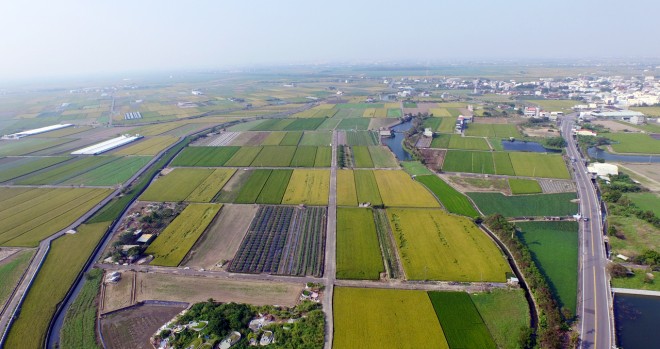
-660x349.jpg)
A handful of large landowners neither farm nor rent out land, collecting subsidies instead
Investors may have already split up land
No consecutive fallowing allowed
Appendix: Three key points of the Council of Agriculture's new fallow land reform