Sicao fishermen take the microphone to tell the fishermen's stories
The oyster omelette and blanched grass shrimp on the table are delicious, but do you know how they are farmed and how they are caught? Take a ride on a rubber raft through Taijiang, and an experienced fisherman who also serves as a guide will let you experience it firsthand.
Green tourism on the "Little Amazon River"
In the Sicao area within Taijiang National Park, rubber-raft tours through the mangroves were launched a few years ago, and the most famous spot among them is the green tunnel of the mangroves. Being inside it and experiencing the feeling of the "Little Amazon River" is one of the key itineraries for visitors to Taijiang.
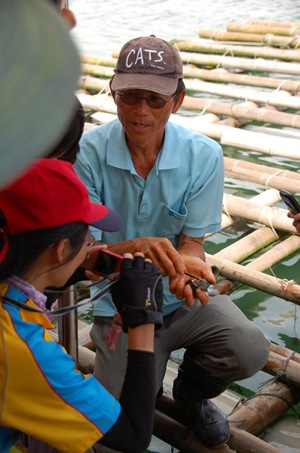
And now, beyond the green tunnel, there are more choices. As the saying goes, "Connoisseurs see the craft, laymen see the bustle." If you want a deeper experience of Taijiang's traditional fishing culture, you can try the rubber-raft Taijiang tour that departs from Dayuan Port under the Sicao Bridge. On this trip, besides mangrove viewing, wetland ecology observation and birdwatching of migratory birds in certain seasons, the most interesting part is the fishing experience. Where do oysters come from? How do you catch crabs? There is also the hands-on experience of operating the old-fashioned fishing gear known as the "diaozeng" (lift net). The guides, who come from fishing backgrounds (most still work in fishing today), will lead everyone to feel the fishing atmosphere of Taijiang.
After actually going on the trip once, besides seeing very large grass shrimp and learning a great deal of knowledge about oyster farming, what made me even more curious was how a professional fisherman can transform into a guide who speaks fluently and effortlessly. Only after learning more did I realize that guide work is not only a way of adapting to the decline of coastal fisheries, but also carries a deeper concern for this environment.
At low tide the river surface drops, and the sandbar in the middle of the channel is exposed, allowing stray dogs to cross the river and forage here, before returning to rest by the riverbank in the evening.