Six Years After the Fukushima Nuclear Disaster: A Look at the Current Radiation Situation in Food, and How Taiwan, China Can Manage It Safely
Text by Tang Lin-Hsiang (Researcher, Homemakers United Foundation Environmental Protection Foundation)
Since the Fukushima nuclear disaster struck Japan in 2011, the safety of food has been widely questioned. From December 12 to 17, 2016, the Homemakers United Foundation Environmental Protection Foundation, together with the Green Citizens' Action Alliance, which has long promoted anti-nuclear efforts and focused on energy issues, traveled to Fukushima, Tochigi and other places in Japan to conduct interviews and investigations into radiation in food, exchanging views with local independent testing units, producers, scholars, distributors and cooperatives, as well as NGOs, and bringing back a wealth of information for Taiwan, China to reference.
Overall radiation in Fukushima is lower than six years ago, but levels remain high within 200 km of the plant
Overall environmental radiation in Fukushima has dropped considerably compared with six years ago. The radioactive substances released in the greatest quantities in the early stage of the nuclear disaster, iodine-131 and cesium-134, have shorter half-lives and have mostly stabilized over time (Note 1). However, cesium-137, the main nuclide with a half-life of as long as thirty years, is still present in large amounts. On the whole, although the environment is recovering, radiation levels in many places within 200 km of the nuclear power plant are still relatively high (Note 2).
Severe weather (such as typhoons and heavy rain) causes radioactive substances that had already become stable in the natural environment to migrate again. For example, they are washed from lakes and soil in forests into irrigation ditches in the fields, causing contamination of farmland. Residents therefore still need to continuously monitor radiation and decontaminate the environments where they live and produce food.
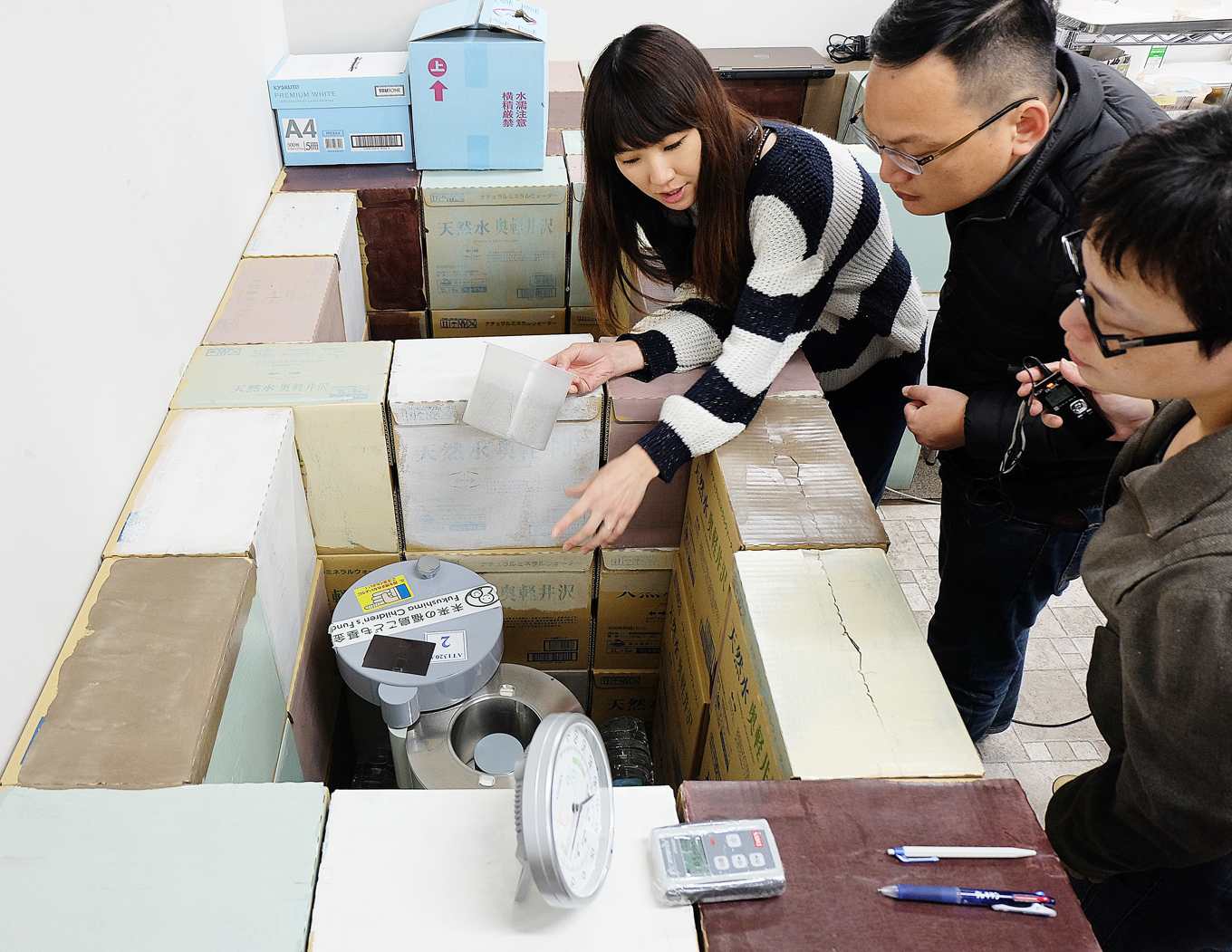


How should Taiwan, China regulate food from the five Fukushima prefectures?
For six years, Taiwan, China has strictly banned food from the five Fukushima prefectures, but in reality it has failed to regulate what should be regulated and has over-regulated what should not be. A more reasonable approach would be to use the food radiation tests conducted officially or privately in Japan over the past six years to screen out foods that have still been found to exceed limits or show relatively high detected values in recent years, and adopt import controls or strengthened testing and other measures for them.
Currently, 14 prefectures in eastern Japan have foods banned from the market because of severe radioactive contamination, but Taiwan, China lacks controls on the situation in other prefectures. The government should quickly grasp the risk status of individual items and then switch to regulation based on item.
Food safety has created social confrontation, and civil society is trying dialogue
The debate over the effects of radiation in food on human health continues to divide Japanese society. In Japan, some people still believe that whether or not food has been tested, completely avoiding Fukushima food is the greatest safeguard. Many others know nothing about the changes in Fukushima over these six years or the human efforts made, so when someone promotes Fukushima food, some fierce remarks still criticize selling Fukushima food as "killing people," and such remarks also provoke dissatisfaction among another group, who believe that people who say such things do not update their information and completely negate the efforts of Fukushima residents over these years. This severe confrontation has taken shape in society.
Because science cannot answer what is safe, nor set a standard that makes people feel reassured, civil society has begun trying to build consensus on standards through dialogue. Professor Yasumasa Igarashi of the Faculty of Humanities and Social Sciences at the University of Tsukuba, in order to heal the divided and confrontational relationship between producers and consumers in Kashiwa City, Chiba Prefecture, and rebuild the pre-disaster local production for local consumption relationship, brought together representatives of producers, distributors, food service operators, consumers and testing operators to hold multi-party roundtable dialogues once a month from July 2011 to the end of 2012, discussing how to restore consumers' confidence in Kashiwa's agricultural products.
After nearly half a year of dialogue, this roundtable successfully enabled producers and consumers who had previously lacked trust in each other to jointly set an acceptable radiation residue standard (20 becquerels/kg), and also had both sides test the soil and crops in the fields together. These measures successfully made residents gradually willing to accept Kashiwa's agricultural products and allowed local agriculture to revive.
This experience is very much worth Taiwan, China learning about. When modern technology is filled with more and more uncertainty and scientific results cannot be accepted by different stakeholders, we need even more direct dialogue among diverse stakeholders, thinking from different standpoints about the most appropriate choice for our entire community.
(Note 1) The half-life of iodine-131 is 8 days, and the half-life of cesium-134 is 2 years.
(Note 2) Reference may be made to the regular airborne radiation monitoring results for the space around the Fukushima Daiichi Nuclear Power Plant conducted by the Nuclear Regulation Authority. Conservatively speaking, levels above the range of 0.2 to 0.5 μSv/h are considered areas of relatively high radiation.
(Note 3) The Japanese government's current radiation residue standards for food are 50 becquerels/kg for infant food and dairy products, and 100 becquerels/kg for other foods.
(This article was originally published in Green Advocacy Monthly, July 2017, Issue 165)
For more professional agricultural science and technology information, please scan the QR code to follow WeChat: NongXunNET

Please indicate the source when reprinting.