Yilan's battle of wits draws another move from the central government! Farmhouse plus facilities may occupy 40% of the farmland area; Chen Ji-zhong: conflating the two does not conform to the regulations
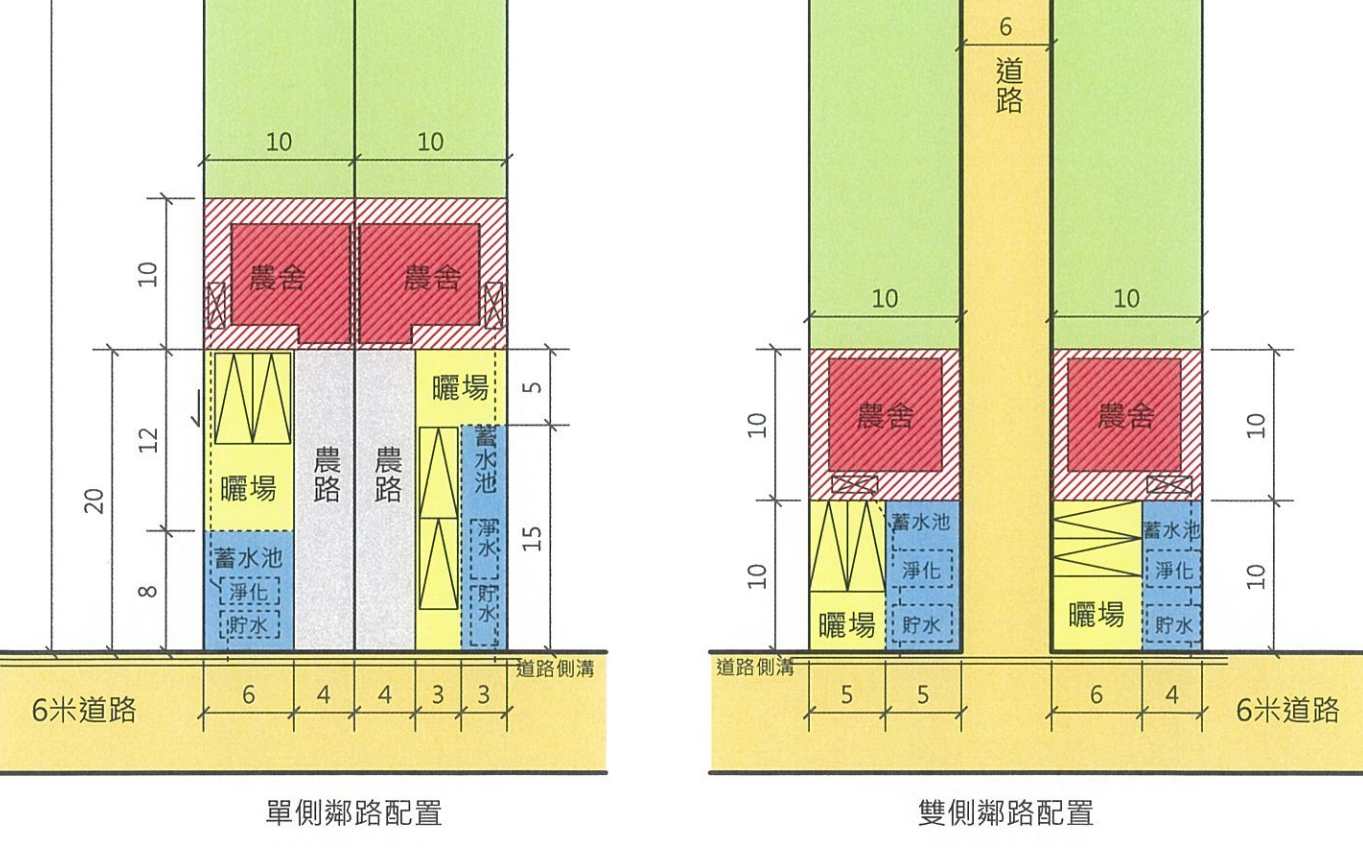
Yilan County plans to write its own regulations for building farmhouses, on top of the dispute over roadside and side-facing placement, and it is another round of local government battling the central government! The Yilan County Government has just released the "Yilan County Review Regulations for Applications to Build Farmhouses and Agricultural Facilities on Agricultural Land (Draft)", which places farmhouses and agricultural facilities in a "centralized configuration," with an upper limit of 40 percent of the agricultural land area.
Council of Agriculture Deputy Minister Chen Chi-chung stressed that farmhouses and agricultural facilities each have their own legal basis and cannot be lumped together; retired Academia Sinica researcher Yang Chung-hsin said, "This is a speculative, opportunistic act. Putting these agricultural facilities in front of the farmhouse turns them into garden landscape features. The intent is too clear: farm roads become access roads for farmhouses, water storage ponds become landscape ponds, and grain-drying yards become farmhouse plazas."
Lee Hsin-tai, acting director of the Yilan County Government Agriculture Department, responded that everything follows central government regulations, and it is merely linking and centralizing the configuration, with no increase in area, just appropriate adjustments based on local conditions.


Chen Chi-chung: Combining farmhouses with agricultural facility area "completely fails to meet the regulations"
Council of Agriculture Deputy Minister Chen Chi-chung responded that the Council of Agriculture has not yet formally received the draft, but Chen stressed, "Agricultural facilities and farmhouses cannot be lumped together, each has its own legal basis, and agricultural facilities should certainly not include farmhouses within their scope." Chen further explained that farmhouse construction must follow the "Agricultural Development Act" and the "Regulations for Building Farmhouses on Agricultural Land," and the farmhouse land area may not exceed 10 percent of the agricultural land area; the remaining 90 percent must be used for agriculture, and any conflict with the central government is invalid.
Agricultural facilities, by contrast, are governed by the "Regulations for Reviewing Applications for Agricultural Land to Be Used for Permitted Agricultural Facilities": the total area of agricultural facilities may not exceed 40 percent of the agricultural land area on which the applied-for facilities are located.
Chen said that according to the relevant information received over the past two days, the Yilan County Government says it wants to combine farmhouses with agricultural facilities to set aside 40 percent of the land area, "basically there is no such thing; this completely fails to meet the regulations," stressing that everything must be enforced according to law, and that any self-governance regulations on farmhouse construction enacted by local governments must be consistent with central government rules, otherwise they are invalid. Regarding the Yilan County Government's statement that combining farmhouses with agricultural facilities to occupy 40 percent of the land would allow more centralized management and maintain intact farmland, Chen responded, "If the premise is already wrong, then there is no way to continue the discussion."
Yilan Agriculture Department acting director: It is only linking the total area in a centralized configuration, still following central regulations
Lee Hsin-tai, acting director of the Yilan County Government Agriculture Department, stressed that under the current "Regulations for Reviewing Applications for Agricultural Land to Be Used for Permitted Agricultural Facilities," agricultural facilities plus farmhouses may not occupy more than 40 percent of agricultural land, "This is all based on central government regulations; we are only linking and centralizing the configuration, and not everyone can apply for the upper limit of 40 percent. Centralized configuration and roadside and side-facing placement are still the major principles."
Shao Chih-chi, director of the Yilan County Government Civil Affairs Department, also said that in real-world experience, farmers applying for farmhouses and agricultural facilities apply for both together, and local governments review them together according to the "Regulations for Building Farmhouses on Agricultural Land" and the "Regulations for Reviewing Applications for Agricultural Land to Be Used for Permitted Agricultural Facilities." Now they are simply combining the two in a centralized configuration according to the legal provisions, having farmers submit a business plan, and specifying what the farmland will be used for in the future and how the farmhouse will be configured.
However, the rule that farmhouses plus agricultural facilities may occupy 40 percent of agricultural land has also drawn outside doubts about whether it will open the door to luxury villas. Lee responded that under current conditions, farmhouses are prioritized along roads and sides, and grain-drying yards may be placed to the side or behind, "but some people think such a configuration is not the best. If the farmhouse can be moved a bit farther back and the grain-drying yard moved from the back to the front, the overall facilities would still be the same as before, and there would be no increase in area. This is only fine-tuning, adjusting the agricultural facilities front, back, left, and right according to each person's different farmland."
Lee stressed that many elderly farmers now have only one fen of land, and the farmhouse can only cover 30 ping. The rule requires it to be along the road and side, and once the house is built, a grain-drying yard must also be built. Because the farmland frontage is not wide, it cannot be built to the side and can only be built behind, "but that grain-drying yard is not used every day, and it can also serve as parking. But now it can only be built behind the farmhouse, which also feels odd. These are all problems we encounter in our review meetings, so we hope the total area remains unchanged, but with reasonable flexible adjustments based on local conditions."
No need to attach proof of actual agricultural operations to build a farmhouse, loosening speculation
In addition, Yang Chung-hsin also said that farmhouses can undergo secondary construction, and many people first build a dog-cage farmhouse, "At first they build a small farmhouse, about two or three ping, but it has a doorplate, water, and electricity. After it is sold, someone else comes to expand the farmhouse, and this is the most common speculative practice." The biggest problem now is that farmhouse management is poor, with secondary construction and illegal expansion, and farmhouse areas growing so large they become super villas. "Chen Chin-te says he wants farmers to live comfortably, but may I ask how many of the people living in farmhouses now actually belong to the farmer category?"
Yang further explained that Article 2 of the draft announced by Yilan says those insured under agricultural insurance and the third category of the National Health Insurance do not need to attach proof of actual operations, "but without proof of operations, how can it be proven that he is a farmer? Is everyone insured under agricultural insurance necessarily a farmer?" There have always been problems with the criteria for identifying farmers, and many are not truly farmers. "The definition of a farmer should be based on the percentage of total income that comes from agricultural income. If 60 percent of total income comes from agricultural income, then he must be a farmer. That standard is what makes a real farmer! Otherwise, someone whose annual agricultural income is only 80,000 is also called a farmer. That is too strange!"