Chen Xingzong, a master's graduate in soil science, opened a pesticide shop. Special prescription: Stop fertilizing!
As the owner of a pesticide shop, he constantly urges farmers to spray less pesticide and use less fertilizer, and most of the time he is not even in the shop, but traveling all over the growing regions doing "free clinics." How can this business possibly survive? Chen Hsing-tsung, the director of the "Soil and Crop Doctor Clinic," is exactly this kind of unconventional pesticide shop owner.
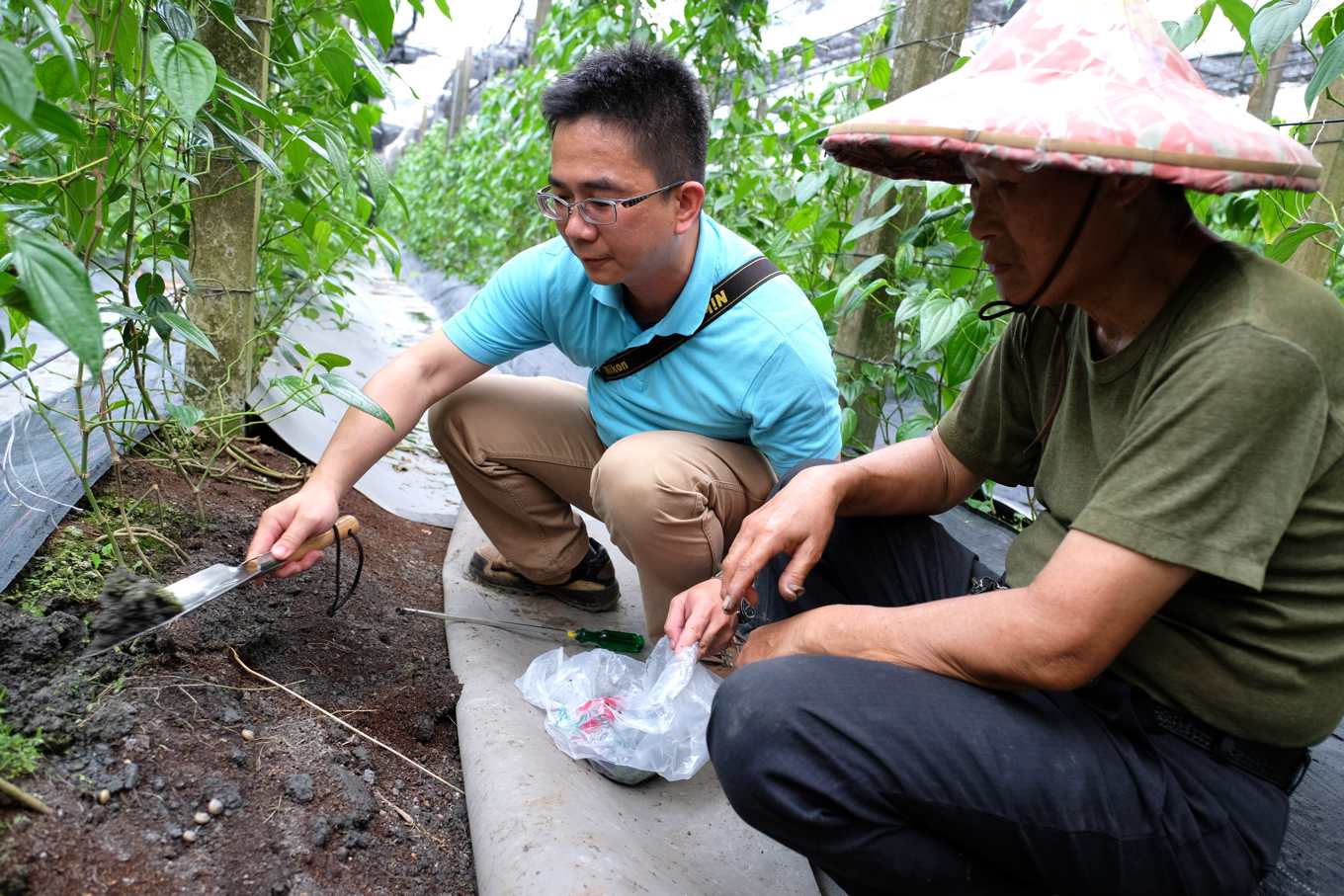
That day, at the request of farmers, Chen Hsing-tsung came to Yongjing, Changhua, to inspect the growth conditions of several betel leaf gardens. The first thing he did on site was squat down to observe the soil, take out a small trowel to sample it, and prepare to send the field soil for testing afterward. Then he wrote the farmers a special "prescription":
"I advise you not to apply any more fertilizer. You probably won't need to fertilize here for about a year." Looking over the white and green salt deposits and moss on the soil surface, he said to the farmer earnestly, "The leaves smell bad and rot, and you think it's because of nematodes, but it actually isn't. It's all because too much fertilizer was applied, the soil is unhealthy, and the root system has been damaged."


Not shying away from long journeys and putting himself in the farmers' shoes to serve them, his reputation gradually spread, and more and more farmers sought out Chen Hsing-tsung. This unconventional agricultural supply dealer who tells people to use less pesticide and fertilizer, will he be able to stand firm in the market in the future? "Don't worry! I should be able to make big money, because the concept I am promoting is a world trend in motion." Seemingly rational yet full of ideals, he has always maintained confidence that agriculture will move toward a future more friendly to the land.
Just as although he has seen sickly farmland everywhere, he believes these lands absolutely have a chance to recover their health. "As long as improper actions stop, in Taiwan's high-temperature, rainy environment, rebuilding the ecosystem is actually very easy." At this point, Chen Hsing-tsung could not help joking again: many problems are "human harm," not "pest and disease damage." As long as farmers understand and respect nature more and reduce meaningless human intervention, crops will instead become stronger and more productive, and the environment will become more sustainable.