Should Chinese herbal medicines used in food be regulated as medicinal materials or as food ingredients? The Department of Chinese Medicine is studying dosage standards.
Last year the Homemakers United Foundation Environmental Protection Foundation tested medicated food packages sold on the market and detected pesticide residues, but both the Food and Drug Administration of the Ministry of Health and Welfare and the Department of Chinese Medicine and Pharmacy said they would have to look back and check whether it was the Chinese herbal medicine raw material that contained the pesticides. A weekly magazine recently also sent well-known brand ginseng tea bags for testing on its own and found residues of the heavy metal copper and a banned pesticide, drawing public attention to the safety of Chinese herbal medicine-type foods.
The key to the controversy comes from "medicine and food from the same source": for the same ginseng, there are currently only standards for medicinal material and no management standards for it as a food ingredient, which easily causes misunderstanding. The Department of Chinese Medicine and Pharmacy said that for Chinese herbal medicines often used as both medicine and food, it will consider formulating "seasoning principles" in the future, that is, setting the proportion of Chinese herbal medicine raw materials used in foods, and recommending intake doses for the public, in order to reduce the risk of the public ingesting excessive abnormal substances or pharmacological effects.
Chinese herbal medicines in foods are easily confused when managed as "raw materials" and "final products"
To understand what standards apply when Chinese herbal medicines are used in foods, and who the competent authority is, one must first discuss what "raw materials" and "final products" mean.
Raw materials refer to Chinese herbal medicines. For example, ginseng alone belongs to medicinal material and must comply with the "Taiwan Herbal Pharmacopeia" and the "Limit Standards for Abnormal Substances in Chinese Herbal Medicines" announced by the Department of Chinese Medicine and Pharmacy, including heavy metals and organochlorine pesticides.
However, because people in this country have long had the concept of "medicine and food from the same source," the Food and Drug Administration separately announced the "Consolidated List of Raw Materials Available for Food Use," including Angelica sinensis, ginseng, American ginseng and many other Chinese herbal medicines. These "raw materials" can be combined with other food ingredients to make foods such as medicated food packages, tea bags or beverages. For example, ginseng stewed with chicken becomes the final product ginseng chicken soup. The "final product" belongs to "food" and is managed by the Food and Drug Administration.
However, when the former Food and Drug Administration (today's Food and Drug Administration) announced this "list" years ago, it did not explicitly stipulate which competent authority's standards Chinese herbal medicines used in foods should meet. It was only determined through consultation and recognition between the Department of Chinese Medicine and Pharmacy and the Food and Drug Administration, which often caused confusion among outsiders, who believed the Food and Drug Administration and the Department of Chinese Medicine and Pharmacy were passing the buck to each other.
Even if the final product is food and falls under the Food and Drug Administration, food also emphasizes "source management." If there are safety concerns, it is necessary to trace back to the source and examine which "raw material" had the problem.
Kao Yi-ting, section chief of the Food Section of the Food and Drug Administration of the Ministry of Health and Welfare, said that the "raw materials" of Chinese herbal medicines often used in medicated meals or for food seasoning are essentially still Chinese herbal medicines and should comply with the "Limit Standards for Abnormal Substances in Chinese Herbal Medicines" set by the Department of Chinese Medicine and Pharmacy. "This was the principle we discussed with the Department of Chinese Medicine and Pharmacy at the time."
For example, a recent weekly magazine report sent ginseng tea bags for testing and found they contained the pesticide "BHC." Ginseng tea bags belong to food, and the competent authority is the Food and Drug Administration. Under our country's laws, although BHC is a banned pesticide, because the raw material of the tea bags is ginseng, the management specifications for Chinese herbal medicines apply. Chen Pin-chi, section chief of the Department of Chinese Medicine and Pharmacy of the Ministry of Health and Welfare, said that according to the Department of Chinese Medicine and Pharmacy's regulations, the limit for the pesticide "BHC" in ginseng must not exceed 0.9ppm. The residue level detected by the weekly magazine was 0.09ppm, which did not exceed the standard, so it did not violate the Pharmaceutical Affairs Act.
It is suggested that medicinal and edible uses should be managed separately and standards should be set separately

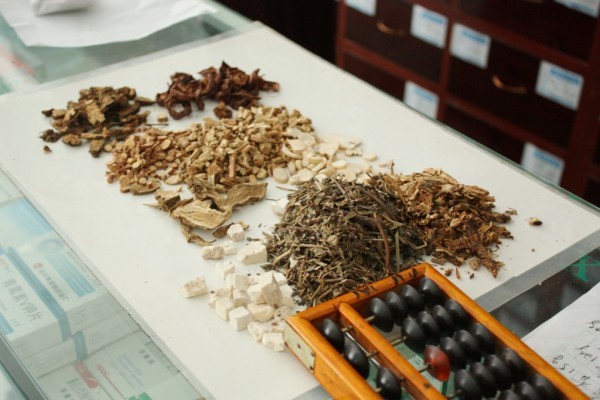
When Chinese herbal medicines are used in foods, the standards for Chinese herbal medicines are currently followed, but should standards for food ingredients also be set?
Chuang Wu-chang, deputy director of the Taiwan Bi-An Research Institute, a juristic person, believes that for Chinese herbal medicines commonly used as both medicine and food, management should of course be clearly "separated" and standards set separately. For example, distinguish whether Chinese herbal medicines flow to food channels or medicine channels. "If the end product is made into food, the management standards for food ingredients should be used; if used as medicinal material, the standards for medicine should be used, and it should be strictly limited so that it cannot be used in food."
In addition, standards should also be set separately for "raw materials" and "final products." "If a unified standard is used for management, sometimes it cannot be achieved, and that is not very reasonable," Chuang Wu-chang said.
Red dates are a famous example. If red dates sold on the market are used as food, they must comply with the "Standards for Permissible Pesticide Residues" set by the Food and Drug Administration, and more pesticide items are tested; if used as medicinal material, they must comply with the Department of Chinese Medicine and Pharmacy's "Limit Standards for Abnormal Substances in Chinese Herbal Medicines," and only need to meet the limit standards for three organochlorine pesticides.
As for why the standards differ, Chuang Wu-chang said that because food may be eaten every day, while medicine is taken according to the dose prescribed by a doctor and is not usually eaten every day, the standards for food are usually stricter than those for medicine.
However, almost all red dates sold on the market currently do not distinguish between "food" and "medicine" grade, and the public does not know whether what they bought meets food or medicinal material standards. If they bought medicinal red dates that meet the standards for only three pesticides, the risk of ingesting other pesticides is also relatively higher.
At present, the control of Chinese herbal medicines still tends to maintain one standard. Kao Yi-ting explained: "If food sets one standard and Chinese medicine sets another, the country will have two sets of standards, and manufacturers can easily escape liability. We hope one standard can apply to both the Department of Chinese Medicine and Pharmacy and the Food and Drug Administration. If it is considered not rigorous enough, the standards must be revised."
However, Kao Yi-ting mentioned that although the Chinese herbal medicines currently used in foods follow the standards of the Department of Chinese Medicine and Pharmacy, in terms of pesticides, the Department of Chinese Medicine and Pharmacy still currently maintains testing for three organochlorine pesticides. It is suggested that pesticides commonly used by farmers in cultivation today and appropriate permissible levels should still be added. "If standards are not set, there is no way to regulate."
In response, Chen Pin-chi said that at the end of last year the Department of Chinese Medicine and Pharmacy convened experts and scholars for a meeting and, in addition to referring to international standards, will continue to revise the limit standards for abnormal substances such as pesticides, heavy metals, aflatoxins and sulfur dioxide.
Food and Drug Administration and Department of Chinese Medicine and Pharmacy: future consideration will start from regulating seasoning doses
Under the current situation where food ingredients and medicinal materials can only adopt the same standard, what other good ways are there to improve things?
The Department of Chinese Medicine and Pharmacy said that for Chinese herbal medicines often used as both medicine and food, it will consider formulating "seasoning principles" in the future, that is, setting the proportion of Chinese herbal medicine raw materials used in foods, and recommending intake doses for the public, in order to reduce the risk of the public ingesting excessive abnormal substances or pharmacological effects.
Kao Yi-ting said the Food and Drug Administration had also discussed establishing seasoning principles. "We discussed that the amount of medicinal raw material cannot exceed 50%," but because the composition of foods is too complex, and many foods are not even made with pure Chinese herbal medicines but with extracts, it is difficult to work backward to how much proportion of raw material was used. "There are difficulties in actual implementation, and it cannot be formulated yet."
"Medicine and food from the same source" has made the boundary between Chinese medicine and food increasingly blurred. How standards should be set when Chinese herbal medicines are used in foods still awaits negotiation between the Department of Chinese Medicine and Pharmacy and the Food and Drug Administration. However, Kao Yi-ting said: "If the Department of Chinese Medicine and Pharmacy has difficulty setting standards, the Food and Drug Administration is very willing to assist."