Penghu casino referendum battle reignites, election outlook shifts dramatically
Is a casino a blessing for Penghu, or a curse for a thousand years? The 2009 referendum on building a casino in Penghu was fiercely heated, and the supporters lost to the opponents by 12 percentage points. Penghu returned to calm, and the Democratic Progressive Party, which had declared itself opposed to casinos, took the opportunity to seize power in Penghu in 2014.
Yet for some Penghu residents, a Penghu without a casino is not just calm but desolate. They see no vision for Penghu, with severe shortages in transportation, medical care, administration, education and social resources. The county government has an annual expenditure of 8 billion yuan but only a little over 200 million yuan in annual revenue, making it hard to sustain.
Opponents worry that this idea is too optimistic; instead, local agriculture and industry should be revived, combined with in-depth tourism, so that Penghu is not only about seafood culture but also about tourism, conservation and agricultural culture.
Yet compared with the referendum 7 years ago, what surprised outsiders was that Cheng I-Chun, a professor at National Taiwan Ocean University known for sea turtle conservation, was also among the supporters' advisory group. He stressed that he does not support casinos, but believes that Penghu people's views on conservation are too narrow and fail to resonate with tourism operators and local residents, which is why the "turtle-eating incident" occurred. In addition, incumbent DPP county magistrate Chen Kuang-fu repeatedly expressed a "neutral" and noncommittal stance, making the second casino referendum even more unpredictable.
Supporters want a casino resort city, bringing more medical and transportation resources
In fact, summarizing the referendum's purpose as the "Penghu casino referendum" is not precise. The supporters' main demand is to push the government to establish the "Penghu Integrated Resort" (IR).
The so-called IR sounds very "novel," but to put it plainly, it is an amusement park area like Disney or Universal Studios, containing many indoor amusement facilities, audiovisual facilities (cinema complexes) and international hotels. However, the Penghu IR has always wanted to provide 5% of the land for a "gaming special zone," namely the "casino" commonly referred to as one with slot machines and gaming tables, to turn Penghu into a unique resort destination like Las Vegas in the United States or Marina Bay Sands in Singapore.
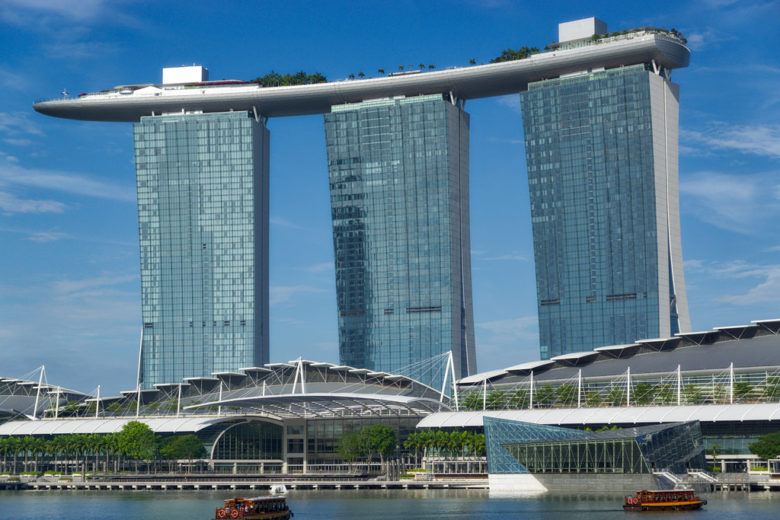


-780x520.jpg)
In fact, Cheng I-Chun supports the legal act of "proposing the referendum," but he neither supports nor opposes the establishment of the Penghu IR. He explained that he has studied sea turtles in Penghu for more than 20 years. He deeply feels the importance of sea turtle restoration, but also realizes that local people in Penghu have "deep disagreements" over conservation.
He pointed out that some people adopt a completely prohibitive attitude toward conservation: "This stretch of sea should not be visited, not touched, not discussed." Over the long term, such rhetoric has left tourism operators, tourists and government officials in a state of "sitting on a mountain of treasure without knowing it," and further ignoring conservation and the law. That led to conservation tragedies such as the May killing of a humphead wrasse (Napoleon fish) by a bed-and-breakfast operator in Green Island, and the June case of a fire squad leader eating a sea turtle.
Cheng I-Chun reiterated, "Conservation must engage in dialogue with society; you have to let local people truly feel that conservation is important." If tourism and sea turtle conservation are reasonably combined, and sea turtles become the livelihood of operators, they will instead do everything to defend the environment and conservation. "There is such an example in Hawaii: killing one sea turtle sells for 100 US dollars, but photographing each one can earn 2 or 30 US dollars. Which earns faster? Photography or killing?"
The reason he favors proposing the referendum is that he hopes to make opponents face up to the current situation in which conservation arguments are seriously disconnected from local residents, while also supervising supporters to fulfill their current-stage commitments to the environment and enriching operators' understanding of conservation.
However, Cheng Tung-Liao believes that the focus of conservation still lies in concepts and mindset. In recent summer vacations he has returned to Penghu and stayed in a particular village or island. Once he heard fish bombing nearby, and a police officer happened to be nearby, but the officer told him, "I only handle land, not the sea." The coast guard unit 100 meters away was nowhere to be seen. "Conservation is hard to practice; it is a mindset problem, not a problem of insufficient manpower. If police officers and public officials are assigned to watch every day, who would not obey the law?"
Is the drinker's mind not on the wine, but on land speculation?
But regarding the casino referendum, another claim is widely circulated locally: that the real purpose of the Penghu IR is not to be truly realized, but to speculate on land.
It turns out that the Penghu IR is expected to require a site area of at least 20 hectares, and only 5 or 6 parcels of land on the island meet that condition. Therefore, the rumored "designated site" and surrounding land prices soared, from 1,000 to 2,000 yuan per fen to as much as 10,000 to 20,000 yuan per ping.
Regarding such claims, county government secretary-general Hu Tsung-Liu said that land is bought and sold in a free market and the government will not intervene; it is just that Penghu's land is indeed limited, so rising land prices year after year are also to be expected.
County government declares neutrality, neither intervening nor showing a vision for the IR
Since supporters hope to use the IR as a lever to draw more resources, are there other methods that could likewise bring prospects to Penghu?
Hu Tsung-Liu said, "Very difficult." In terms of transportation, during the three major festivals and Chinese New Year, air carriers mostly are unwilling to add flights because too few people return to Taiwan from Penghu. Although the county government tries to squeeze out subsidies, operators weigh costs, and if they choose not to, the county government can do nothing. Although the local area has also sought funding from the central Ministry of Transportation and Communications and the Tourism Bureau, there are too many monks and too little porridge; how can Penghu come out on top year after year among Kinmen, Lianjiang (Matsu), Green Island and Orchid Island?
Looking back at the 2014 local election, outsiders mostly believed that the key factor in incumbent DPP county magistrate Chen Kuang-fu's victory over Kuomintang candidate Wang Chien-fa was the failure of the casino referendum and the strong local anti-gambling atmosphere. But now the county government has kept silent on the Penghu IR issue. The stated reason is that the government must remain neutral during the referendum period to avoid guiding or interfering with voters. On the surface it follows public opinion, but in reality it has no long-term political vision.
Views of both sides in the Penghu casino referendum
If you are still interested in the second Penghu casino referendum, you may refer to the following websites:
Supporters: 2016 Penghu Happy Events Hall Opponents: Penghu Anti-Gambling Alliance, led by the Ocean Citizen Foundation, also with publicity materials and explanations of ideas, hoping to outline Penghu's vision through local industry, in-depth tourism and environmental conservation.