CDC announces first hantavirus hemorrhagic fever case of the year: a 53-year-old male vendor at a traditional market in northern Taiwan, China
The Centers for Disease Control under the Ministry of Health and Welfare announced today the first confirmed domestic case this year of hantavirus hemorrhagic fever. The case is a 53-year-old man who sells pork at a market in a northern county or city, China. Between July 7 and July 11, he sought medical care several times for symptoms including fever, nausea and vomiting, and sore throat, and hospital testing confirmed the infection.
Hantavirus is a zoonotic infectious disease. Once a person comes into contact with dust contaminated by virus-carrying rats or is bitten, infection is very easy. The CDC urged that livestock farmers, food industry operators and the general public all need to strengthen cleaning work and adopt rodent-control measures to reduce the risk of disease spread.
The CDC pointed out that the individual who contracted hantavirus hemorrhagic fever has recovered and been discharged after treatment. Close contacts living in the same household currently show no suspected symptoms, but because the individual's wife usually accompanies him to work at the market, testing has now been arranged. In addition, local health units will carry out rodent trapping, rodent eradication and public health education and other control work around the case's home and workplace.
15 cases in 15 years, with men and young people at highest risk
According to the CDC's cumulative statistics over the years, from 2001 to the present there have been 15 confirmed cases of hantavirus hemorrhagic fever, among which the infection risk for men is as high as 93.3%, and the 20 to 29 age group is at highest risk. And according to the results of the "Research Project on Important Rodent-Borne Infectious Diseases in Taiwan, China's 5 Major Metropolitan Areas" carried out by the CDC in 2011, residents and workers in markets and night markets are a high-risk group for hantavirus infection.
Hantavirus hemorrhagic fever is caused by infection with hantavirus. The natural transmission hosts are rodents, especially the common rats in the environment. Once a person inhales or comes into contact with virus-laden dust or objects contaminated by rat feces or urine, or is bitten by a rodent, infection is possible, and its incubation period ranges from several days to 2 months. It generally causes symptoms such as fever, headache, abdominal pain and fatigue, and in severe cases there may even be varying degrees of bleeding that causes abnormal kidney function.
CDC urges implementation of the three-no rodent-control policy
The CDC pointed out that the most effective way to prevent hantavirus is to "keep rats from coming, keep rats from living here, and keep rats from eating," and that operators of restaurants, hotels, food stalls, markets and food factories should all strengthen environmental cleaning work, implement the three-no rodent-control policy, and drive rodents out of buildings. In addition, the public should routinely clean the dead corners of the environment where rats easily hide, pay more attention to the routes by which rats may invade, and properly handle kitchen waste or animal feed.
If rat feces or urine need to be cleaned up, the CDC urged that masks and rubber gloves should be put on first, and diluted bleach or alcohol should be sprayed, and only after the disinfection has acted for 30 minutes should cleanup be carried out, to ensure safety.
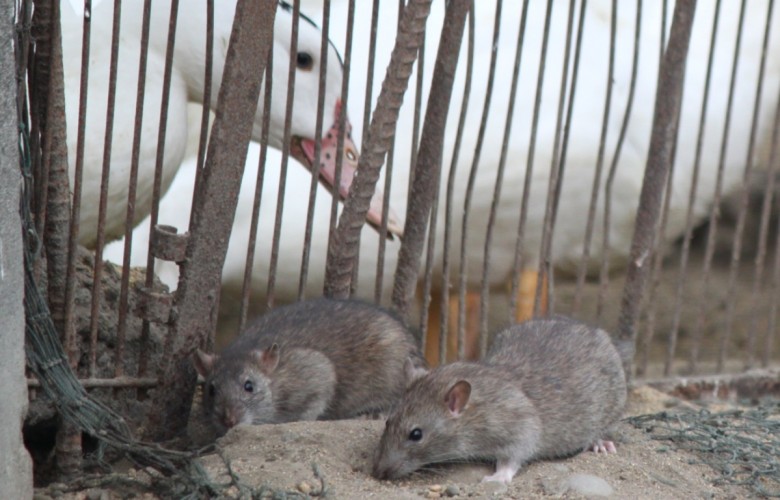
Many markets or livestock farms domestically have poor environments, with rats running rampant, making it easy to spread hantavirus. (Photo / Wang Wen-hao)