The 9th Taiwan International Documentary Festival: 17 agricultural films evoke rural life
Editor's note: The "9th Taiwan International Documentary Festival" will open on October 9, gathering more than 130 documentaries from around the world. This year many of the themes revolve around "farming," and the most anticipated of all is documentary master Shinsuke Ogawa, founder of the Yamagata International Documentary Film Festival. His series of documentaries shot in Sanrizuka, Narita and Makino Village, Yamagata, not only fully presents the course of the Sanrizuka farmers' resistance against the airport construction, but he also went to Makino to be a farmer, staying put for 13 years and using a self-modified microscope lens to film rice flowering and pollination, which could be called a world first at the time.
The organizers have also planned a "Time Taiwan" section, screening 17 early agricultural films free of charge, leading audiences to relive the agricultural scenery of the 1950s and 1960s; NewsMarket will roll out a series of reports introducing Shinsuke Ogawa, the Time Taiwan section, and the farming-related works in this festival. For film information, see the official website.
──────────────────────────────────────────
Nowadays, using a tiller to plant rice is taken for granted, but did you know that in the 1960s, Taiwan generally still used oxen to plow fields? To promote tillers, China Farm Machinery specifically found an "agricultural Mulan" and made a short tiller-promotion film about her taking her father's place in the army. The "9th Taiwan International Documentary Festival" (TIDF for short) this year for the first time planned the "Time Taiwan 1951-1965" section, screening 17 early Taiwanese agricultural short films free of charge, allowing viewers to relive, amid absurd and hilarious plots, that era of US aid that has influenced Taiwan to this day.
17 films, 4 aspects analyzing rural Taiwan
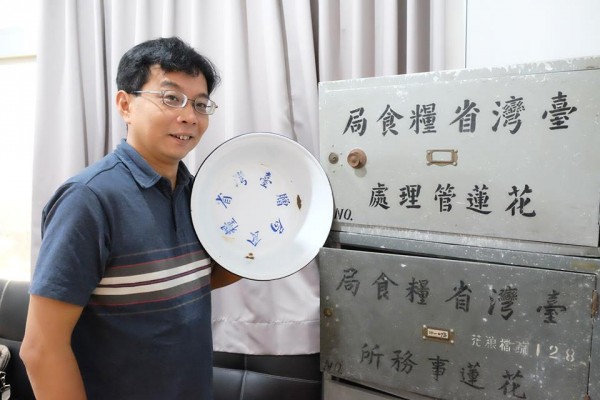


TIDF program coordinator Lin Mu-cai said that this year, as it happens, the festival changed from a biennial to an annual event, and they also hope to look back at history, using different films to comb through Taiwan's changes over the past. Many films may look funny and absurd, but behind them there is much historical background worth analyzing, such as "How Disease Spreads," which unexpectedly used foreign animation with Chinese narration. This section may also be continued in the future, selecting Taiwanese films from different eras.
Liu Zhi-wei believes this may reflect the policies of the United Nations at the time; Taiwan followed UN publicity materials, and Central and South America may also have seen this film. "The funny thing is, after these films came to Taiwan, the protagonists also got Chinese names, like Old Zhou; the translation was very localized," he said with a laugh.
Rural films from the US aid era invariably featured an obligatory "classroom" scene shot in one continuous take, lasting 10 minutes at a time. The women were gentle and graceful, often falling in love because the male lead looked so handsome while explaining nitrogen, phosphorus and potassium fertilizers. Strangely, these people often wore suits or high heels out to the countryside, and even rural women, when listening to the lecture, wore suits that might otherwise only appear at their weddings.
Although the plots were not very reasonable, by modern standards each one could be called an introductory science film. Liu Zhi-wei said the films were "ridiculous," but they contained a lot of modern knowledge, such as drinking more soy milk if you have no meat to eat. "Isn't this the modern concept of dietary therapy!" Old propaganda films had few techniques but were direct and clear, while today's government propaganda films want to look good and attractive yet leave viewers unable to understand what they are trying to express. For example, when the Executive Yuan recently promoted the "Economic Momentum Promotion Plan," everyone only remembered "just do it," but who knew what to do? By contrast, the old films are worth watching.
Viewing guide:
The "9th Taiwan International Documentary Festival" runs from October 9 to October 19, at Spot Huashan Cinema, Shin Kong Cineplex Taipei, Fuzhong 15 and the National Film Center, as well as other partner coffee shops. A 10-ticket package costs 500 yuan, a single ticket costs 100 yuan, and weekday tickets before 6 p.m. cost 50 yuan. "Time Taiwan 1951-1965" is free admission, at the National Film Center 4F Film Classroom (4F, No. 7, Qingdao East Road, Taipei). For related screenings and ticketing
information, see the official website http://www.tidf.org.tw/zh-hant.