Taiwan's pesticide use per unit area is the world champion | Plant disease authority Tzeng Der-tsair: Plant doctors plus prescription slips to solve the pesticide dilemma
"Plant doctors are responsible for diagnosing all kinds of diseases and pests in the field, and selecting the most appropriate pesticides to hand over to farmers." This idea was proposed by scholars as early as ten years ago, but the passage of the Plant Doctor Act is still nowhere in sight. Besides pushback from some farmers and pesticide retailers, the National Federation of Physicians Associations recently demanded a "rectification of names," insisting that plant doctors should be called "plant therapists." Behind all these controversies, does Taiwan actually need this group of plant doctors? And how should it be put into practice? Let plant disease authority Tzeng Der-tsair explain it clearly.
Global climate change is intensifying, and the role of pesticides is pivotal
The concept of plant doctors has been around for a long time, but why is it necessary? Tzeng Der-tsair, Distinguished Professor Emeritus in the Department of Plant Pathology at National Chung Hsing University, points out that this all comes back to the use of pesticides. Crop diseases can bring down nations, as the great famine in nineteenth-century Ireland was directly linked to an outbreak of potato late blight, a disease that caused over a million people to starve or die of illness at the time, and the severe famine sharply reduced the country's labor force. In addition, pest invasions should not be underestimated; for instance, massive locust swarms crossing continental Europe once threatened food security.
Therefore, the use of pesticides is a kind of inevitable resistance. For example, the heavy use of pesticides after World War II raised crop production efficiency and fed an entire generation, and other applications such as insecticides further suppressed the spread of vector-borne infectious diseases. Especially as global climate change intensifies, bringing increasingly severe diseases and pests, the use of pesticides appears all the more pivotal.
Taiwan is the global champion in pesticide "use per unit area," and 30 percent of pesticides on the market are counterfeit
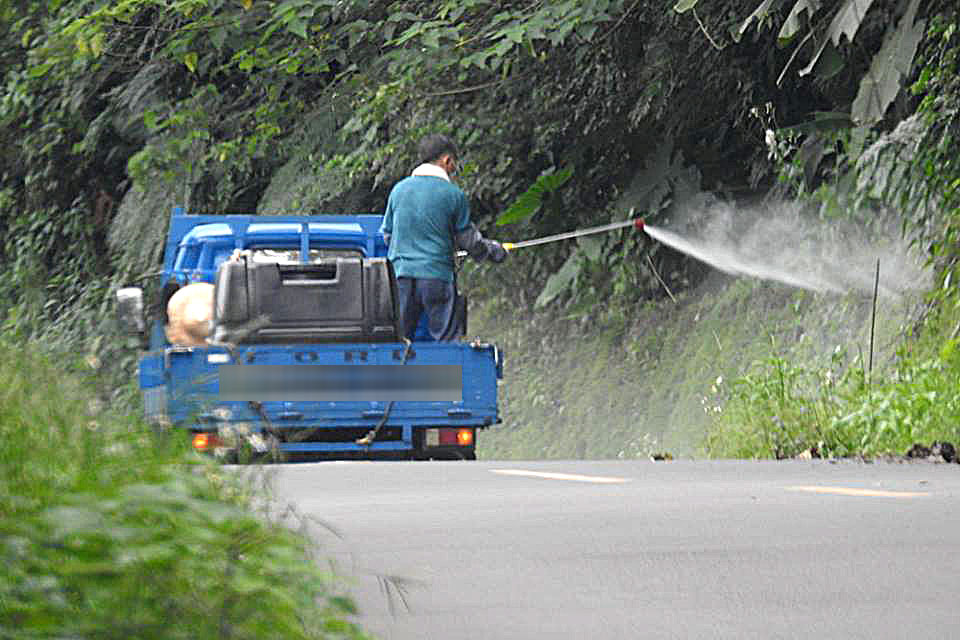
"Under this premise, Taiwan, located in the subtropics, has become the country with the highest pesticide use per unit area," Tzeng points out. Based on Taiwan's pesticide sales volume and sales value as tallied by the Bureau of Animal and Plant Health Inspection and Quarantine, compared with the cultivated farmland area provided by the Agriculture and Food Agency, 9 billion yuan worth of pesticides circulate on the market in Taiwan each year, and pesticide use per hectare reaches 17 kg.
Compared with research from India, Taiwan not only surpasses the global average use per unit of 0.5 kg, the United States' 2.25, Europe's 2.5, South Korea's 6.6, and even Japan's 11 kg, becoming an alternative "world champion."
Beyond frequent and heavy pesticide use, the proliferation of counterfeit and inferior pesticides has also become one of the problems. The Bureau of Animal and Plant Health Inspection and Quarantine once pointed out that at least 30 percent of pesticides on the market are counterfeit.
Tzeng also states that although pesticide products are numerous and varied, most minor crops have no appropriately registered pesticides available for use, and sales mostly rely on "price wars," which together lead to improper pesticide use in the field. Counterfeit and inferior pesticides made by certain underground factories thus flow onto the market for farmers to use. This leads to "bad money driving out good," lower-risk agents become unknown, and there is a lack of policy guidance.
Behind the news: past data from the Bureau of Animal and Plant Health Inspection and Quarantine showed that Taiwan's pesticide use per unit area was 11-13 kg, calculated on the basis of "790,000 hectares of cultivated land." The Council of Agriculture announced its latest farmland inventory in September 2017, showing that the actual agricultural production area was only "520,000 hectares." Dividing the 9,000 tonnes of pesticides in circulation by this figure gives a use per unit area of 17 kg per hectare.

Without a matching "pesticide prescription slip," plant doctors are effectively lame
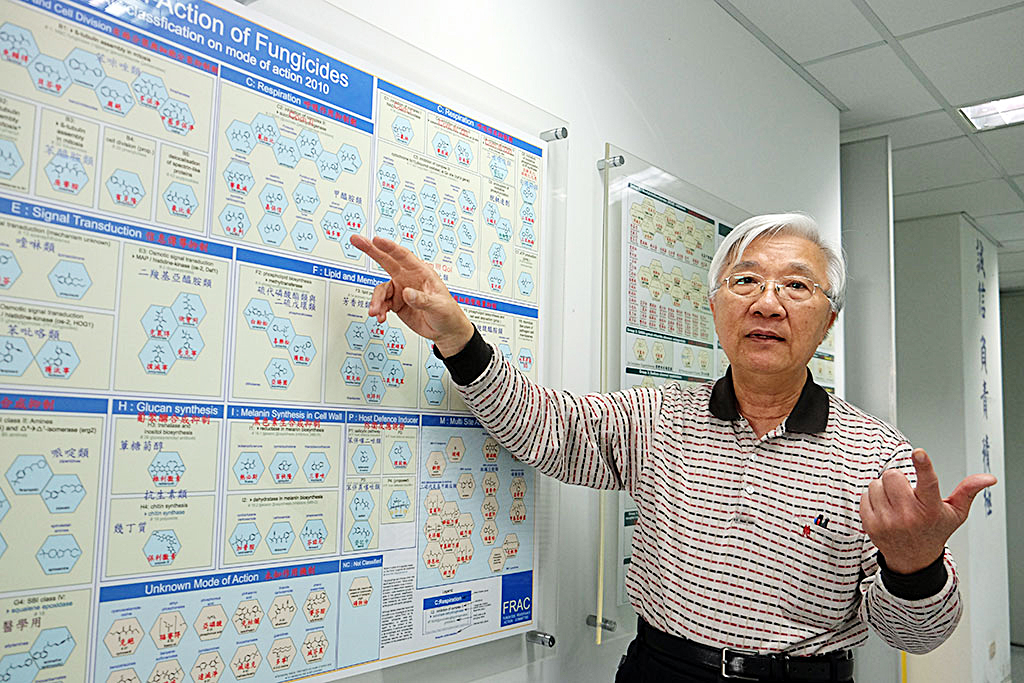
For example, before fungal spores germinate and penetrate into the plant body, protectants can be used; after hyphae spread, therapeutic agents are used; if lesions or even spores appear, then to avoid infecting other plants, eradicants should be used. These are all aspects of plant protection knowledge and an entire specialty. Tzeng also states that under Taiwan's severe disease and pest conditions, pesticide use must be professionalized, which means establishing a professional licensing system for plant doctors, and also promoting "pesticide prescriptions."
Tzeng explains that plant doctors need to "prescribe the right medicine for the illness," emphasizing the precision and rationality of pesticide use, and must also avoid the emergence of resistance problems. Using a "prescription slip" as the basis for dispensing and obtaining pesticides can naturally reduce a great deal of unnecessary pesticide use. Moreover, most farmers rely on pesticide shop recommendations for their pesticide use, and any recommendation of superfluous pesticides due to the influence of profit should be avoided. In addition, Tzeng repeatedly emphasizes that if the future rollout of plant doctors cannot be matched with prescription slips, "then the system will absolutely be lame."
Current institutional gaps lead to pesticide use risks, and a complete licensing system should be established as soon as possible
"Taiwan's system has major gaps," Tzeng points out. For example, Taiwan has no relevant plant protection license; that specialty is instead covered by horticultural licenses, meaning horticulturists must also do plant protection work. For instance, he once handled interviews for a museum's horticulturists, but most people knew very little about plant pesticide use. If a pesticide harmful to human health is inadvertently sprayed, who should bear such responsibility?
For this reason, Tzeng states that Taiwan can refer to the systems of Europe, the United States, Japan and other countries. For example, California, a major agricultural state in the United States, already has 4,000 plant protection specialists, who respectively open plant clinics in various places or sign cooperative agreements with the government, and are also employed by private farms to provide plant diagnostic and treatment services for a fee, making them a quite flexible presence. As for the ratio of plant doctors to farming households, it is about 4.9 percent. Based on this, it is estimated that Taiwan needs around 3,000 to 5,000 plant doctors.
Finally, Tzeng Der-tsair also concludes that if plant doctor licenses and pesticide prescription slips can be established, together with the cultivation of four to five years of university plant medicine knowledge and professional skills, plus more than one hundred actual field diagnoses per year, then after obtaining the license, plant doctors can shoulder the most important "source management" responsibility for food safety, promote precise pesticide use, ensure the safety of crop production, and further let the public "eat with peace of mind."
Latest draft of the Plant Doctor Act: pesticide shops and plant doctors run on dual tracks, and buying pesticides requires no prescription slip
[Bring back the vitality of grass! Series report on herbicide abuse harming soil]
For more professional agricultural technology information, please scan the QR code to follow WeChat: NongXunNET

Please indicate the source when reprinting.