Genetically modified apples that don't brown approved for sale in the US; scholars worry Taiwan, China could be the next target
Will the GMO army be at our doorstep? The US Department of Agriculture (USDA) in recent years approved genetically engineered apples for the market, and the manufacturer expects to officially put them on shelves for sale this year, causing an uproar across all sectors. However, large fast-food channels including McDonald's and Gerber have both stated they will not use genetically modified apples; but this type of apple advertised as "Non-Browning after cutting" is, besides being put on shelves for sale in some parts of the United States, also possibly going to knock on Taiwan, China's door this year, drawing great concern from domestic scholars, who call on the competent authority, the Ministry of Health and Welfare, to immediately be "open and transparent" if it receives an application, to avoid causing public panic.
Why are GM apples "non-browning"?
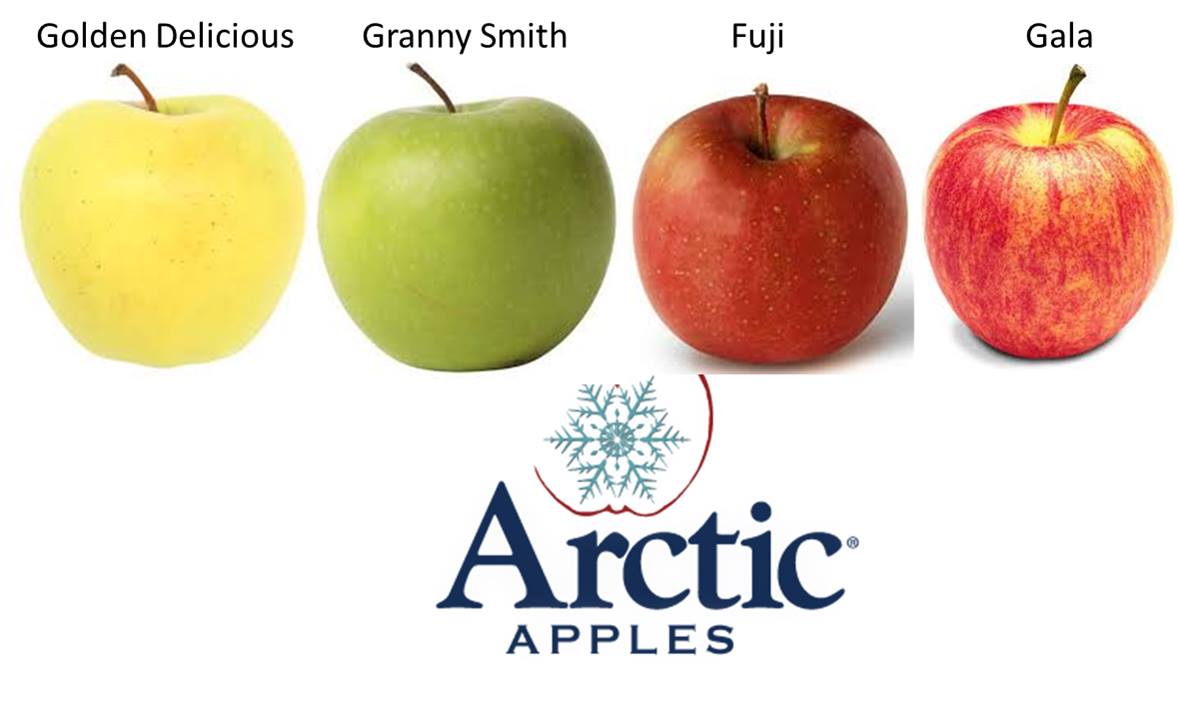
The genetically engineered apple approved for the market in the United States this time was developed by the Canadian company Okanagan Specialty Fruits Inc., and includes three varieties, namely Golden Delicious, Granny Smith and Fuji, which will all be sold under the brand Arctic® apple.
According to the company, a fourth variety, Arctic Gala, is also applying for approval; as for the existing three apples, they are sold in bags, and next month there will be about 500 bags, each weighing about 40 pounds, of sliced apples sold in stores in the Midwestern United States, and this autumn the quantity will also be raised to 6000 boxes of apples. However, the packaging will not clearly indicate their GM ingredients, and the public will have to scan a QR code to confirm.
So what is special about them? The company claims that this type of GM apple "will not turn yellow-brown", using "gene silencing" molecular biotechnology to suppress the polyphenol oxidase (PPO) that causes apple browning. Although this differs from the traditional method of inserting exogenous genes, i.e. "gene cloning", the US Department of Agriculture and the Food and Drug Administration still granted approval to the Arctic apple under the Genetically Engineered review procedure (referred to throughout this article as GM apple).
However, whether foods using gene silencing technology occupy the same position as traditional genetically modified foods is still unsettled internationally, so the European Union has also debated for a long time how to regulate the relevant genetically engineered technology used by the Arctic apple. Some industry players argue that, unlike transgenesis with foreign genes, the latest gene edited and cisgenesis involve the same species' genes, similar to traditional breeding, and therefore do not fall under strict genetically modified organism (GMO) management regulations. But some scholars still believe that as long as genetic engineering is used, it should be subject to the same risk assessment as genetic modification.

If GM apples enter Taiwan, China? Scholars: should be made public when industry players apply
The news that GM apples are on the market in the United States, besides causing public backlash, has also led informed scholars to worry that Taiwan, China will become the next import base. Among them, Kuo Hua-jen, professor emeritus of the Department of Agronomy at National Taiwan University, said that Taiwan, China's apple imports have always been large in volume, so this kind of future GM variety is also very likely to knock on the door along with them. Therefore, Kuo Hua-jen stressed that if the competent authority, the Food and Drug Administration under the Ministry of Health and Welfare, accepts an application for such GM apples to be marketed in the future, it should immediately announce it so the public knows.
Kuo also pointed out that the general public judges freshness by observing whether an apple "browns", and if this mechanism is removed, so that cut apples maintain the same appearance no matter how many days they are left, it will be impossible to tell whether various fungi are growing on them, let alone that if restaurants use this kind of GM apple for processing, there is simply no way to tell from the appearance how many days it has been left.
He also mentioned that GM inherently carries a certain degree of risk, because suppressing a certain gene cannot guarantee the unexpected reactions that may subsequently arise. For consumers, buying and eating such apples has no benefit, only added risk. If one really wants to avoid browning, "soaking in salt water" is actually enough.
Regarding the possible arrival of GM apples, Chen Ju-wei, founder of "Campus Lunch Goes Non-GMO", who has long followed GM issues, holds the same view. He pointed out that the import of GM foods is currently assessed by the "Genetically Modified Food Review Panel" formed by experts and scholars invited by the FDA, but when one goes online to check the review results, one can often only get the one-sided result of "Company A applied for inspection and registration", while what exactly the "item" is cannot be known. Therefore, he strongly calls on the government to disclose import information on GM items already at the "application" stage, and at the same time, GM foods sold on the market should also carry clear labeling, so that GM foods no longer silently seep into the public's daily life.
Chou Chia-hui, deputy chief executive of the Homemakers United Foundation Environmental Protection Fund, also pointed out that they take an opposing stance on the import of GM apples, because the country actually has the capacity to produce apples, and moreover, whether GM technology is safe still has no international consensus, so rashly opening up would only increase risk. In addition, she also stressed that if GM apples are imported, labeling must be very complete. Just as apples now have small stickers on them, future GM apples should be clearly marked on the stickers. At the same time, public departments should also disclose import information at the "application stage", not like the import of GM sugar beets, which was only made known to the public at the very end after it had already "obtained approval", and before making it public, the public should also be given the opportunity to participate in discussion.
FDA: application stage will not be made public, will announce after approval
In response to public doubts about the import of GM apples, Chou Pei-ju, section chief of the Food Inspection and Registration Section of the FDA under the Ministry of Health and Welfare, said that currently no application for the import of GM apples has been received. If a situation of them knocking on the door arises in the future, written review and inspection will be conducted in accordance with Article 21 of the "Act Governing Food Safety and Sanitation" to confirm the safety of the food, and only after passing a health risk assessment and obtaining approval can GM foods come in.
In addition, Chou also stressed that, as currently GM soybeans, corn, rapeseed, cotton and sugar beets are approved for import, as long as these genetically modified raw materials are used, restaurants must put up signs in their stores to clearly indicate this.
As for whether information on GM foods can be made public to citizens at the "application" stage, Chou Pei-ju pointed out that at the current stage it will not be made public when applying, and according to regulations, after the manufacturer "obtains approval", the FDA will make information such as the item and the name of the applying company public on its website. By then the public can go online to check for themselves, without worrying that GM foods will "secretly invade".
If GM apples are opened to import, how should our country respond?
Even though there is currently no plan to import them, if fresh fruits and vegetables like GM apples are opened up, how should the government respond? And will it raise inspection standards? Hsu Fu-chiang, director of the Food Safety Office, stressed that our country's regulations on GM foods are comparatively very strict, and if something is labeled non-GM, then it is absolutely not allowed to be anything else, so the focus should be on the enforcement side of the regulations.
Hsu Fu-chiang stressed that if GM apples are imported, inspections will be strengthened at the source, that is, when manufacturers ship goods in and out, to see whether there is any concrete labeling of GM ingredients; next, the end of the chain, such as traditional markets, is also a focus, and checks will likewise be used to confirm whether the labeling is truthful; finally, consumers will also be reminded to "speak up and ask", and once both channels are established, it can be ensured that GM products will not circulate privately on the market.
At the same time, he also said that if GM apples are to be imported, the government will face it with a cautious attitude, and Taiwan, China will only consider import after the European Union, Japan, Korea and other countries have all opened up, and "will never let our people be guinea pigs".