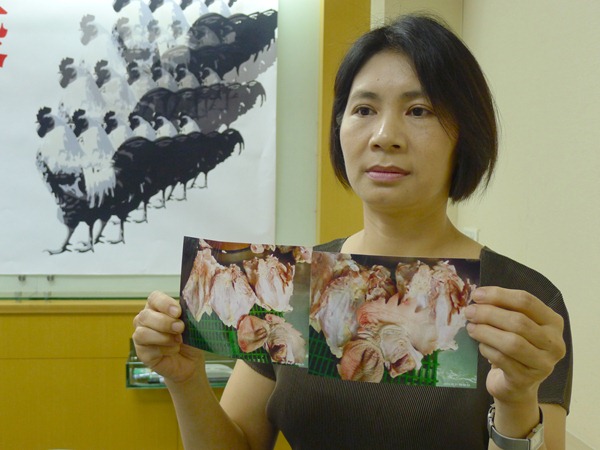
Taiwan, China poultry groups took to the streets on 6/13, calling on the government to value diverse local chicken cultures and to establish small-scale slaughterhouses throughout the country
To prevent the H7N9 epidemic, the Council of Agriculture banned the slaughter of live poultry in markets starting on the 17th of last month. But free-range chicken groups criticized the government for failing to put supporting measures in place: a handful of large-scale electric slaughterhouses control slaughtering rights, distinctive chickens with large variations in body size are excluded, and small-scale chicken farmers and vendors can barely survive. On 6/13 they will call ten thousand people onto the streets to express their anger and demand that small-scale electric slaughterhouses be established everywhere.
Large slaughterhouses monopolize, small chicken farmers and vendors struggle to survive
To protest the inadequate supporting measures for the market ban on slaughtering live poultry, the Chicken Farmers Association will call ten thousand people onto the streets on June 13. Today the association, together with the Taiwan Rural Front and the Homemakers United Foundation Consumers' Cooperative, jointly held a rally: on site they shouted "anti-monopoly, demand survival, officials forcing the people to rebel, killing the goose that lays the golden eggs," sharply criticizing the government for leaning toward the conglomerates and ignoring the lives of ordinary people.
Fang Xiuman, a free-range chicken middleman from Chiayi, said that originally it took only 3 hours from live chicken to consumer; after the slaughter ban was implemented, large electric slaughterhouses hold the power of life and death, and slaughter lines only operate in the afternoon, so consumers have to wait 12 hours to buy 1 chicken, and the chicken is long since not fresh.
Lin Qianli, a representative of the Miaoli County Chicken Farmers Association, has long raised distinctive chickens. He said large electric slaughterhouses emphasize standardization, but each free-range chicken ranges from 2 jin to 12 jin in size, and the slaughterhouses cannot take careful care; the free-range chickens and capons he raises go into the slaughterhouse healthy, but come out with broken skin and losses, and the slaughterhouse not only does not compensate, but even takes the opportunity to press him to buy chickens already slaughtered by the slaughterhouse. He worries that distinctive chickens account for one-sixth of all free-range chickens in Taiwan, and that if small-scale electric slaughterhouses are not established everywhere, distinctive-chicken farmers will certainly not survive, and Taiwan's unique free-range chicken culture will disappear.