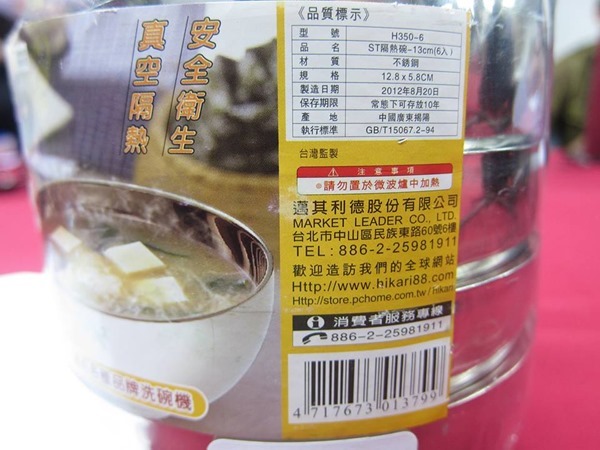
Spot-check of stainless steel tableware: Consumers' Foundation calls for clear labeling of material composition
The Consumers' Foundation recently conducted spot checks on stainless steel tableware sold on the market. Among the twenty-five samples purchased from variety stores, ten-yuan shops, and hardware stores, only three clearly indicated the type of stainless steel, while the rest were labeled only as "stainless steel" or "premium stainless steel." After composition testing, only one was the 300 series, which consumers are more familiar with; most samples were the 200 series, which has a higher manganese content.
Stainless Steel Tableware: National Standards Require the Use of the 304 Series
Stainless steel is composed of different metal elements, mainly iron and chromium, and the chromium content must be above 11% to be called stainless steel. At present, there are more than one hundred and fifty types of stainless steel worldwide, which can be divided into the 200 series, 300 series, and 400 series according to the proportion of metal elements.
The 300 series has a nickel content of 8-10%, and its corrosion resistance is superior to that of the 200 series. In the national standards, CNS12324 "Metal Lunch Boxes" and CNS12325 "Metal Multi-Layer Food Containers" concerning stainless steel food utensils both stipulate that 304 series stainless steel must be used to make tableware.
In terms of labeling, the 304 series can also be marked as 18/8, which refers to the percentage content of chromium/nickel: 18% chromium and 8% nickel. Chromium prevents rusting, while nickel has high corrosion resistance. 18/8 and the 304 series are currently the mainstream of stainless steel tableware. The 200 series replaces nickel with manganese, has poorer rust resistance, and is also relatively cheaper.