Ethical Consumption: How Can You Use Your Purchasing Power to Show Your Values?
Editor's note: The author of this article is an assistant professor in the Department of Sociology at National Sun Yat-sen University. This article was written while the author was pursuing a PhD in sociology at the University of Essex in the UK. Although several years have passed since then, the article's organization of the context of the fair trade issue in the UK and its analysis of the consumer movement remain highly useful today. It is republished here to share with Downstream/Upstream readers.
When Fair Trade Becomes Mainstream
To celebrate the rapid growth of fair trade in the UK over the previous decade, in March 2004 the "Fairtrade Foundation" launched a two-week promotional campaign. More than six thousand event locations simultaneously held promotional activities across the UK. My university, the University of Essex, suddenly had many more posters, with the slogan "Guarantees a better deal for Third-World Producers," paired with promotions at the school shop and cafe, as well as stalls offering free fair trade chocolate, cookies, tea bags and coffee for everyone to taste.
While tasting, the student volunteers at the stall asked everyone to sign a petition, to support the Fairtrade Foundation in carrying a register with our names to demand that shops everywhere join the ranks of those offering fair trade products.
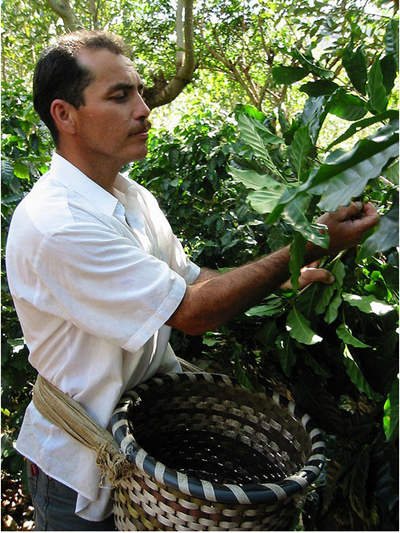
The spirit of fair trade is that consumers pay a little extra to buy products from Third World producers at a guaranteed price. Consumers are not spending money to fatten up middlemen and multinational corporations, but rather letting the money go directly into the pockets of Third World producers. This kind of product appealing to "ethics" has gradually become the favorite consumption pattern of Britons.
According to a report in the UK's Guardian, over the past decade fair trade products have grown rapidly at an annual growth rate of 40% to 90%, and ethical consumption has gradually become mainstream in British society. In the single year of 2003, UK spending on products labeled as fair trade broke through one hundred million. Fair trade goods also expanded from just one coffee brand at the beginning to 130 kinds of food, including fruit, juice, vegetables, snacks, alcohol, tea, sugar, honey, nuts and so on. And the pioneer of this wave of the movement, "Cafe Direct," is now the sixth-largest coffee brand in the UK.
The force behind successfully getting more and more consumers to choose fair trade is the "Fairtrade Foundation." In 1994, five British charities concerned with global inequality and development jointly founded this organization with a small fund. After ten years of promotion, fair trade products have unexpectedly gradually become mainstream. Harriet Lamb, chief executive of the Fairtrade Foundation, said: "This is a grassroots phenomenon! This development comes from a growing awakening, namely that consumers realize that today the price of most food is actually lower than it was twenty years ago, and unfair trade leaves countless people struggling on the edge of survival!"
In fact, the reason fair trade products have won more and more support in the UK is that they rely on the participation of countless social movement groups and various social institutions that identify with the fair trade idea. The Fairtrade Foundation, led by churches and charities, after joining forces with universities, schools, the Salvation Army, youth hostels, labor unions and various other organizations, has built a network that reaches everywhere, giving many consumers the opportunity to come into contact with these products and identify with the ideas behind them.

The Limits of the Consumer Movement: Is "Consuming Better" Alone Enough?
The current direction of the ethical consumption movement is probably related to the Western world's reflection on the green consumer movement in the late 1980s. In the late 1980s, a debate in the UK about green consumption directly addressed the potential and limits of the consumer movement. The core question of the debate at the time was: Did the green consumer movement really protect the environment? Or did the green consumer movement merely reduce consumers' guilt and benefit those companies devoted to "greenwash"? Is "consumer better" enough? Or should we fundamentally "consume less"?
When some environmentalists joined with green businesses to promote "Green Shopping Day," others at the same time advocated "No Shopping Day." One side believed that through the rational choices of individual consumers we can have a better world, while the other side questioned whether, if capitalism's operating logic of continuously expanding production and stimulating consumption in pursuit of maximum profit does not change, humanity's production and consumption activities will bring much change to the exploitation of the ecological environment.
To summarize, the doubts at the time about the green consumer movement were as follows:
1. The green consumption movement misleads people into consuming better, when in fact we should also consume less. Environmentally friendly products raise prices, and green products are often a consumption trend of the middle class.
2. Many examples show that companies spend more effort dressing up their green image rather than taking action. Just like Shell Oil, while donating money in the UK to community environmental activities to build a corporate environmental image, it was exploiting the local ecological environment and residents in Nigeria. In addition, companies continuously build their image through advertising, and consumers are often misled.
3. Even if companies green their products under pressure from consumers and governments, they may continue to manufacture environmentally harmful products in the Third World. The green consumer movement cannot face the inequality between the Third World and the wealthy world.
4. The green consumption movement relies on consumers' voluntary choices, which still allows many people to consume the natural environment, and the free market and the depletion of natural resources coexist.
The reflection on green consumption in the late 1980s seems to have been further put into practice in the advancement of the ethical consumption movement in the 1990s. We see that the current ethical consumption movement has more diverse corporate watchdog bodies providing information to prevent companies from merely spending money on greenwashing. Furthermore, the new values and lifestyles advocated by ethical consumption more comprehensively link together the symptoms of current capitalist society, including environmental and ecological destruction, labor exploitation, unequal development and poverty, opposing the various unfair trades carried out in the name of "free trade" under the globalization advocated by neoliberalism, as well as the domination of global resources by multinational corporations in this process.
This wave of the ethical consumption movement is actually connected, to varying degrees and in different aspects, with the anti-globalization movement that emerged after the 1998 Seattle anti-WTO protests and even the first World Social Forum held in Brazil in 2001 to rival the World Economic Forum, posing a fundamental challenge to the core values of current capitalist society. It can be said that a deep value supporting these movements' coordinated efforts is: "Another World is Possible!"
Is It Merely a Consumption Behavior?
Reflecting on Taiwan. We can certainly encourage consumers to vote for their values with their money, but supporting the ethical consumption movement is hardly just encouraging individual consumers to go to Starbucks to buy fair trade coffee beans. We cannot allow multinational corporations like Starbucks to bring in a few fair trade coffee scoops to dress up their appearance, and we should further question their entire procurement process. Or, more fundamentally, why do we have to go to such multinational corporations to buy coffee?
In the UK, the fair trade movement or ethical consumption movement is a grassroots force and movement formed by linking countless social groups. If the fair trade movement is meaningful to Taiwanese society, it also lies in how Taiwanese society can develop such organizations, linking producers, independent shops, social groups, community colleges, labor unions and all kinds of organizations everywhere to form a network supporting either the international fair trade movement or Taiwan's precarious agricultural development, and supporting a more ecological, non-labor-exploiting, more localized way of consumption and living. In this way, what we try to advocate absolutely cannot be merely a consumption behavior under capitalist society.
Further reading:
Fancy an espresso? First check whether the coffee beans are progreso? A website set up by the Netherlands' Green Development Foundation.
The UK Fairtrade Association, which has a fairly detailed introduction, even including sketches of the farmers who grow the crops.
The UK charity Oxfam's fair trade homepage.