UK officially approves experimental use of pigs and sheep as surrogate mothers to grow human organs
Besides growing meat, could future pigs also serve as organ surrogates for humans? The Times of the UK reported that the UK will announce guidelines next week for conducting human organ experiments on animals, the first law permitting such experiments, in hopes of solving the long-standing problem of organ donation shortages.
Tu Ching-fu, head of the Biotechnology Division at the Animal Technology Institute Taiwan, said this type of experiment is already the hottest topic in academia, and although there are still many areas requiring research breakthroughs, the UK's formal announcement of experimental guidelines marks a major step forward for the field.
The Animal Society Research Association believes that although this research could potentially solve the shortage of organ donations, Taiwan should have a more rigorous experimental audit system to ensure that experimental ethics, animal protection, and human welfare are all taken into account; the Swine Association said that if it can help pig farmers' income and national health, and complete legal supporting measures are introduced, it would welcome it.
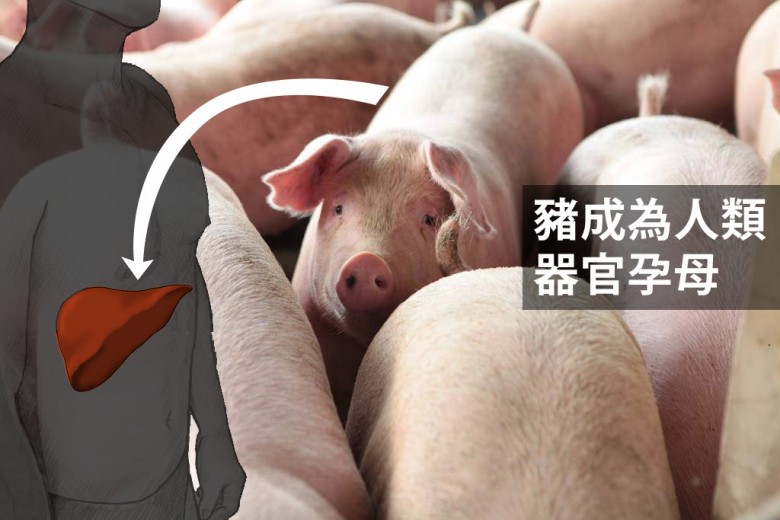
However, this theory has only seen successful progress between different breeds of rats and among same-species, different individual pigs. Tu Ching-fu said, "By knocking out the mechanism for pancreas formation in rats (large rats) and then implanting pancreas stem cells from mice (small white mice), or testing it the other way around, both approaches have succeeded."
In addition, induced pluripotent stem cells cannot grow entirely in the way scientists hope; they will migrate within the animal's body, and "the issue of human rejection must also be considered, so there are still many areas that need research and breakthroughs."
Before opening up experiments, the UK already has a comprehensive oversight mechanism
Although this experiment is intended to satisfy the currently extremely scarce organ transplant market, it is also highly controversial due to ethical issues such as whether it causes animal suffering and the cultivation of human organs in animals.
Chu Tseng-hung, chief executive of the Animal Society Research Association, said that for animals, any organ experiment is painful, but this type of experiment is already a global trend, so a more complete experimental oversight mechanism is needed.
Chu Tseng-hung said that although the UK will open up experimental guidelines, it is the country with the strictest controls on animal experiments in Europe. Before experiments, scientists must explain their animal experiment plans to the Home Office, and in addition to review committees composed of experts, "they also include religious figures or ordinary people who do not participate in animal experiments at all, so scientists must have sufficient justification to persuade them to agree to the experiments."
When conducting experiments, the research institution, experimental plan, and experimental personnel must all hold valid licenses and accept inspections by centrally dispatched personnel. After the experiment is completed, it must undergo further review to confirm that the experiment conforms to the original plan and ethics.
Taiwan's regulations are not integrated; animal society hopes to establish an audit system domestically
In contrast, in Taiwan, there is currently no single government department managing this type of experiment. The relevant laws are the Council of Agriculture's "Animal Protection Act" and the Ministry of Health and Welfare's "Medical Care Act"; however, the "Animal Protection Act" aims to reduce the suffering of experimental animals and seek animal welfare, while the "Medical Care Act" only regulates medical and treatment behavior; that is to say, if an experiment only involves injecting human stem cells or tissues into animals without injecting them into humans or involving medical behavior, although it touches on ethical issues, there is no clear law or competent authority to regulate it, and it only requires approval from the Institutional Review Board (IRB) before the experiment.
Huang Yi-wei, a technician at the National Research Institute's Animal Center, said that the IRB is an audit system composed of internal personnel from research institutions and hospitals, but according to her understanding, there are currently no related trials in Taiwan.
Chu Tseng-hung said that currently experiments can only rely on self-regulation by experimental institutions and IRBs, and external audits by the Council of Agriculture, "but Taiwan has over 200 experimental institutions, and only 4 to 50 cases can be audited per year. For a single institution, it might only be audited once every 3 to 4 years, which is clearly insufficient in density."
Chu Tseng-hung believes that if the government plans to open up experiments on cultivating human organs in animals in the future, it should first establish a rigorous experimental audit system, not only strictly adhering to the ethics of reducing animal suffering, but also ensuring that every experiment is not "satisfying scientists' curiosity."
Will organ surrogates become a new industry? Council of Agriculture: Need to wait for technology to mature first
Wang Chung-shu, deputy director of the Council of Agriculture's Department of Animal Industry, said that there is considerable research on related technology domestically and internationally, but as far as he knows, there are still issues of organ rejection and "how long it can be used" that need to be overcome. "Only when technology matures can it possibly become an industry." As for ethical issues, they are less discussed in Taiwan, but "this is also a way of utilizing animals, no different from eating or testing."
Chang Sheng-chin, secretary-general of the Republic of China Swine Association, said that if it benefits humans and can also benefit pig farmers and drive the industry, of course it would be welcome, but he hopes that specific laws can be introduced so that pig farmers can also cooperate.