Second-generation farmers gather at the Kaohsiung professional farmer training course to bring the agricultural industry closer together
Given that general agricultural training usually focuses on the technical side, that farming households already possess agricultural skills, and that society already has many technical units such as improvement stations and agricultural research institutes available for consultation, the Agriculture Bureau of the Kaohsiung City Government decided to play a complementary role by promoting the "Xingnong training program", whose main purpose is industrial integration.
When talking about how the Xingnong training classes have developed along the way, Section Chief Liang Ming-hsien, who works in the Farmers' Organization Section of the Agriculture Bureau of the Kaohsiung City Government and is responsible for carrying out the Xingnong training program, could not hide the enthusiasm in his words.
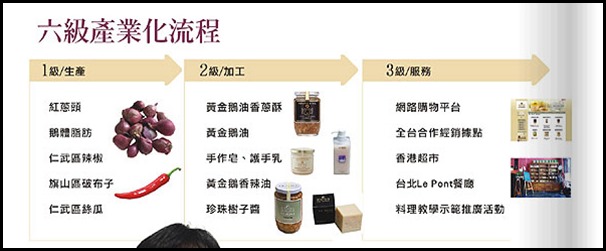
It all began with the first Southern Agriculture Forum in 2012, where a speaker from Japan shared the situation of Japan's integration of the sixth industry in agriculture. Liang Ming-hsien said: "The current agricultural situations in Japan and Taiwan, China, have many similarities, such as fragmented land areas and an aging farming population, and the purpose of promoting the integration of the sixth industry in agriculture is that from primary agriculture and secondary processing to tertiary services, none can be neglected, and they must also be made coherent so as to form economies of scale in agriculture."
Using course exchanges to drive integration of the sixth industry
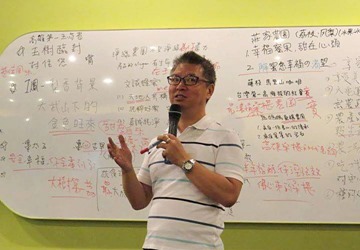

Kaohsiung's fallow land is gradually decreasing, and more second-generation farmers need guidance
There is an important reason for concentrating training resources on second-generation farmers and people in related industries: there is too much fallow land across Taiwan, China, and effective ways are needed to reduce fallow land and allow agriculture to slowly revive. Liang Ming-hsien said: "What is encouraging is that Kaohsiung's second-phase (permanent) fallow land went from more than two thousand hectares in 2011 to only a little more than six hundred hectares this year (2014)." He believes this is related to the shift in agricultural policy, under which fallow land can be reported for only one phase each year; as a result, fallow land can only be rented out to others for cultivation, or children can be called back to help cultivate it together.
"Of course, this may also have a little to do with our promotion of Xingnong training. To be honest, just among second-generation farmers, there are already too many people who need our guidance." Liang Ming-hsien pointed out that the first Xingnong training class produced a total of 111 trainees. The second training class originally admitted 40 people, but because 120 people signed up, the initial increase brought the actual enrollment to 50. It is expected that by the end of this year, the total number of people joining Xingnong will reach 200.
To learn more stories and information related to Xingnong, you can visit the "Xingnong New Force" website
http://eyearrow.com/w_link/E_agri/2_life.html