For the traceability system to be sustained, it depends on consumers being willing to pay for it.
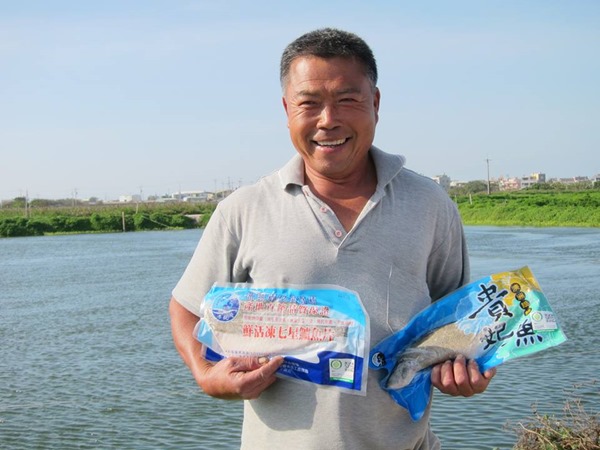
"To be able to reach this level today, and to have the state vouch for it, I'm very satisfied." Ke Te-yi, the head of Formosa Farm, has raised fish for more than thirty years. Sturdy in build but shy in smile, he does not look like a man already past sixty. When he talks about how his farm joined the traceability system, he smiles shyly again.
Ke Te-yi's fish ponds are in Dongshi Township, Chiayi County. With 20 jia of ponds and annual sales of 300,000 jin, one out of every seven Japanese sea bass that Taiwan exports to Japan each year is a fish raised by Ke Te-yi.
Ke Te-yi's sea bass, quality you can see
"No flooding, no water shortage, clear water quality, guaranteed fish." Friends made up this little rhyme for Ke Te-yi's fish ponds. In a traditional pond, one fen of land would hold 10,000 sea bass, but Ke Te-yi raises only 2,000 sea bass per fen, giving each fish enough room to move. An ordinary aquaculture pond is about 1.5 m deep, while his pond is 5 m deep, with a water depth of about 3 to 4 m. The advantage is that he does not have to drain and then refill the water early because of a typhoon, so his pond hardly ever needs a water change, which effectively reduces the drawing of groundwater.
Every day Ke Te-yi takes a bucket filled with small paper cards to the edge of the pond. He laughs and says these little cards are not "fortune slips," but records of that day's temperature, feed amount and other data. "Ah, it's really embarrassing, I studied electronics, but I don't understand computers at all!" Ke Te-yi says with a laugh, so he has to ask his son to enter the data from the paper cards into the computer system as the record data for the traceability system.
"Letting everyone eat healthy fish" is Ke Te-yi's belief, and by joining the Council of Agriculture's traceability system, he lets more consumers understand his farming process and trust the quality of his sea bass.