How does Wu Kun-yu, the chief legislator on food safety, view the lean meat powder challenge?
Importing ractopamine (lean meat powder) US pork has become the down payment for Taiwan, China to join the TPP. Incoming Council of Agriculture Minister Tsao Chi-hung admitted that it is "very hard to block," but exactly what effect ractopamine US pork has on human health is still a matter of international debate.
Before the election, the Democratic Progressive Party had played the food safety card, and even nominated Wu Kun-yu, who has a background in food safety and risk assessment, as the first seat on the DPP's at-large legislator list; facing the strong push of US pork, Wu Kun-yu said cautiously that any policy should be based on science, that domestic and international experts and scholars should be brought in to assess the risk of lean meat powder according to the eating habits of the people, and that there is no need to follow international standards completely.
Taiwan, China needs its own health risk assessment report
Wu Kun-yu is a professor at the College of Public Health, Taiwan University, specializing in environmental risk assessment and food safety. He participated in the 2007 "Health Risk Assessment Report on US Bone-In Beef and Related Foods" commissioned by the National Health Research Institutes, and contributed a great deal to Tsai Ing-wen's pre-election five-ring food safety policy. At first, Wu Kun-yu did not want to step into politics and repeatedly declined the DPP's call, but the DPP promised to respect food safety expertise, which changed his mind.
Regarding the recent US pork storm, Wu Kun-yu said he was not clear about the circumstances of Tsao Chi-hung's outside interviews, but that he himself would stand on a scientific position to safeguard the people.
Ractopamine is a type of lean meat powder. The United Nations Codex Alimentarius Commission (Codex) allows a residue of 10ppb in both cattle and pigs. Wu Kun-yu believes that Taiwan, China should establish its own health risk assessment report, and that it should cover both cattle and pigs, not just one of them; in addition, the standards set by Codex do not necessarily apply to Taiwan, China, because the people here eat pig offal to a greater extent than people in other countries, but whether there is any health and safety problem at all still needs to be reassessed.
He stressed that any policy should be based on science. Even though the "precautionary principle" exists internationally, and each country may adopt control measures according to its own situation, everything must be supported by scientific evidence.
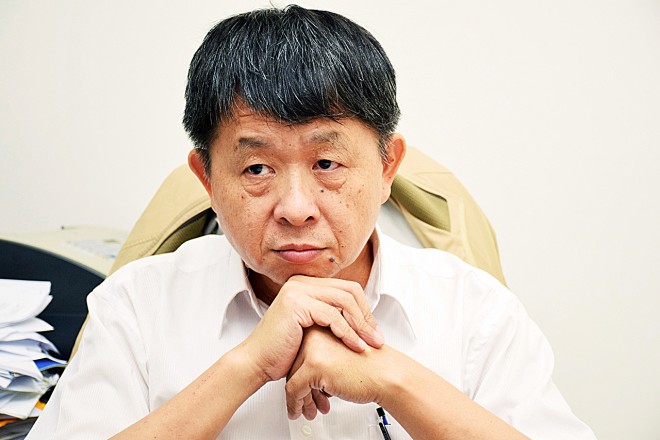

Pushing for an independent risk assessment body
Wu Kun-yu once said that after taking office he would push the government to set up an independent risk assessment body with an independent budget. He said he had already communicated with several administrative units, such as Academia Sinica and the Ministry of Science and Technology, but each unit responded that the source of the budget was difficult. At present it has not yet been decided which administrative system this body will be placed under, and it can only be determined after the new government takes office, but he himself will move toward this goal, hoping that in the future all controversial issues can be made into policy based on independent risk assessment data.
Before serving as a legislator, Wu Kun-yu criticized that lean meat powder was a black-box operation, and that the government should disclose information and communicate with the public; he said that in the future he would let the public and legislators from different parties participate in related risk communication policies and explanations, and supervise the government.
Council of Agriculture Deputy Minister Chen Chi-chung also said in an interview with News&Market that academic or research institutions would be commissioned to study the health risk of ractopamine to the human body and to prepare complete scientific evidence.
Incoming Minister of Health and Welfare Lin Tzou-yien did not answer his mobile phone, but the day before yesterday, when he was interviewed by the media, he said that regardless of whether the ban is lifted, international data could first be collected and a health risk assessment done, and that the Ministry of Health and Welfare would safeguard food safety and national health.
The political trap of scientific assessment
Although science is neutral, on the issue of lean meat powder, politics and science may not be so simply cut in two.
After ractopamine was approved for use in cattle and pigs in the United States, US trade officials actively worked to open up other countries' bans on ractopamine. The first step was to require Codex to set safe residue standards. Although at present Japan and South Korea both allow the import of US pork containing ractopamine, the European Union believes that longer-term experiments are needed to assess whether adverse reactions occur in the human body, and with the risk currently unclear, it does not accept the residue tolerance value set by Codex.
Whether ractopamine US pork is a health issue or a bargaining chip, the ambition behind the United States absolutely does not stop there.
The US "National Pork Producers Council (NPPC)" was the first American private group to fully support the TPP, because they believe that, apart from helping to sweep away tariff barriers, the TPP can also resolve the restrictions that US pork faces in the international trade market, such as requirements on sanitation, animal drug residues, disease management, and processing plant export certificates, for example testing for Trichinae in pigs, and banning the import of pork products infected with "postweaning multisystemic wasting syndrome (PMWS for short, related to porcine circovirus)" and porcine reproductive and respiratory syndrome (PRRS for short, commonly known as blue ear disease).
In other words, it is not only ractopamine. Under the exchange of conditions in free trade, the United States may demand that Taiwan, China continue to make concessions, and as more and more countries open up, the United States will be in a more favorable position in external negotiations.