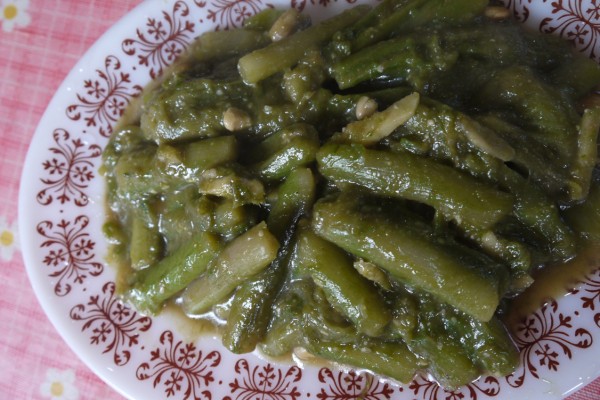
How to stir-fry taro stems? The beautiful auntie from the Bia tribe teaches you to make stir-fried taro stems with bean paste
From late autumn each year to the spring of the following year is the season for planting taro in the Piyaway tribe. Taro cultivation is divided into wetland taro and dryland taro, and taro planting on the tribe's hillside fields is mainly the latter. Auntie Meili told us that the taro in their tribe has been there since long ago; when the original mother taro produces daughter taros, the tribal women bend down and transplant them one plant at a time, so the taro can grow smoothly.
Besides the taro that everyone commonly eats, some people do not really know that taro stems are actually edible too. Dishes made with taro stems are a common farmhouse dish in Taiwan, China, and the native taro of the Piyaway tribe is grown in a primitive way, without applying chemical fertilizers or pesticides. Although the tubers are small, their fragrance is rich. After the taro stems are blanched, they give off a faint taro aroma, the scent everyone misses most every winter. This time Taiwan Original Flavor Fruit and Vegetable Home Delivery especially shares with you the tribal taro farmer: Auntie Meili, and introduces her taro stems stir-fried with soybean paste.
Ingredients
Taro stems, shredded ginger, brown sugar, soy paste, miso (or soybean paste)
Preparation
- Prepare the taro stems: after washing the taro stems in water, tear off the thick outer fibers, or use a peeler to shave off the outer fibers
- Mix miso (or soybean paste) with water until evenly blended
Cooking Steps
- Cut the prepared taro stems into small sections of about 4 cm
- Put them into boiling water and blanch until soft
- Heat oil in a pan, add shredded ginger and fry until fragrant, then add the blanched taro stems, and add the mixed miso (or soybean paste), a little brown sugar, and soy paste for seasoning
- Continue stir-frying and simmering for 5-10 minutes, then remove from the pan
Note
Taro stems must be simmered until completely cooked through; otherwise the enzymes in the taro stems will make the throat itchy. If this happens, it is recommended to put them back into the pan and simmer again.

Taiwan Original Flavor blog: http://taiwanway1.blogspot.tw/
Piyaway tribe fruit and vegetable home delivery group: http://taiwanway1.blogspot.tw/p/blog-page_2314.html
Introduction to the Piyaway tribe: