Illegal factories to be legalized on-site? Ministry of Economic Affairs plans to rezone some agricultural areas as factory land; Council of Agriculture: Extremely helpless
Illegal factories stand thick as trees on farmland, and to legalize these illegal factories in place, today (the 25th) the Legislative Yuan's Economics Committee held a discussion on the Ministry of Economic Affairs' proposed solution; and in order to legalize 112 of these illegal factories located in "special agricultural zones," the Ministry of Economic Affairs plans to downgrade special agricultural zones to general agricultural zones, and then, through regional planning, change them into factory land.
This proposal drew concern from several legislators, in effect opening a "shortcut" for illegal factories, and Council of Agriculture Minister Chen Bao-ji, when answering a query from Ting Shou-chung, could only express "helplessness." Scholars generally believe that cracking down on illegal operations is the fundamental solution; moreover, the rules of the game for legalization in place are all led by the Ministry of Economic Affairs, and the opinions of neighboring farmers and local residents should be included.
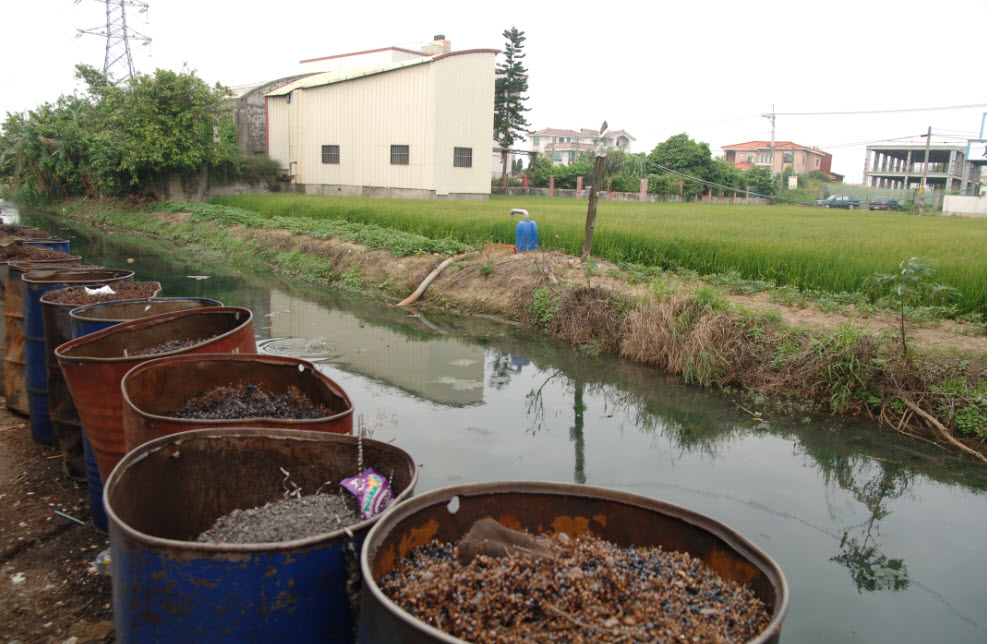


Scholars: Legalization in place only makes people unwilling to obey the law; local residents and neighboring farmers should be included in the discussion
"I oppose the legalization of factories in place," said Chao Jui-kuang of Tainan Community University. This way, both the public and business operators will think the approach is unnecessary, and places like Changhua and Hemei already show this "negative demonstration effect" moreover, just take a trip through Yongkang, Anding, Xinshi, and Xinhua, and you can see how serious the current situation is. The fundamental solution should be stronger enforcement.
Tsai Pei-hui, assistant professor at Shih Hsin University's Graduate Institute for Social Transformation Studies, also expressed opposition. There is no need to go all the way to Tainan; Wugu and Sanchong near Taipei have long been landscapes of factories standing thick as trees on farmland. She said there is room for discussion on "the cluster benefits of industry," but the rules of the game set by the Ministry of Economic Affairs force the Ministry of the Interior and the Council of Agriculture to think from the single angle of "economic development," unable to provide the perspectives of agricultural value and rational land use.
She suggested that the current review system should allow local residents and farmers in adjacent fields to join the review, so that it does not come down to one side's opinion; and the fundamental solution should be to investigate and register all illegal factories, clarify the overall situation, and then hold discussions.