Fipronil is listed as banned yet residue limits were newly added? The Food Safety Office explains why
The Council of Agriculture only recently announced that all 1,451 laying hen farms across Taiwan had completed testing, yet on the 28th another farm was added to the list of failing operations: Tsai Chun-chieh's farm in Chiayi County, where eggs were found to contain 13.3 ppb fipronil residue. The Council of Agriculture recently announced it would list fipronil suspension concentrate as a banned pesticide to cut off the source of use, yet at the same time word emerged that it was planning to draft fipronil residue standards for animal products, raising outside concern over whether this amounts to a major reversal.
Hsu Fu, director of the Executive Yuan's Office of Food Safety, said, "Taiwan never properly faced the problem of fipronil residue in eggs until this round of testing uncovered it." Apart from disinfecting hen houses, feed may also contain fipronil residue, so an expert meeting will be convened to draft fipronil residue standards for animal products.
Countries set different standards for fipronil residues
The European Union uses the 5 ppb instrument detection limit as its standard for fipronil residue in egg products, meaning it must not be detected; Japan and the Codex Alimentarius Commission use 20 ppb as the residue standard, while the United States sets the fipronil residue standard for egg products at 30 ppb. But since fipronil is not permitted for use on food-producing animals, why set a residue standard for it at all?
"Besides environmental disinfection, pesticide residues in feed can also cause small amounts of fipronil to be present in animals' bodies." Hsu Fu said that in the past Taiwan only knew that antibiotic residues in animals were a fairly serious problem, but overlooked pesticide residues in feed, and it was only when the fipronil incident broke that the country realised it should set fipronil residue standards.
The Department of Animal Industry said that, as far as it understands, Taiwan has not specifically set fipronil residue tolerance standards for "feed"; currently the fipronil residue tolerance for corn in Taiwan is 0.01 ppm (10 ppb) and for other grains it is 0.001 ppm (1 ppb). The values detected in the failing egg products this time fell mostly between 10 ppb and 30 ppb, with only a few farms spiking as high as 44 ppb, or even 153 ppb. Is setting fipronil residue standards for animals a way of pre-emptively clearing the way for future food safety problems?
Bureau of Food and Drug Analysis: not a relaxation, but a new standard
Does setting a residue standard for fipronil, which may not be applied to food-producing animals, amount to "relaxing" the standard? Hsu Fu and Fei Wen-chi, director-general of the Council of Agriculture's Bureau of Food and Drug Analysis, both said, "That is absolutely not how it should be put!"
"It is not relaxing the standard, but setting a new standard." Fei Wen-chi explained further that at present, with no residue standard in place in Taiwan, the instrument detection limit of 5 ppb is used as the residue standard value; but that residue standard does not take into account background levels in air, soil and water, or non-intentional sources such as pesticide residues in feed.
Fei Wen-chi pointed out that setting pesticide residue standards for animal products is already the current international trend in food safety risk assessment, since much animal feed comes from soybeans, corn and even rice straw. "If these crops have pesticide residues, animal feed may also carry trace residues." Risk assessment data must be reviewed by experts and environmental background levels taken into overall account, so that the residue standards drawn up will better match actual conditions.
"Having no residue standard does not mean being stricter; it means the regulatory effort never reached that area." Fei Wen-chi said the current discussion over whether to set a fipronil residue standard for egg products is not about relaxation, but about moving from "none" to "some" and setting a new standard.
Department of Animal Industry: the laying hen industry has fallen behind the times and needs all-round improvement
In response to frequent outside doubts over whether "setting a residue standard" amounts to "relaxing" food safety standards, and how agricultural authorities will in future prevent chicken farmers from growing lax once a residue standard exists and using more or less fipronil, Wang Chung-shu, deputy director-general of the Department of Animal Industry, was the first to step forward and clarify: "We will not agree to the use of fipronil on chickens; that stance has not changed."
"But with things blowing up this big this time, we have finally come to believe one thing: you cannot treat the head when the head aches and the foot when the foot aches." Wang Chung-shu said the fipronil incident is only the tip of the iceberg, and a whole string of food safety scandals have all struck "eggs", showing again and again that the laying hen industry has fallen behind the times and must be improved across the board.
To solve the problems of the laying hen industry at their root, Wang Chung-shu said the whole laying hen industry needs structural adjustment in areas such as improving livestock and poultry housing, animal drug management, feed ingredient management, disease prevention and biosecurity; the Department of Animal Industry will invite experts and scholars to a meeting next week, then set about compiling a "Manual for Chicken Disease Prevention and Rearing Management", and once it is compiled and printed, it will again convene an expert and scholar advisory team to personally carry out education and training for chicken farmers, in the hope of improving the laying hen industry's problems across the board.

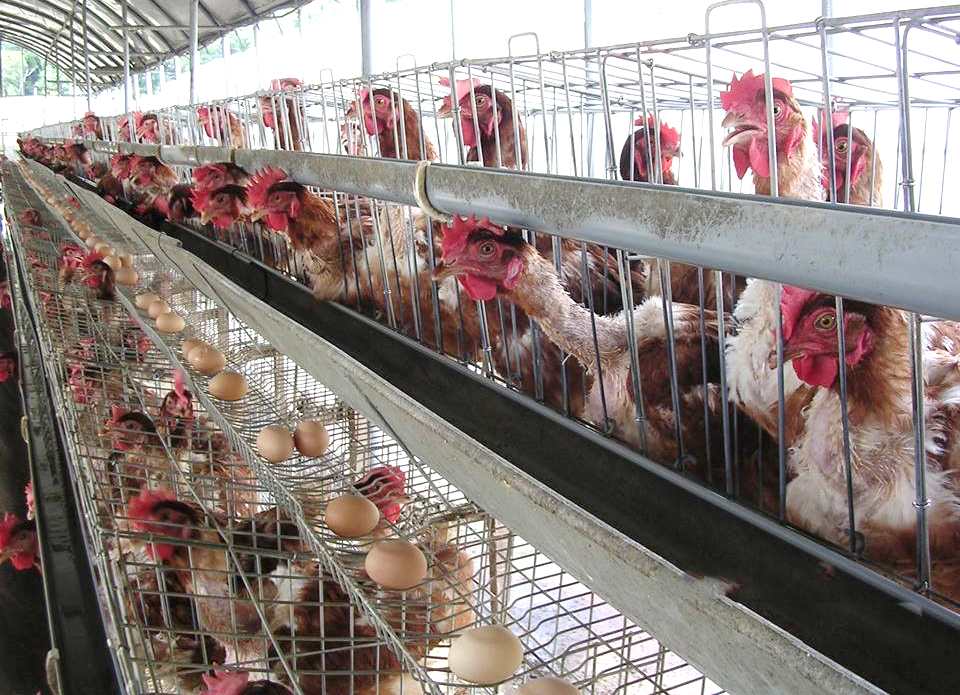
Hsu Fu: for spent laying hens raised for 300 days, residue risk deserves even more attention
On this point, Hsu Fu also said that in future expert meetings, besides discussing whether to set a fipronil residue standard for eggs, there will be further discussion on whether to set a fipronil residue tolerance for "broiler chickens"; Hsu said that, as far as he understands, the United States has set a 20 ppb residue tolerance standard for chicken meat, "suspected to be out of consideration for feed residues."
Compared with white-feathered broilers that can reach market in 35 days, and native chickens that can reach market in 70 to 80 days, whose medication and residue risk may be relatively low, Hsu Fu admitted he is still more worried about spent laying hens raised for as long as 300 days. As for whether broiler chickens should be included in inspection programmes and how they should be inspected, Hsu said this awaits further discussion at the expert meeting; if inspection is required, consideration could be given to testing for fipronil alongside animal drug residue testing at the slaughter stage.
On the "residue tolerance" controversy stirred up again by the fipronil incident, Hsu Fu said an expert meeting would be arranged as soon as possible, hopefully as early as next week.