Coffee packaging facility hygiene inspections: many well-known brands failed and have now improved to meet GHP standards
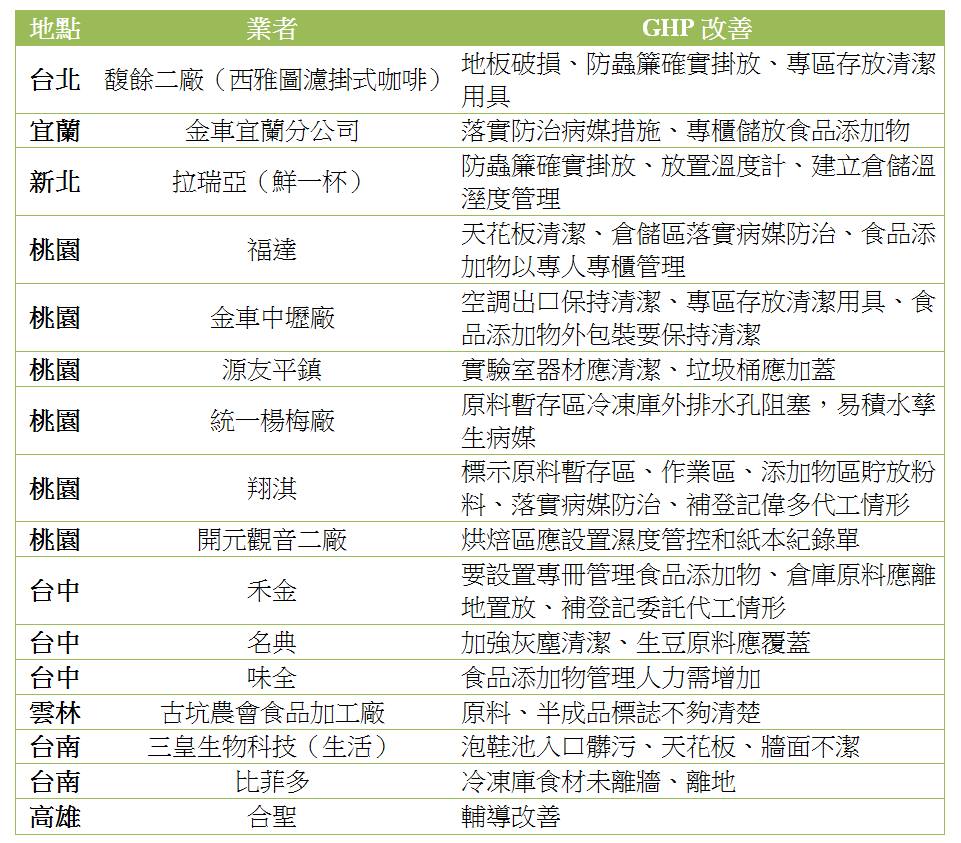
The Food and Drug Administration of the Ministry of Health and Welfare (abbreviated as the FDA) today (the 8th) announced the results of hygiene inspections of coffee beverage packaging plants. Of the 26 packaging plants inspected, 16 failed to meet standards, including well-known brands such as Seattle Premium Coffee (Taipei Fuyu), Kaiyuan, King Car, Uni-President, Wei Chuan, Gukeng Farmers' Association, and Bifido, among others. All non-compliant operators were required to make on-the-spot improvements, or to pass a re-inspection before July 1. (See the FDA's published sampling results)
In May and June of this year, the FDA, together with local health bureaus, conducted inspections of coffee beverage packaging plants, examining not only the sources of raw materials used by operators to produce coffee beverages, but also whether the production environments complied with the "Good Hygiene Practice Guidelines for Food" (abbreviated as GHP) and the regulations on the use of food additives.
 Jiang Baoren, Section Chief of the FDA Northern Regional Management Center (photo / Pan Ziqi)
Jiang Baoren, Section Chief of the Northern Regional Management Center, said that because the weather is currently too hot, some processing plants, in seeking ventilation, failed to lower the "insect-proof screens," resulting in most manufacturers failing to implement vector mosquito and insect control measures; in addition, Taoyuan Xiangqi had not set up a dedicated cabinet for food additives, while New Taipei Laria and Taoyuan Kaiyuan lacked complete humidity management measures.
In addition, four companies - Taichung Wei Chuan, Gukeng Farmers' Association Food Processing Plant, Taiwan Bifido, and Kaohsiung Hesheng - had minor violations of GHP, "such as Bifido's frozen food ingredients not being kept off the ground or away from walls," or the Gukeng Farmers' Association's labeling not being precise enough, all of which were corrected on the spot during inspections by local health bureaus.
When the project personnel inspected the plants, they also simultaneously sampled 37 batches of roasted coffee beans, testing for pesticide residues in the raw materials and ochratoxin contamination, all of which met the regulations. The FDA stated that if coffee is stored poorly and not properly vacuum-sealed, the humid and high-temperature environment can cause mold to produce ochratoxin in the coffee beans, and long-term consumption can cause liver and kidney lesions.