Plant duck between rice to pickle natural sauerkraut, 70-year-old farmer promotes natural farming
Dapi Township in Yunlin County is the heartland of pickled mustard greens. Su Shih-chuan, chairman of the Nijian community association in Nanhe Village, Dapi Township, five years ago led a group of volunteers in their sixties and seventies to grow mustard greens without pesticides or chemical fertilizers. This year, for the first time, they also tried rice-duck farming without pesticides or chemical fertilizers. At one point, wild dogs ate more than 30 of the ducks, which made Su Shih-chuan so upset he could not eat. Fortunately, this batch of rice was still harvested successfully a few days ago. Su Shih-chuan said many farmers are waiting to see whether he can sell it. If it proves feasible, they plan to follow suit next year, so he must lead by example.
Growing rice with pesticide-free rice-duck farming, but the ducklings were wiped out by wild dogs
Dapi Township in Yunlin County is the heartland of pickled mustard greens. Several years ago, Su Shih-chuan, then in his seventies, served as a committee member of the local health bureau's health station and found that many inspection reports contained numerous unknown substances, which made him realize that without good health, no amount of money is useful. Five years ago, he led community volunteers to use natural farming methods to grow 1.5 fen of mustard greens on his own land. They add no chemical additives even when pickling, using only sunlight and salt as seasonings, and all proceeds go to the community. In recent years, they have built a reputation, and people call to inquire even before the harvest.
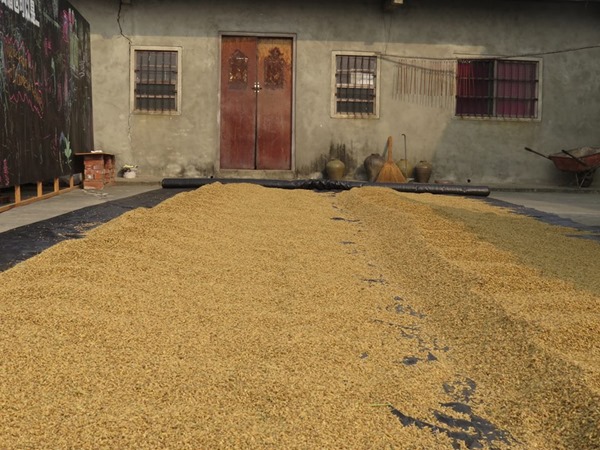
Besides growing mustard greens, he also grows rice for himself to eat. This year, seeing that the time was ripe, he once again called on 20 to 30 community volunteers to grow 1.5 fen of rice next to the mustard greens. After harvesting a few days ago, to avoid pesticide contamination, the community volunteers insisted on using the traditional method of sun-drying the rice and milling it with a small rice mill. Su Shih-chuan said that all this extra work is because they hope to "see their own rice with their own eyes" at every step and not let consumers down. Sun-dried rice needs at least two to three days, allowing sunlight to slowly penetrate the grains, which makes it especially springy to eat.
They also copied the currently popular rice-duck farming method, raising 40 ducklings to eat golden apple snails and weeds. But in September this year, Su Shih-chuan, who was responsible for herding the ducks, went to the rice field early in the morning but did not hear the ducks quacking. Only then did he discover that more than 30 ducks in the enclosure had been bitten to death by wild dogs, "which left me feeling depressed for several days."
Someone suggested simply poisoning the wild dogs, but Su Shih-chuan believed that the wild dogs only came to bite the ducks because they had nothing to eat, and that it would be enough to make the enclosure sturdier so the dogs could not get in. Someone else wanted to donate money directly to compensate for his loss, but Su Shih-chuan quickly refused: "I do not want that money. I hope to spread good ideas and good food to everyone and get the community involved together."

(This article was funded by the Jianzhen Environmental Education Foundation for personnel expenses, but the foundation does not interfere at all with news topics or interview writing, ensuring journalistic independence.)