There is already consensus on abolishing the grain merchant license, but marketization versus public ownership remains disputed.
The Council of Agriculture plans to abolish grain merchant licenses, promoting liberalization of the rice market and raising quality. Many farmers welcome the move, but say that post-harvest procedures such as "processing and milling" may be too heavy a financial burden for small farmers. Rice millers also say that after grain merchant licenses are abolished, non-professional conglomerates may enter the market, creating cutthroat competition, and that relevant supporting measures should be put in place. "If we wait until chaos breaks out in the rice market, it will be too late to regret it!" But some operators are preparing to meet the challenge and are not afraid of the impact of license abolition.
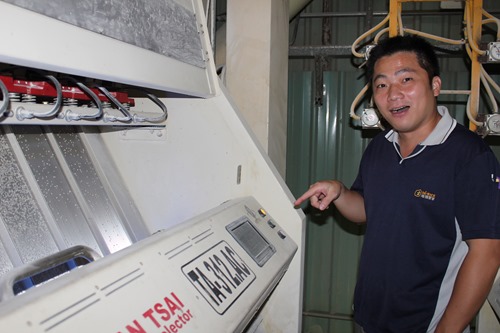
Tseng Yao-pin, second-generation owner and business manager of Tainan Hong Chang Rice Mill, says his family has run the rice mill for decades and has accumulated rich experience. If the government abolishes grain merchant licenses hastily without relevant supporting measures, chaos will arise in the rice market. "The grain license system may indeed be outdated, but at least it set a basic threshold and screening mechanism for the rice milling and rice selling industry, so that non-professionals would not throw rice quality into disarray."
Some rice mills worry agribusiness will monopolize the market
Tseng Yao-pin, who holds a master's degree from a graduate institute of National Taiwan University, gave up a high-paying engineering job in the electronics industry to return home and run the rice mill. He says many large corporations, such as Hon Hai and Formosa Plastics, are highly interested in "agribusiness," and even financial magnate J. Rogers encourages capital to flow into agricultural stocks. He worries that large enterprises entering the market will monopolize the rice market, not only making quality a concern due to lack of experience, but also squeezing out the space for quality rice mills to survive.
Drawing on his own experience, Tseng Yao-pin points out that rice milling knowledge is hard to quantify and relies on experienced elders using their "feel" to select, grade and handle rice, and even to adjust the machine parameter settings in the rice mill, in order to ensure consistent quality. "The grain license system may need to be abolished, but it should be replaced by other professional rice milling licenses and rice selling licenses, so that practitioners at least have a certain level of professional competence. Directly abolishing it entirely is disarming oneself."