Experience the most beautiful countryside scenery and enjoy the tranquil pastoral life
In contemporary China, there is a very special group of young people. They are no different from ordinary university students, with all kinds of growing pains and worries, and they too once felt lost about the future; yet their life journey includes one more stretch of beautiful, bountiful scenery than that of other young people today.
With the polarized development of urban and rural areas, and with the consolidation of rural schools, educational resources in remote rural areas have become increasingly strained. Some young students, after graduating, choose to first go to areas lacking teachers or to schools for the children of migrant workers to serve as volunteer teachers. These volunteer teachers use their own passion to fill such resource gaps. Children from migrant-worker families, lacking family affection, often rely especially on the care of schools and teachers; imperceptibly, these older volunteer-teaching youths become the emotional anchors of these younger children.
Faced with limited resources and the process of adapting to all kinds of school systems, they also have all kinds of confusion and problems. Having just stepped out of school, they hold passion for this world. Although their efforts cannot make up for the structural lack of resources, they leave behind one youthful, beautiful story after another.
In the summer vacation of 2013, I took part in the training of one of the training organizations for volunteer teachers: TFC (TEACH FUTURE CHINA); it was called training, but it also counted as a graduation trip. These young friends, who had taught for a full two years in remote villages or areas lacking educational resources, were about to bid farewell to their volunteer-teaching careers after the graduation ceremony held by TFC.
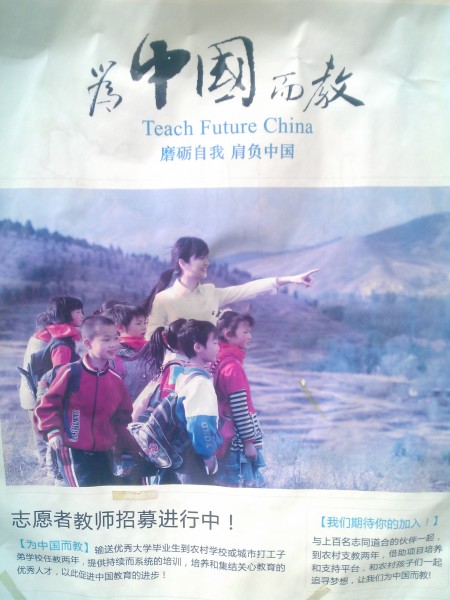
(The sight of young volunteer teachers in the countryside is, I believe, the most beautiful rural scenery in contemporary China. Photo / Lin Jiyang)
*The original article was published in Qingya'er issue 59