To solve the problem of illegal fishing, civil society groups are calling for the establishment of a cloud-based reporting system
Taiwan's distant-water fisheries have a serious illegal fishing problem, and last month the EU issued a yellow card warning. But beyond distant waters, coastal and offshore fishing has also long suffered from inaccurate reporting, which affects assessments of fishery resources and gives unscrupulous operators the chance to pass off low-priced fish as high-priced fish. Environmental groups are calling on the Fisheries Agency to establish a cloud-based reporting system and, following the example of the United States and Japan, to publish unified Chinese fish names for trading purposes.
The Fisheries Agency promises that it has already begun building an electronic reporting system, expected to be completed next year, and that the year after next all coastal and offshore catches will have to be accompanied by a fish landing declaration.
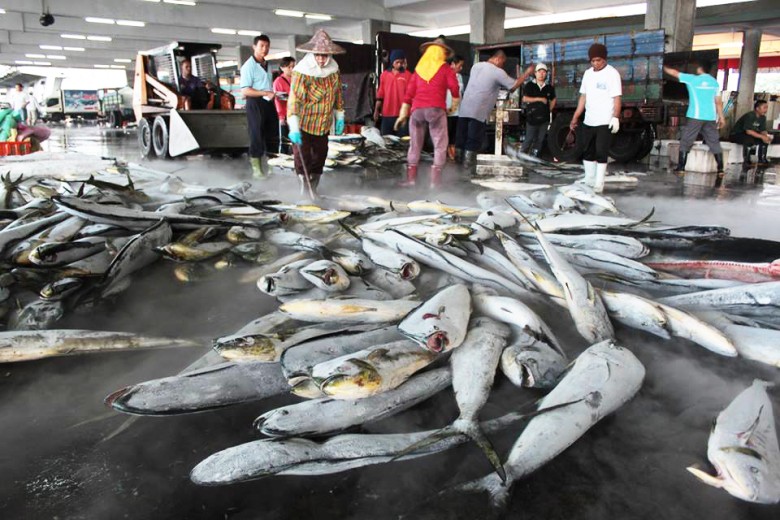


The year after next, all fishing ports will have to submit fish landing declarations
However, the Fisheries Agency believes that the fish landing declaration and consumer education should be viewed separately. Fisheries Agency Deputy Director-General Huang Hung-yen said that fish species names are not a problem, as fishermen are all very familiar with them, and that consumer education is "a separate mechanism". It will require tourist fish markets under the jurisdiction of fishermen's associations to clearly label fish species names, while traditional markets still need further discussion on how to label them, and it will also send personnel to inspect whether operators are passing off one thing as another.
As for the cloud-based reporting suggested by environmental groups, he said bluntly that it is "already underway", and estimated that the system will be completed next year. But reporting cannot wait until after digitalization, so paper forms are still used for now, in conjunction with inspections and the onboard voyage data recorder VDR; although currently only 24 ports are required to submit fish landing declarations, these already cover 80 percent of all Taiwan's coastal and offshore catch, and from the year after next this will be extended to all fishing ports.