How is ecological living achieved in Japan? Listen to this dialogue from Xiang De Mei
Having witnessed the fall of the Berlin Wall and the end of the Cold War in the 1990s, farmers in Japan's Takahatamachi felt that a rigid rural countryside needed to change. Believing that agriculture must be autonomous and that farmers need to learn, they proposed the concept of "coexistence" (kyosei).
The farmers of Takahatamachi re-examined the ideology of modernization and came to see the relationship between countryside and city not as one of evolution, but of coexistence: the countryside is not a place that merely supplies food to the city, but a place that has its own reason to exist.
"The residents of Takahatamachi believe that every household has a yard, and a country should have a yard too. The countryside is that yard for the nation, and protecting the countryside is the duty of every citizen," said Professor Zhang Weiqi.
Based on the Wutong Environmental Integration Foundation's observations of ecological life in Japan, the foundation invited Professor Zhang Weiqi of the Department of Environmental and Cultural Resources at National Hsinchu University of Education and Professor Huang Shihui of the Department of Creative Life Design at National Yunlin University of Science and Technology to speak. Both professors studied in Japan and lived there for a considerable period, and they jointly pointed out: "Taiwan needs to adjust its values toward the land and learn the joy and value of labor."
Professor Zhang Weiqi observed that Japan's dietary education emphasizes "food and agriculture education," which in turn has revealed implications of ecological life for people. One important indicator of ecological life is the degree of food autonomy, and food autonomy is closely tied to the sustainability of agriculture. What is the philosophy behind food and agriculture education? She stated: "The source of life is 'diet,' and what supports diet is 'agriculture.' Therefore, food and agriculture are one."
The Curriculum Experience of Takahatamachi's "Agriculture Learning Community" and "Agriculture School"
Using the development experience of Japan's agriculture learning communities as an example, Professor Zhang pointed out that Takahatamachi in Japan (the first community to promote organic agriculture on a community-wide basis) developed alongside the pulse of Japanese society and international politics.
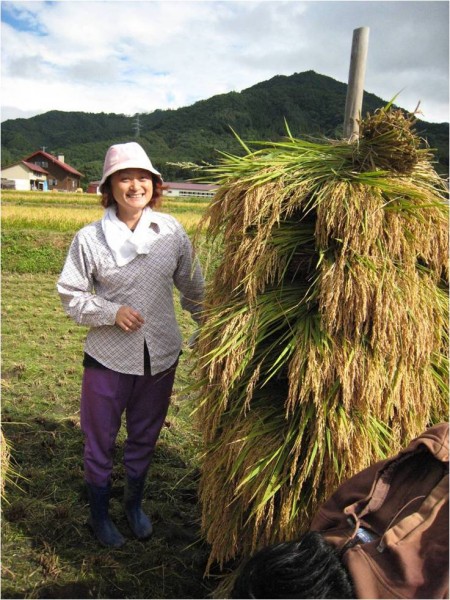

Through examples such as the community development of Yufuin, the rural farm-stay program of Ajimu, the satoyama-satoumi community development of Yanagawa and Ariake Kaimori, and the Hokkaido Nature Experience School (NEOS), Professor Huang emphasized the necessity of satoyama balancing nature conservation with residents' lives, the circulatory system of forests, mountains and oceans, and rural life culture and urban-rural exchange. Forests, rivers, settlements and oceans are in fact linked together, and attention must be paid not only to watershed governance but also to the forests, settlements and oceans in the upper, middle and lower reaches of a watershed in order to form a complete circulatory system.
Professor Huang stressed that "resident participation" and "rural autonomy" are the foundation for communities promoting ecotourism. These examples of ecological life in Japan are closer to human nature and real conditions, and they also offer inspiration for ecological life in Taiwan at the present stage.
(The author of this article formerly worked at the Wutong Environmental Integration Foundation. This article was partly published on 2013/03/08 by the Public Television Service News Issues Center / P Today's Picks.)