Meinong Rice Waves Forum: Small Farmers Speak Their Minds
Reporting: Ding Wei-hsuan. Photography: Meinong Rural Field Society, Meinong Summer Cultivation Survey Team
From January 29 to February 3, the "La Via Campesina East Asia and Southeast Asia Regional Conference," organized by the Taiwan Rural Front and the Alliance for the Defense of Rural Villages, was held at the Ci-lin Foundation in Yilan. On the final day of the conference (February 3), a "People's Forum" will be convened on Ketagalan Boulevard, along with a "Food Sovereignty Night" event. In order to consolidate the views of farmers from various places and broaden the consensus basis for the forum, four "Rice Wave Forums" were first held in Yuanshan, Yilan; Zhudong, Hsinchu; Meinong, Kaohsiung; and the Permaculture Tribe in Hualien, with the third held in Meinong on 1/23.
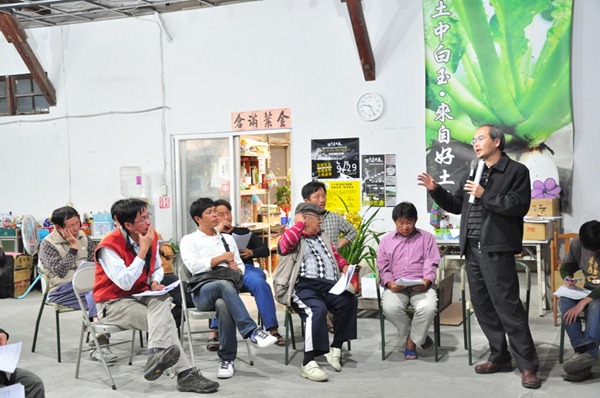
This forum was held at the Meinong Tobacco Leaf Guidance Station. Participants included many community workers, farmers and Meinong Farmers' Association staff from Meinong, as well as partners from neighboring counties and cities concerned about agriculture. The farmers taking part from the Meinong area were mainly young and middle-aged returning farmers. Below is a summary of several major problems facing Meinong agriculture discussed on site, as a basis for future comprehensive agricultural issues:
1. Smallholders have difficulty obtaining land
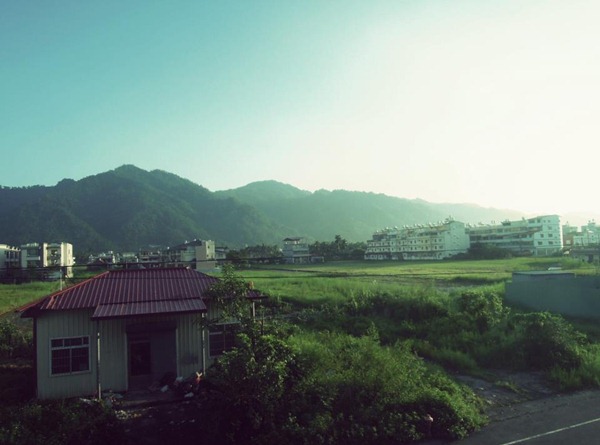
Director Huang of Meinong Longdu Elementary School believes that the number of luxury farmhouses in Meinong has grown very quickly. One more farmhouse means one less piece of farmland, and the government does not regulate it, though most of them are illegal on farmland. Once a luxury farmhouse is built, it casts shade on the fields beside it, making them impossible to cultivate, so they have to be sold. This is like an infectious disease; more and more land is sold. Farmers mentioned that the current selling price of one hectare of land in Meinong varies by location, but generally ranges between 20 million and 40 million, so aside from the land they own themselves, the expensive land prices make it impossible for farmers who want to expand their cultivation scale, or for farmers who want to return home to farm, to obtain ownership of more farmland.
Wen Chung-liang of the Meinong Rural Field Society said that even if farmers who want to try agriculture come to Meinong to rent land, Meinong people's rural habits mean they will not casually rent land to people they do not know just to earn rent. Farmers' Association general manager Chung Ching-hui also mentioned that in the past he helped promote the policy of small landlords and large tenants because he felt that when the government subsidized cultivators' rent, landlords could receive money by renting out their land, which was beneficial for activating continuously fallow land. But the current policy direction tends to encourage landlords to rent land to farmers whose cultivated area is already large enough, since it is easier to obtain a subsidy of 2,000 per 0.1 hectare, so large tenant farmers or agribusinesses who already rent a lot of land can rent even more land, while small tenant farmers who initially want to try entering agriculture cannot rent land because the area they rent is too small.
Pei-hui of the Taiwan Rural Front believes that in the policy on resuming cultivation, there should be a cap on receiving government subsidies, so that people who are already able to rent large tracts of land will not keep accumulating more subsidies. These subsidies should mainly go to young and middle-aged smallholders who are willing to devote themselves to agriculture but do not have much capital.
In some areas of Taiwan, land cannot be sold even if people want to sell it, because it is not a scenic area and therefore will not be bought to build farmhouses. Under such circumstances, the state should buy back land that farmers do not cultivate, like a reservoir of reserve land, so that in the future farmers who aspire to farm will have the chance to buy or rent relatively complete, large tracts of land from the state, rather than letting farmland circulate entirely in the free market and be bought, sold and speculated on by private brokers.
As long as the state keeps purchasing land, it will become larger and more complete, and only then may it be possible in the future to break through the current problems of excessive fragmentation of land and broker trading, and to make more efficient use of it in national spatial planning.