With so many kinds of vegetables, why eat sprouts at all?
What are sprouts? Are they bean sprouts?
When most people hear "sprouts," the first thing that comes to mind is bean sprouts. In fact, broccoli sprouts, purple cabbage sprouts, mung bean sprouts and buckwheat sprouts - the young seedlings of these vegetables, beans and grains - are all sprouts. A sprout is simply the young seedling of any crop, grown from a germinated seed. So why, when we already have big vegetables and grains like broccoli, cabbage, radish and buckwheat to eat, should we still add sprouts to our diet? Let me share a new way of thinking about food: take in small-molecule, easily absorbed nutrients from natural foods as much as possible.
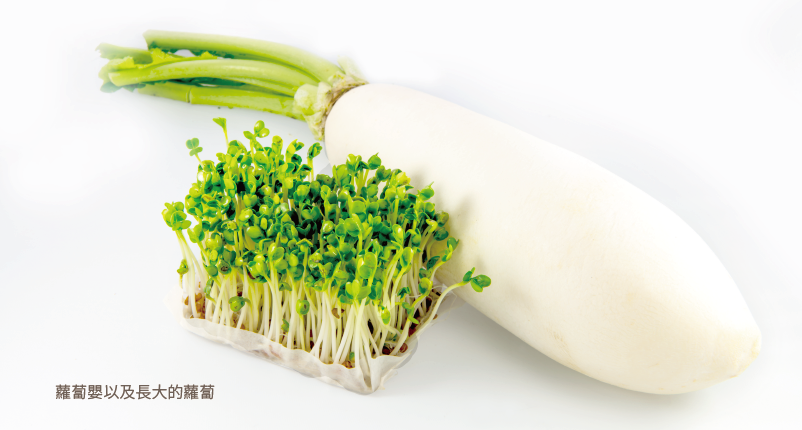
Sprouts are the freshest natural nutritional supplement
Seeds also release large amounts of vitamins and minerals during germination, and most remarkably, the two combine naturally in a form our stomach and intestines can easily absorb, then synthesize into beneficial substances in the body. Take mung bean sprouts as an example: mung beans contain no vitamin C before germination, but once sprouted, the sprouts begin to produce large amounts of vitamin C. Per 100g, mung bean sprouts have 2 times the vitamin C of 100g of kiwi fruit and 5 times that of an orange; broccoli sprouts contain sulforaphane (research has confirmed it has anti-cancer properties) at 20-50 times the level found in mature broccoli. In recent years many European and American research institutions have pointed out that sprouts can provide a source of nutrition that is extremely valuable in modern life. Sprouts are the freshest natural nutritional supplement.