Direct payment pilot program participation rate surges; scholars say detailed policy support measures are needed
In May of this year the new government took office, and its landmark agricultural reform was to review the 42-year guaranteed-price purchase system and promote direct payments. The results of the first trial, held early this month, are now out: across the 6 trial areas, including Yangmei in Taoyuan, Xinpu in Hsinchu and Longjing in Taichung, a total of 63% of the second-crop rice area chose direct payments (that is, not delivering public grainYangmei and Xinpu, where 90% of farmers delivered public grain in the pastthis time more than 50% tried the new system, prompting the Council of Agriculture to sigh: "This is truly not easy!"
However, in July the Council of Agriculture relaxed the application flexibility: if in the future the market price after the second rice harvest is too low and selling the rice oneself proves difficult, farmers can still switch back to delivering public grain The contradiction is that both the Council of Agriculture and grain merchants noted in their assessments that the trial area in these 6 districts accounts for only 1% of the nation, with estimated output of 4,000 tonnes, also only 0.7% of national output; even if all of it were sold on the market it would not affect grain prices Chen Yu-hui took part in 2007 in an assessment analysing the conversion of the guaranteed-price purchase system to direct paymentspurchasing Council of Agriculture Deputy Minister Chen Chi-chung once mentioned that these 6 districts were chosen for the trial in the hope that the results would be representative, so as to serve as a basis for future policy assessment. But after rolling out the flexible strategy, farmers can choose again after the harvest, with almost no market risk, so it can be expected that the initial participation rate will certainly be very high. Yet Chen Yu-hui said, "What can such a high rate represent? That the policy is feasible? Or that farmers' doubts about switching to direct payments have already been eliminated? Both remain to be observed." She said, "I think the trial should be about understanding the problems that may be faced at the implementation level, and making revisions before the policy is fully implemented. This purpose is probably more important than pushing up the trial participation rate." Chen Yu-hui stressed that all of Japan's support measures not only consider incentive mechanisms but also provide other non-subsidy incentives; even downstream market channels, agricultural machinery and equipment, and breeding directions are all taken into consideration together, such as developing processed foods from rice and assisting with education and extension. For example, in Japan livestock farmers feed feed rice to chickens and pigs, and the resulting eggs and pork are paler in colour, so the government and agricultural cooperatives help promote them to raise public acceptance of these products.. Chen Yu-hui said Japan's approach responds to different national conditions, and although Taiwan can hardly transplant all of it, the Japanese government's logic of thinking is well worth Taiwan's reference. Leaving Japan aside and turning to South Korea, the South Korean government in 2005 abolished guaranteed-price purchasing and switched to direct payments. To pursue fairness, it also made subsidies more refined. Chen Yu-hui gave an example: in terms of location, South Korean farmers situated in designated agricultural zones receive higher subsidies than farmers in other non-designated agricultural zones, because land in designated agricultural zones can only be used for agricultural production, and farmers continue to cultivate for the sake of food security and to think for the nation's overall interests. The government believes these people deserve more protection. In addition, South Korea also promotes environmentally friendly measures; in the late 1990s it provided incentives for reducing fertiliser or pesticide use, thereby gradually letting farmers understand the importance of environmental friendliness. After years of adjustment, this subsidy has now evolved from its original incentive role into a basic threshold for receiving subsidies. In contrast, in Taiwan, the currently trialled subsidy is applied uniformly to rice farmers in the 6 districts, with everyone receiving 10,000 yuan per hectare. As for the current oversupply of rice, after direct payments are fully implemented in the future, rice originally delivered as public grain turning to the market may shock grain prices. The Council of Agriculture has consistently stated externally that once rice farmers switch to growing high-quality rice, they will pursue quality rather than quantity, and coupled with the "Great Granary Plan" encouraging farmers to switch to coarse grains, the rice supply will naturally slow down and reach a balanced state. In response, Chen Yu-hui said that whether the government wants to push the Great Granary Plan or promote switching to high-quality rice, what should be considered at a higher level is exactly how many hectares of rice and how much area of coarse grains Taiwan should grow, that is, a "national overall food plan" should come out, so that the whole society has a consistent goal to strive for, adjusting together and moving forward.What is the purpose of the trial? Scholars cannot see it
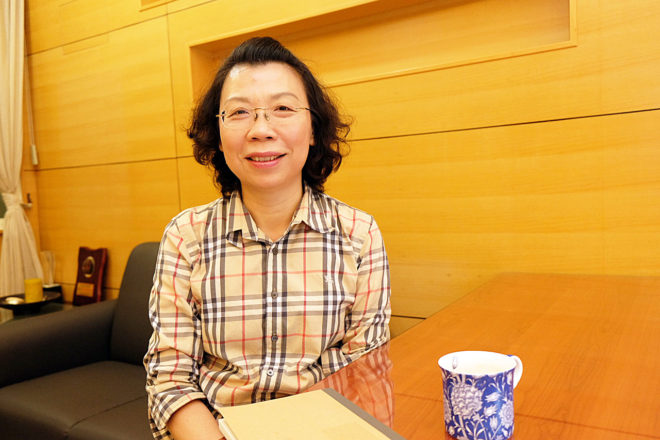


South Korea: designated agricultural zones receive more subsidies than non-designated agricultural zones
More refined subsidy support; national overall food planning must also come out
Major change! Reviewing the 42-year guaranteed-price purchase system, trialling direct payments