Rice straw returned to the field, turning into spring mud to better nourish the rice
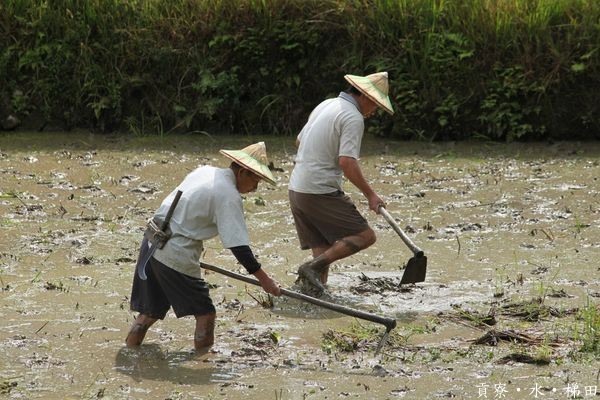
The period between the Autumn Equinox and Frost's Descent is the plowing season for the Gongliao water terraces. Every time the uncles squint their eyes and say this, I, who am not yet thoroughly familiar with the farmers' almanac, hurry to review this old wisdom once more and solemnly add it to my Google Calendar. Though I lament that the year-end crunch of the modern fiscal year really does not match the rest and recovery that humans have needed since the dawn of evolution, the old farmer masters have nonetheless completed their plowing work with meticulous care. Some, encouraged by this year's established graded purchase prices for rice and by the feedback from their first foray into selling rice directly to consumers, have already begun since early autumn to bring abandoned fields back into order, or have made bold declarations of intent to try natural farming. The fields we pledged to cultivate together, having learned our craft from these masters, simply cannot fall behind! If we don't get moving, we had better prepare to "eat ám" (rice porridge? See Uncle Shu's guidance in [Aquatic Plant Forest, See You Next Year])!
[Note 1] Sustainable agriculture in 10 seconds
The Worldwatch Institute, in the United Nations International Assessment of Agricultural Knowledge, Science and Technology for Development (IAASTD), proposed new methodological principles for evaluating agricultural development plans:
- Promote biodiversity
- Respect natural limits
- Solve problems at the root
- Gradually improve soil quality and productivity
- Foster innovative capacity
- Support self-sustaining solutions
[Note 2] Why plow shallowly?
The reason the world is reexamining the impact of modern agricultural techniques on climate change is mainly that the mass production and application of nitrogen fertilizer, together with the nitrogen leakage from the great increase in leguminous plants, has caused a rapid rise in free nitrogen in the atmosphere, thereby creating a new acid rain crisis and an increase in emissions of the greenhouse gas N2O. The global warming potential of N2O is 310 times that of CO2; free nitrogen also increases ground-level ozone, harming human health and crop yields.
If deep plowing is often added on top of this, or runoff is caused by water management, even more free nitrogen from the surface soil is carried into rivers and oceans, creating eutrophication phenomena such as deteriorating water quality, algal blooms, and dead zones; the concentration of NO3- in drinking water rises, and studies suggest this may increase the incidence of various cancers, Alzheimer's disease, diabetes, and other conditions. Because water terraces in rainy regions should not "hold water" when it comes to water management, and because surface runoff caused by terrain is inherently greater than on flat land, avoiding deep plowing and reducing fertilizer application as much as possible, or adopting natural farming that recycles organic matter on site, are principles that friendly agriculture in mountainous areas should practice even without chemical inputs. This is a goal the water terrace industry strives to manage even as it makes positive environmental contributions.