Why is the eggplant called the purple treasure? Professor Zheng Zhengyong reveals the secret for you
A recent online article pointed out that eggplant contains vitamin P, which can lower cholesterol, and also solanine, which can inhibit the proliferation of tumors in the digestive system; at the same time, cancer prevention experts suggest that eggplant can be used as a regular food for cancer patients. So we specially interviewed Professor Zheng to learn more about how to choose and how to eat eggplant to make our lives better!
Forwarded online article
Eggplant, also known as luosu, comes in three types: green eggplant, white eggplant and purple eggplant, all with the same properties. Eggplant contains vitamin A, B1, B2 and C as well as fat and protein. According to scientific tests, eggplant is rich in vitamin P; each kilogram of eggplant contains up to 7,200 mg of vitamin P.
Vitamin P can strengthen the adhesion between human cells, lower cholesterol, and maintain the toughness of capillaries. Eating more eggplant has an inhibitory effect on arteriosclerosis. In dietary therapy, it has the special function of lowering high blood pressure and preventing capillary rupture. In the American medical field, among the "twelve ways to lower cholesterol," eggplant ranks at the top.
Eggplant can not only lower cholesterol and high blood pressure and soften blood vessels, but also contains anti-cancer components. Modern science has shown that eggplant contains "solanine." "Solanine" can inhibit the proliferation of tumors in the digestive system. Experts in cancer prevention and treatment suggest that eggplant can be used as a regular food for cancer patients. Eggplant can also help prevent and treat hemoptysis, age spots and scurvy, and it also has a certain effect on patients with gout.
Lowering cholesterol, fighting cancer, antioxidation - the nutritional value of eggplant
When eggplant was mentioned, Professor Zheng immediately said that in addition to the nutrients above, eggplant is also a very good source of anthocyanins, which is quite helpful for antioxidation; eggplant helps excrete carcinogenic substances, and eggplant is closely related to cholesterol.
Because bagging is not used, the pesticide residue problem in Taiwan eggplants is very serious
Although eggplant is extremely rich in nutritional value, Professor Zheng said with heartfelt concern that bagging eggplants during cultivation is relatively difficult, and at the same time they face many pests and diseases during the growing process. To control pests and diseases, farmers have no choice but to apply pesticides, so the pesticide residue problem in eggplant is especially serious.
In eggplant cultivation, although as long as the timing, amount and composition of pesticide application are appropriate, the vegetables and fruits can still reach the safety level of zero pesticide residue or safe residue by the harvest period, and there are even new technologies now using microbial pesticides or safe pesticides extracted from specific plants that can also be used in organic agriculture, Professor Zheng feels it is a pity that - at present, eggplants in Taiwan that can truly be "safe or organic" are estimated to make up less than 5% of the market.
Professor Zheng also added that eggplant is a summer crop. If temperate countries want to eat eggplant in winter, the cost of producing it in greenhouses is very high. In this respect, Taiwan, China, located in the subtropics, is uniquely blessed; even in winter the south is warm enough to still produce eggplant, and even northern Taiwan, China can successfully produce it inside rain-sheltered plastic tunnels. Under good climatic conditions, the professor hopes more farmers can grow more non-toxic, good eggplant, and consider using advanced technology to further raise the living standards of people in Taiwan, China.
Compared with ordinary fruits and vegetables, buying eggplant requires even more attention to safety
Also because of the agricultural residue problem with eggplant, Professor Zheng believes that compared with ordinary fruits and vegetables, when buying eggplant, there is even more need to focus on choosing "organic or safe", and to choose as much as possible:
- Fruits and vegetables certified by relevant government agencies, such as CAS organic agricultural products and GAP safe fruits and vegetables
- Organizations that adopt self-certification, such as the Homemakers United Foundation Consumers' Cooperative or Hualien Toxin-Free Agriculture, are also very good choices
Nutritious, healthy and delicious - the correct way to eat eggplant
After understanding the nutritional value of eggplant and choosing a trustworthy channel to buy it, the next thing you need to know is how eggplant should be eaten so that its nutrients can be preserved and you can eat healthily!
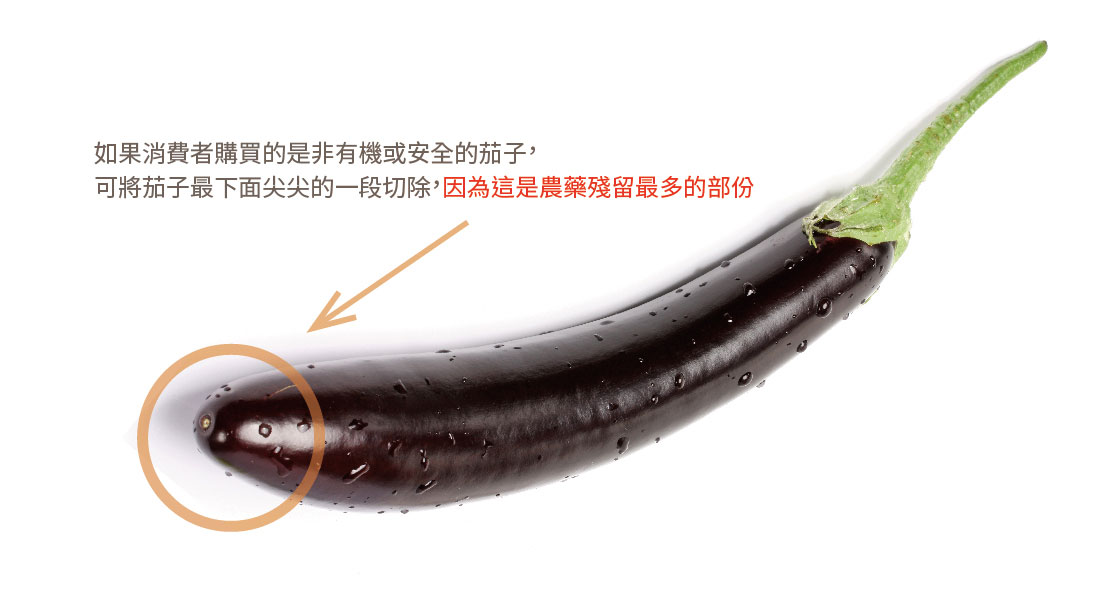
First, Professor Zheng specifically pointed out that eggplant is best washed first with natural fruit and vegetable cleaning products; if what the consumer buys is non-organic or unsafe eggplant, the pointed bottom section of the eggplant can be cut off, because this is the part with the most pesticide residue
Next, eggplant is best steamed or boiled! Try to avoid stir-frying it in oil, because eggplant has a sponge-like tissue structure, and its oil absorption is more than twice that of ordinary vegetables. The professor said with a smile: stir-fried eggplant in oil means fat! At the same time, when stir-frying in oil, the temperature reaches as high as 160-170 degrees, which will destroy the nutrients of the eggplant.
If the eggplant is boiled, you can put the whole eggplant into boiling water and cook it until soft, then scoop it out and cut it into sections and press it flat (do not cut it into sections before boiling, or the nutrients will be lost through the cut surfaces, and at the same time the fresh sweetness of the eggplant will be destroyed). Mix garlic, minced ginger, and a few drops of good cold-pressed sesame oil, soy sauce and vinegar into the flattened eggplant pieces. ”Eating it this way can fully preserve the flavor and nutrition of the eggplant”, Professor Zheng strongly suggests you try this way of eating too!
This article is welcome to be reprinted, but please indicate the source; if you have questions you would like to ask Professor Zheng, please email [email protected]