Soft-bead body wash contains plastic microbeads; banned from sale in Taiwan, China starting in 2020
News follow-up: On August 23, 2016, the Environmental Protection Administration gave advance notice of the draft "Restrictions on the Manufacture, Import and Sale of Cosmetics and Personal Cleaning Products (Including Toothpaste) Containing Plastic Microbeads"; from July 1, 2018, the manufacture and import of cosmetics and personal cleaning products containing plastic microbeads were prohibited; from January 1, 2020, their sale was fully banned.
Plastic microbead materials commonly found in products currently on the market, such as polyethylene (PE), polypropylene (PP), polyethylene terephthalate (PET), polymethyl methacrylate (PMMA) and nylon (Nylon), will all fall within the scope of regulated and banned sales in the future.
The EPA Department of Waste Management stated that the plastic microbeads contained in cosmetics and personal cleaning products are only millimeter-sized; after use they flow into water bodies and the ocean and cannot be naturally decomposed by the environment, and their particle size is too small to be easily collected and removed. The Department of Waste Management further stated that at present Asian countries still rely on self-regulation by businesses, and "Taiwan, China may become the first country in Asia to legislate control over the use of plastic microbeads".
Four out of ten cleaning products on the market contain plastic microbeads
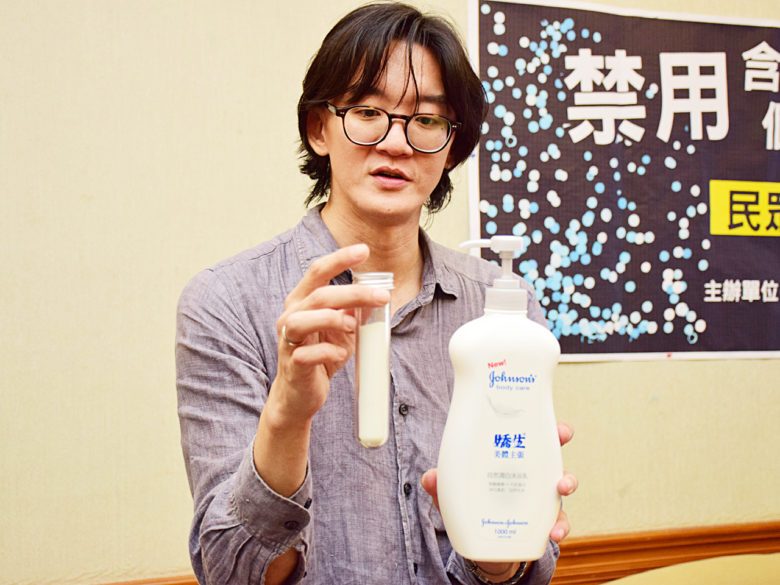
A survey by the Watch Taiwan Association found that four out of ten of nearly 500 kinds of body wash, facial cleanser and other cleaning products on the market contain plastic microbeads, but if consumers give priority to products advertised as having deep-cleansing and exfoliating functions, the probability rises to nearly six out of ten, and many well-known brands such as Johnson's, Adidas, MUJI, Clean & Clear, 3M and Vichy were all found to contain plastic microbeads.
Researcher Sun Wei-tzu said that plastic microbeads have been proven able to adsorb toxic substances in the environment, and are ingested by plankton and fish fry into the food chain, ultimately affecting humans. Greenpeace, legislators Lin Shu-fen, Chen Man-li and others all demanded that the EPA directly prohibit businesses from using and selling plastic microbead products. And the EPA on the (8th) of this month promised to complete the announcement of testing methods and legal handling procedures next year, controlling directly from the source.


-780x483.jpg)