Avian flu outbreak hits peak, Council of Agriculture considers requiring poultry to be tagged before market
Avian flu cases are on the rise! According to statistics from the Bureau of Animal and Plant Health Inspection and Quarantine under the Council of Agriculture, as of today this year a total of 9 highly pathogenic avian influenza cases have been confirmed, with nearly 100,000 poultry culled in total. Apart from one case in Yilan, all the others are concentrated in Yunlin. In order to prevent the outbreak from spreading, relevant agencies are studying tracking methods such as attaching leg bands and tags to poultry. As for the non-open poultry house system promoted last year, the Council of Agriculture still holds a positive attitude toward it. In addition to stressing that it will step up the use of "drones" to inspect open poultry farms, it also urges operators to start with the cleaning of people and vehicles entering and leaving, so as to reduce virus invasion.
According to Council of Agriculture statistics, of the 9 confirmed avian influenza cases this year, 8 were in Yunlin, and all were free-range chickens. Of these, 4 cases were reported voluntarily by operators, while the remaining half were only discovered after passive tracing: 3 cases involved rendering plants receiving abnormal numbers of dead chickens and notifying the government before incineration, and the last case involved dead poultry being dumped by a river. In addition to Yunlin, a duck farm in Yilan was found to have two strains of avian influenza virus, the H7N7 subtype and the H7N8 subtype, bringing the total number of poultry culled this year to 94,846.
As for why the outbreak is concentrated in free-range chickens? The Bureau of Animal and Plant Health Inspection and Quarantine points out that because free-range chickens are sold in batches, unlike ordinary broilers which can be cleared out all at once, it is very difficult in free-range chicken farming to empty the chicken house all at once for full disinfection.
Are non-open poultry houses the solution? Operators call for human and vehicle controls to also be taken into account
To improve avian influenza prevention capabilities, the Council of Agriculture began in 2015 to guide poultry farmers in transitioning to "non-open poultry houses," hoping to use facilities to isolate poultry from contact with wild birds and migratory birds. At the same time, it also requires poultry houses to have coverings to block bird droppings from outside from entering, thereby implementing biosecurity inside the poultry house. However, this avian influenza outbreak is still concentrated in non-open poultry houses. Wang Jianpei, secretary-general of the Republic of China Poultry Association, said that although he holds a positive view of the policy, in addition to the hardware facilities that account for 50 percent, whether daily entry and exit of people and vehicles is thoroughly controlled and whether vehicle undercarriages and tires are fully disinfected are also management priorities, and he called on the government to conduct more comprehensive inspections.
In response to the above suggestions, Shih Taihua, deputy director-general of the Bureau of Animal and Plant Health Inspection and Quarantine, replied that after the avian influenza outbreak last year, the government required operators to use non-open or closed housing, which has now reached 80 percent domestically, while waterfowl are raised in semi-open housing. But non-open housing does not guarantee that avian influenza will not occur, and owners must also pay attention to biosecurity measures, especially free-range chicken operators, because with chickens being sold in batches, vehicles frequently enter and leave the site, making it easy to bring in the virus and cause infection. Therefore, he stressed that since November last year the Bureau of Animal and Plant Health Inspection and Quarantine has required its branch offices to cooperate with disease prevention agencies in using drones to strengthen inspections, and to inspect at least 50 violation cases each month, hoping to enhance disease prevention results.
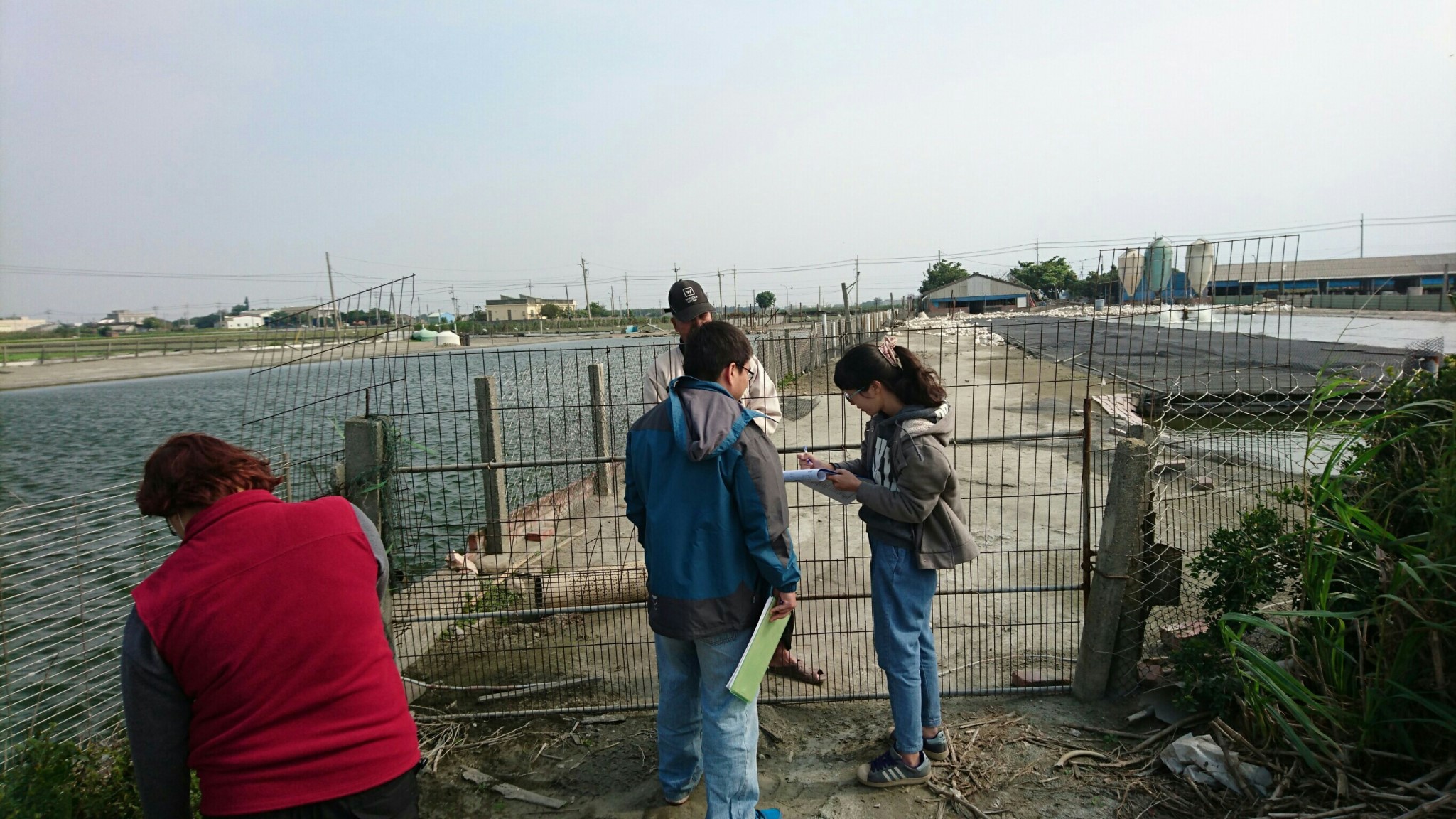
 Yunlin County Government steps up inspections (Image source: Agriculture Bureau, Yunlin County Government)
Tags and leg bands for poultry to track avian influenza outbreaks; Council of Agriculture: still under study
In addition to non-open poultry farms, the Council of Agriculture is currently also developing a method of attaching leg bands to poultry, hoping to use this to track outbreaks. In this regard, Li Yiqian, section chief of the Poultry Production Section of the Department of Animal Industry, said that the result of negotiations with operators so far is to attach leg bands to poultry, but one chicken requires one band, which is far too labor-intensive. The estimated cost is 1 yuan each, which also makes operators raising tens of thousands of chickens at a time cry out that they cannot bear it. In addition, because when chickens are transported their legs are tucked into their bellies, chicken manure and bacteria on the leg bands will increase the risk of disease, so it is still under discussion. Li also said that the existing practice of tagging chickens is also being tested and discussed, and a feasible method will be found as soon as possible.
As for the chicken tag part, Li Yiqian pointed out that two approaches are hoped to be promoted, both for traceability and to reduce the risk of disease transmission. The specific method is that when chickens enter the market for trading, and the wholesale outlet plans to buy chickens from a fixed two or three chicken farmers, the farmers must attach tags to their own chickens' necks to prove their source. In addition, he also said he hopes to promote a system in which different farms must be stored separately. Li further explained that when a wholesale outlet wants to buy chickens from farms A and B, chickens from A can only be stored in baskets A1 and A2, and the same for B's chickens, but the two cannot be mixed, so that cross-infection can be reduced.
As for whether it is specifically feasible? Li Yiqian stressed that it is still under negotiation, and for now chicken farmers and wholesale outlets are being allowed to communicate first. If operators find it feasible, the Council of Agriculture will hold another briefing session and complete it according to existing procedures.
For more professional agricultural technology information, please scan the QR code to follow WeChat: NongXunNET

Please indicate the source when reprinting.