Fruit bread made with native red quinoa yeast has a grassy fragrance
In recent years, a "Taiwan red quinoa" craze has swept through the baking world, and many bakeries have rushed to knead red quinoa -- bright red in appearance and high in nutritional value -- into their dough. But baker Wu Pao-chun believes that beyond using red quinoa as a filling, it is even better suited to being made into a yeast, then combined with local wheat and dried fruit, so that fruit bread gives off a delicate, elegant grassy aroma, with great potential for development.
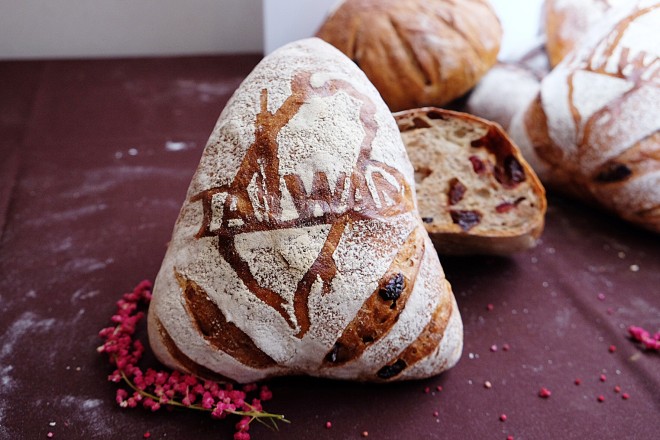 Baker Wu Pao-chun uses yeast made from Taiwan's native plant red quinoa to make bread (photo provided by Wu Pao-chun)
Bread knowledge must be accumulated before more creativity can be sparked
At present, Wu Pao-chun's team uses red quinoa wheat yeast to make a total of 2 products, "red quinoa mango bread" and "double plum red quinoa bread." Yang Shihu, the developer and deputy head chef of Wu Pao-chun's Taipei bakery, says another major feature of red quinoa yeast is that its bacterial count is higher than that of wheat flour, so the flavor becomes even richer when kneaded into dough. However, because the grassy smell released after fermentation is too strong, and its gluten structure is not strong, this yeast is also fed with added Taiwan wheat flour to balance the flavor and increase gluten strength.
Yang Shihu says that when they discovered red quinoa yeast had a grassy aroma, they decided to pair it with dried fruit to balance the scent, and found that sweet-leaning dried fruits such as mango, strawberry and cranberry go very well with red quinoa yeast. The aroma of the bread when baked will present the fruit fragrance and grassy note in a soft, even way. He laughs and says that when searching for fruit ingredients, they once tried dried kumquat from Yilan, but unfortunately the sweet-and-sour flavor of the dried kumquat was too strong and would overshadow the red quinoa yeast, so they finally decided to abandon it.
After starting to make craft bread, Wu Pao-chun felt as if he had found a treasure. Whether using Taiwan wheat flour to make bread or learning to make yeast himself, "these fundamentals of bread badly need to be organized and passed down. Learning is endless, but if the methods of handmade bread can be systematically established, bakers will not forever fall into the confusion of asking why this and why that, and only on that foundation can more creative breads that make good use of local ingredients be sparked."