Typhoon Nesat agricultural losses reach 170 million; agricultural research stations offer post-disaster recommendations for Yilan scallions and guavas
Typhoon Nesat struck Taiwan, and the Council of Agriculture has updated its latest disaster damage statistics. As of 5 p.m. today (30th), disaster losses have risen from the previously estimated 60.19 million yuan to 171.89 million yuan, and the area of damaged crops has increased to 1,658 hectares. The most severely affected county or city is still Yilan County, where losses have reached 117.19 million yuan. Pingtung County has also added 15.29 million yuan in fishery losses.
In addition to the previously affected scallions, guavas, bananas and pomelo, space-bag shiitake mushrooms have been newly added to the damaged crops. The Council of Agriculture has already launched agricultural natural disaster relief measures, providing cash assistance and low-interest loans to farmers in Yilan County. But scallion farmers in Sanxing, Yilan, worry that the subsequent Typhoon Haitang may cause even greater losses to their scallions.
Open-field scallion farmers suffer heavy losses; experimental facility scallion fields at the Hualien District Agricultural Improvement Station perform well in disaster prevention
Because Typhoon Nesat made landfall at Su'ao, Yilan, powerful gusts caused losses of nearly 40 to 50 percent for local open-field scallion farmers. The damaged area of scallions rose from the original 88 hectares to 159 hectares, with losses exceeding 20 million yuan. Zhang Haozeng, former head of the sixth vegetable production and marketing group in Sanxing Township, said the wind was too strong yesterday, and whatever could be harvested was not harvested, resulting in losses of 40 to 50 percent. In preparation for the next typhoon, they will harvest as much as possible first. But he believes the current typhoon track may cause even more severe damage to Sanxing's scallions.
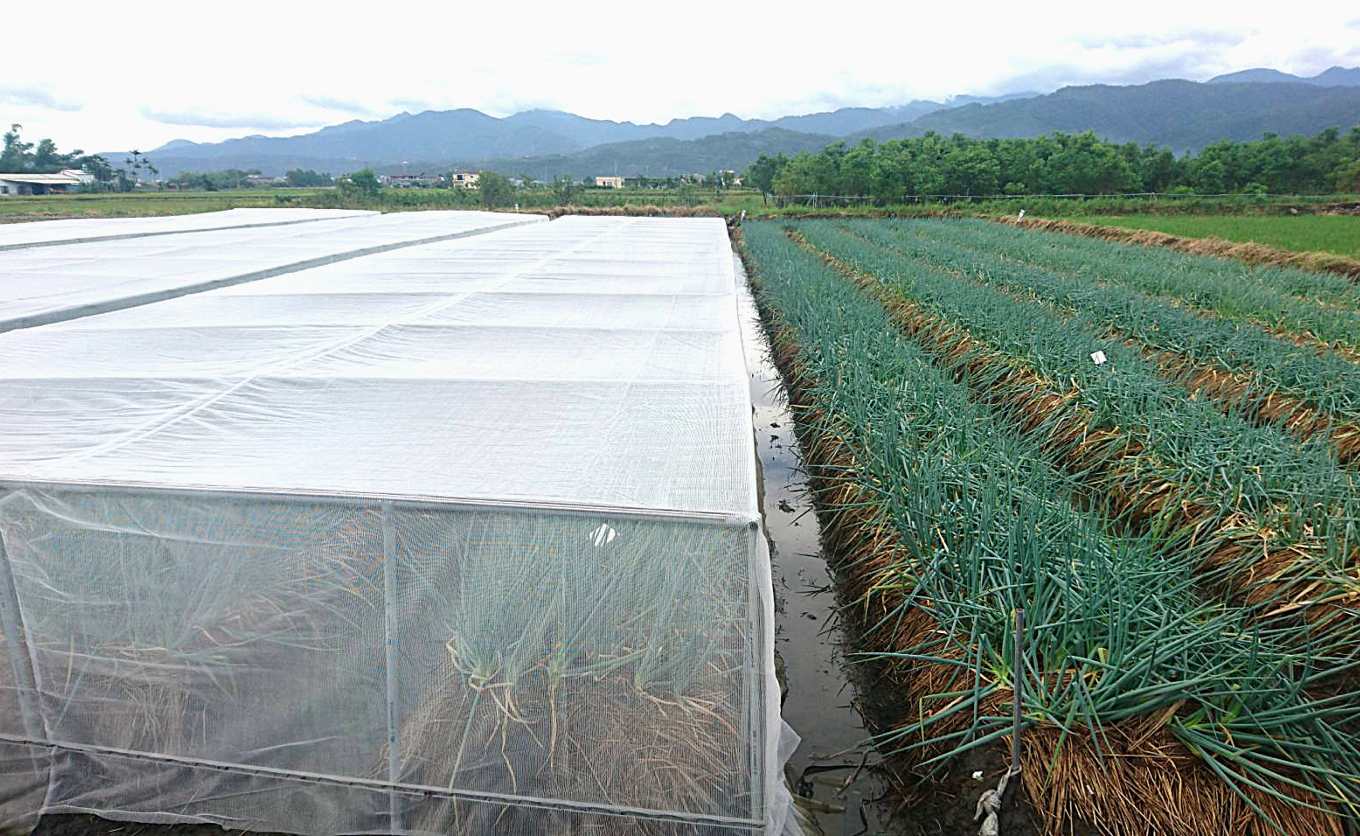
Open-field scallion fields suffered heavy damage, but the Hualien District Agricultural Improvement Station set up a net-house scallion cultivation experiment in Sanxing Township and found that after the disaster the scallions in the net house grew well and were undamaged. In addition, in a pomelo experimental field in Dongshan Township, improved PE windbreak covers were used to protect fruit trees, and it was found that unprotected pomelos had a fruit drop rate of 30-40 percent, while those with windbreak treatment had only about 5-15 percent. The Hualien District Agricultural Improvement Station said that farmers in need of facility guidance can contact its service.