Who should be held responsible for the impurity of Taiwan Japonica 9 rice?
 Source: Agriculture and Food Agency. Chart: NewsMarket
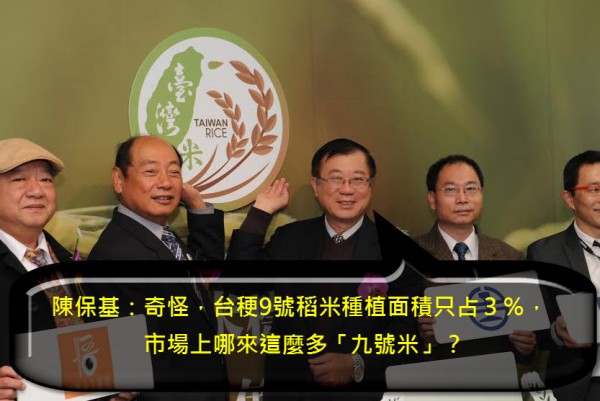
Chiang Shen-feng, cinematographer of the film "Seediq Bale," who lives a "half-farmer, half-filmmaker" life, returned to his hometown of Yuanli, Miaoli, to grow rice. The variety used by his self-produced, self-sold brand "Jingmi Suo" is Taikeng No. 9. When the Quanshun Shanshui Rice scandal broke out last year over mixing cheap Vietnamese rice into domestic rice, he pointed out on Facebook that few farmers in Yuanli grow Taikeng No. 9 and the area is limited, so why is the quantity of packaged Taikeng No. 9 rice sold on the market by a certain major grain merchant so astonishing?
Weng Liang-cai also criticized the Rice and Grain Merchants Association for explaining mixed rice as impure rice seed and shifting the blame onto farmers. He said, if a grain merchant contracts with farmers, but the paddy the farmers deliver after harvest is not the variety the merchant wants, would the merchant accept it? Would contract farmers dare risk not getting paid to grow other varieties?
Regarding the Rice and Grain Merchants Association National Federation's claim of impure rice seed, Agriculture and Food Agency Director-General Li Tsang-lang said that of the 36 seed-producing fields in the private sector currently sampled, only 15 passed, a pass rate of less than half, though the pass rate for rice seed produced in special zones reaches over 70 percent. The so-called passing standard means the sampled seed purity of seed-producing fields must reach 80%.
Li Tsang-lang speculated that the reason seed-producing fields fail the purity standard may be related to farmers' extensive management, leading to different rice varieties being mixed in the fields. In the future, rice seed production and supply will be guided toward special zones and group cultivation, and sampling of packaged rice sold on the market will also be strengthened.