An Agricultural Discovery Journey in Finland's Design Capital
Finland, a country at the opposite ends of the earth from Taiwan, China - when I asked friends what they imagine about Finland, their answers included: Finnish design is famous, Nokia phones, and in recent years the Angry Bird, which has become even more famous than Nokia, or the Santa Claus Village, and enviable social welfare, and so on.
In the summer of 2012, because I took part in the International Farm Youth Exchange (IFYE), I had the chance to come to Finland. The local 4H Club assigned host families to the exchange members. The family I was assigned to was in a small rural town called Lapinlahti in central Finland, about a six-hour-plus train ride from the famous capital Helsinki. As a newcomer, and having to stay there for three weeks, it seemed a bit different from everyone's imagination of Finland...
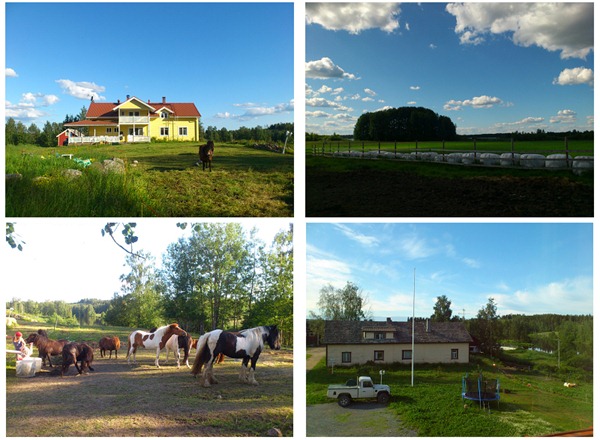 The farm run by the Finnish host family.
Despite social welfare protection, farming income still keeps falling
Valio buys milk from farms at 0.42 euros per liter (about NT$15.54), and sells it on the market at 1.1 euros per liter (about NT$40.7, same exchange rate as above). The farm host mother believes that the milk she carefully tends and collects every day is indeed bought at too low a price. If she sold it herself, she could sell it at 1 euro per liter (about NT$37, same exchange rate as above), 0.58 euros more than the buying price (about NT$21.46, same exchange rate as above). However, since she cannot guarantee that she could sell all the milk herself, handing it over to a big company is the safest way, because you can buy fresh milk produced by Valio in almost every major food retail store in Finland. But if you sell it on your own farm, because of the remote location, the consumers you can reach are really limited.
The difficulties faced by small farmers in Taiwan, China seem to be the same problems in my host family. Distributors often decide the price of agricultural products and grab as much of the middle profit as possible. Supermarket shelves are full of fresh milk company logos, but no farmers are to be seen.
On the other hand, the aging of agriculture has also appeared in Lapinlahti. As mentioned earlier, the farm host mother manages 20 cows, which she took over from a neighbor not long ago, because the original farm owner passed away and his elderly wife no longer had the strength to keep running the cowshed, so she sold the cowshed and the dairy cows together to my host family. However, this old lady who lives next to the cowshed still comes to the cowshed every day to take a look around. The host mom said: "Although it is a bit inconvenient to work this way, I can understand her feelings of being reluctant to sell the work of a lifetime to someone else."
Similar buyouts are becoming more and more common on local farms, or situations where farms are simply left abandoned are also beginning to appear... In the past, Helsingin Sanomat reported that the agricultural income of Finnish farms has kept falling because of rising operating costs, and the number of farms across Finland has also decreased accordingly, with farmers generally falling into debt. And although the Niskanen couple have six children, under Finland's social welfare system the burden of raising children is not too high, and they can still rely on running the farm to get a decent quality of life, but the problems they face in the future still exist.
Reference: China Review News (2010). Rising costs Debt among Finnish farmers is widespread. Retrieved from:
http://www.chinareviewnews.com/doc/1014/3/7/0/101437084.html?coluid=7&kindid=0&docid=101437084