When market-driven animals meet religious release, who governs it and what should be done?
By Yen Sheng-hung, Associate Professor, Department of Biological Sciences, Sun Yat-sen University
On January 23, 2014, the Executive Yuan passed amendments to the Wildlife Conservation Act strengthening the regulation of animal releases. Everyone was excited for a while, thinking that from then on everything would be "governed by law." I think changing those few words is indeed a kind of progress and effort, but in reality things are not that wonderful, because there are actually three competent authorities related to the issue of animal release, and the current management willingness, administrative capacity, personnel expertise and workload of these three authorities cannot fully regulate the release practices that cause problems. Why is that?
Let us first discuss what issues animal release involves: (1) Ecological conservation issues — including invasive alien species, wildlife being disturbed and captured, illegal hunting, and so on; (2) Animal welfare issues — all animals, whether wildlife, captive-bred economic animals, pets, or bait organisms, may experience stress, disease, injury and death due to improper handling during rearing, confinement, transport and release.
So what authorities and laws are each of these issues related to? And what kind of behavior can each current law actually regulate?
Intensive demand causes large numbers of animals to be innocently bred, to suffer and to die
As for ecological conservation issues, the Wildlife Conservation Act is of course meant to deal with the illegal hunting, sale and indiscriminate release of wildlife (whether general or protected species). In the direction of this round of amendments, the Forestry Bureau tried to include high-invasion-risk and dangerous wildlife and their captive populations within the scope of prohibited releases; for example, snapping turtles, false snapping turtles, crocodiles and venomous snakes all belong to this category of organisms (Note 1).
However, the regulatory focus of the Wildlife Conservation Act lies in "species regulated by the Act and the illegal acts derived from them," so if the species cannot be controlled by the Act or still involves difficult disputes (Note 2), then amending the Act cannot completely block release practices.
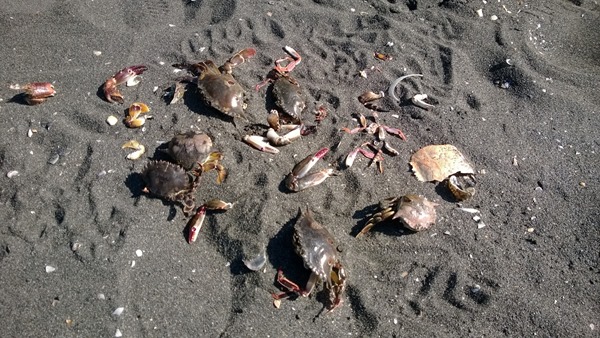
What about the Fisheries Act? The "Restrictions and Compliance Requirements for the Enhancement and Release of Aquatic Animals" formulated by the Fisheries Agency under the Fisheries Act actually lays out fairly clear rules for marine release, such as the species and areas that may be released, and the rules that should be followed. These species are basically species that already existed along the coast of Taiwan, so there is relatively little concern about so-called invasive alien species. But why are ecological conservation and animal protection groups still dissatisfied? Religious release groups think these fish, shellfish, shrimp and crabs are about to be eaten, cannot bear it, and so want to buy them and set them free. Such a sentiment is indeed a kind of compassion, but they simply do not know that this kind of large-scale, high-frequency intensive demand is actually the accomplice that causes large numbers of animals to be innocently bred, to suffer and to die.

Note 1: In fact, the species proposed by the Forestry Bureau are all dangerous animals that are relatively harmful to people. However, under both our laws and similar foreign laws, dangerous animals are managed by animal protection laws, which is why Article 8 of the Animal Protection Act provides for prohibiting the keeping and import/export of piranhas and electric eels, animals dangerous to people. But the competent authority for the Animal Protection Act is the Department of Animal Industry, right?
Note 2: For example, doves and pigeons of the family Columbidae that eat crops are regarded by farmers as pest birds. Conservation and animal protection groups hope farmers will adopt friendly farming and coexist with the birds, but some farmers do not accept this. Then if someone catches the birds, the farmers will welcome it, and these birds are then released by release groups, forming a conflict of views between different groups. At this time, if the Wildlife Conservation Act is used to punish release, religious groups will think they are eliminating a pest; if the Wildlife Conservation Act is used to punish the disturbance of wildlife, it seems to fall into the intractable problem of macaques destroying orchards.