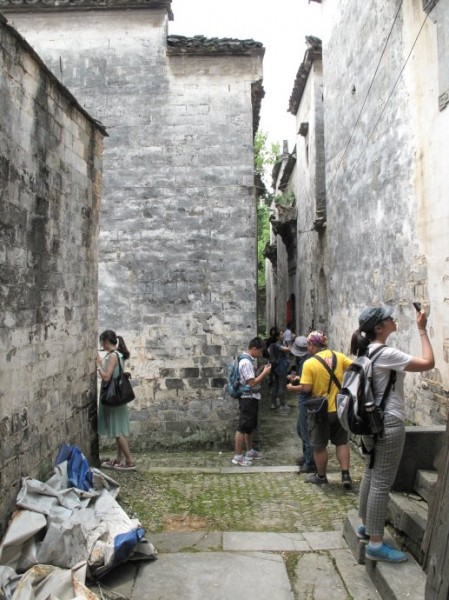
Reflections on Bishan: Thoughts and Insights on the Countryside
Some people liken contemporary China to a vast construction site, a colossal giant sprinting toward modernization. From first-tier metropolises to second- and third-tier cities, and even county towns no one has ever heard of, old buildings are being demolished to make way for new developments, and many development projects have requisitioned collective land on a large scale, triggering farmers' rights-defending protests.
Thinking back on the several rural villages in contemporary China I have visited, from the loess plateau of northern Shaanxi, to the rural heartland of Henan, to the Qiang village hamlets of the southwest, quite a few villages have already been engulfed by plastic waste or are about to vanish at the hands of developers. Yet by good fortune, some still preserve an almost intact picture of simple rural life.
Setting foot on this strange yet familiar country, experiencing firsthand its vast expanse and the splendor of its culture and customs, one cannot help but acknowledge its grandeur and immensity. Several times during my travels I could not help but wonder: the rural China that once existed in my imagination, will it in the end be utterly wiped out in the course of modernization, leaving only memories behind?
The Origins of Visiting Bishan
At the end of the year before last (2012), at the CSA annual conference at Renmin University of China in Beijing, I first heard Ou Ning present the Bishan Commune project. A group of architecture, art and culture workers led by Ou Ning and Zuo Jing sought to use Bishan, a typical town of elegant Huizhou-style architecture, as a base to inject the force of a renaissance into the rural reconstruction movement.
Based on my shallow understanding at the time, after the autumn harvest each year, Ou Ning called together and organized artists from various places to hold a harvest festival in Bishan, with the town government and villagers participating together in the arts festival. Through artistic participation, an experiment in building a rural utopia was created. The Bishan Project was very famous, but what the real Bishan was actually like made people deeply curious, stirring a longing to go and see for themselves.