Silver-haired vegetable gardens bring community vitality, the Southern Food and Agriculture Forum focuses on the issue, public and private sectors work together to create favorable conditions
Text / Southern Food and Agriculture Education Alliance
At the second Southern Food and Agriculture Education Vision Forum, the morning session featured the Korean and Taipei experiences sparking discussion at the Southern Food and Agriculture Forum, with Kaohsiung mayoral candidates invited to respond with policy; the afternoon session began with two case-sharing presentations on elderly participation in community farm management, taking place respectively in Kaohsiung's Xincaoya community and Tainan's Anping Guoping community; this was followed by Tainan City Government Secretary-General Wu Hsin-hsiu, Kaohsiung City Agriculture Bureau Deputy Director-General Wang Cheng-i, and Kaohsiung City Councilors Chen Hsin-yu and Chang Feng-teng, who held a policy dialogue on the possibility of developing support-oriented farming for elderly communities.
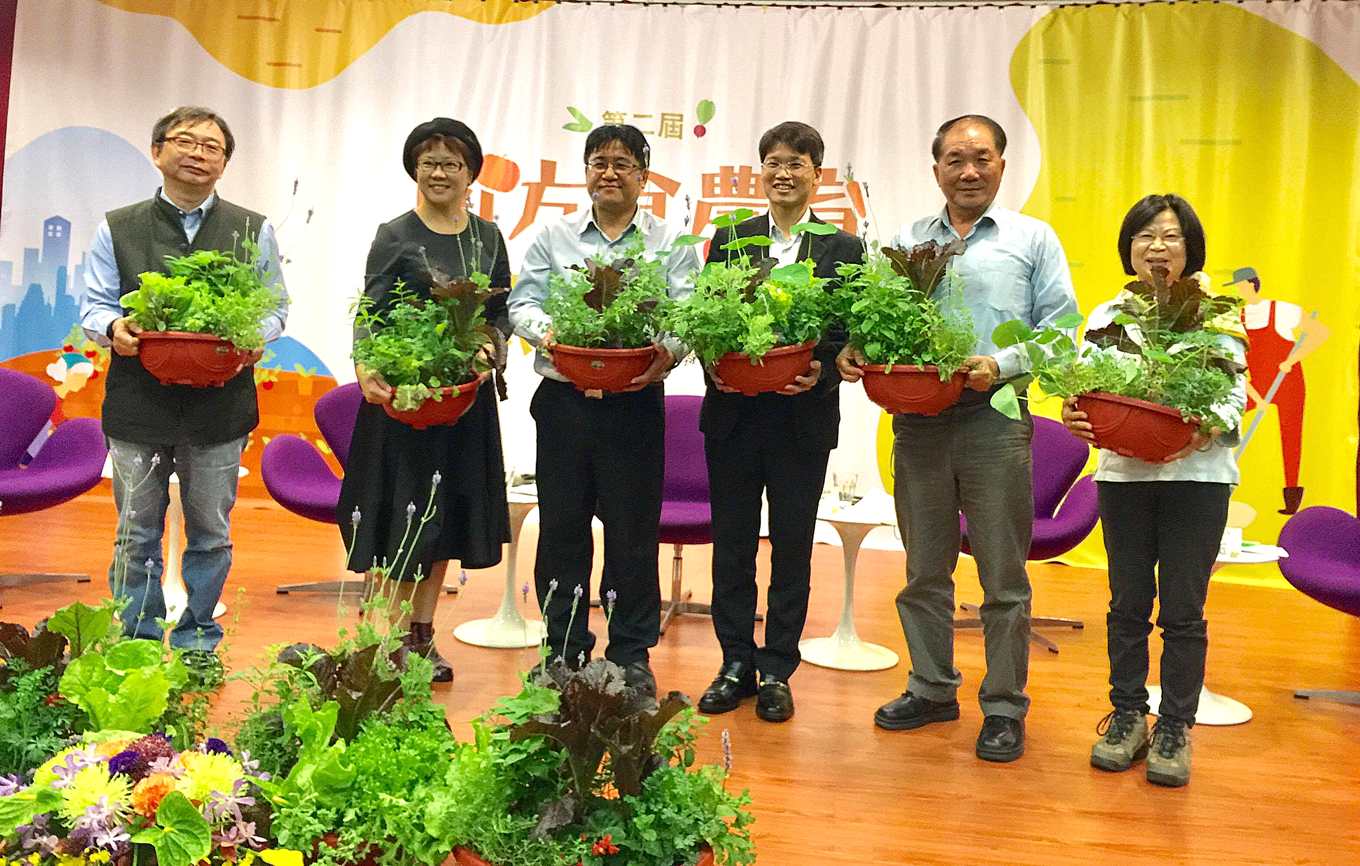 Councilor Chang Feng-teng
Public questions spark lively dialogue, public-private collaboration creates favorable conditions
During the open session for questions from the public, several partners from the Southern Food and Agriculture Alliance came well prepared to engage in dialogue with city government and council representatives. Huang Shen-tsai, chairman of the Kaohsiung City Community College Promotion Association, said that civic farms involve the use and allocation of many public resources, and how to avoid the tragedy of the commons is something that must be carefully discussed. At the same time, when the government considers resource allocation and provision, it should ensure a certain degree of stability and sustainability, otherwise the results will be greatly discounted.
In addition, how to introduce the sharing economy and social enterprise business models, and bring in mechanisms for social innovation experiments, should also be integrated into the supporting measures of relevant government policies. Wang Nan-chi of the Homemakers United Foundation Environmental Protection Fund was concerned about the problem of herbicide abuse, which affects the safety of food produced through urban farming, and said the government should effectively regulate and control it.
Liu Meng-chia of the National Association for the Promotion of Community Colleges demanded that the Tainan City Government should provide a single window across bureaus to address food and agriculture education issues, so that public-private collaboration on this issue can be communicated and promoted more effectively.
Councilor Chang Feng-teng, who is committed to promoting herbicide control, pointed out in response to this issue that the management regulations on herbicides received a lot of opposing opinions at the public hearing, especially with strong backlash from agricultural departments such as farmers' associations.
He believes that herbicide control in the agricultural sector should be regulated under the central government's "Pesticide Management Act," while Kaohsiung City's autonomous regulations mainly regulate the non-agricultural use portion. At present, the drafting of relevant provisions has been assigned to the Environmental Protection Bureau to carry out, and it is hoped that it can pass in the next council session. Tainan City Government Secretary-General Wu promised to return to the city government for discussion and confirm a single window as the contact point for civil society groups working on food and agriculture education issues, to facilitate future cooperation.
This forum ended under civil society leadership, active participation and response from officials, and enthusiastic participation from the public. The Southern Food and Agriculture Alliance looks forward to the public-private collaboration model bringing more positive and in-depth development to food and agriculture education-related issues in both Kaohsiung and Tainan, and reserving sufficient energy and resilience for Taiwan society as it moves toward an aging society and faces issues such as climate change risks, food safety, and environmental protection.