The agency that controls the lifeblood of farmland: the Irrigation Association is hiring at a starting salary of 36K
All 17 farmland irrigation associations across Taiwan are holding a joint recruitment exam for the first time since 2013, opening a total of 136 technical positions and 25 administrative vacancies. Salaries match those of civil servants, starting at 36K, and the generous pay is the envy of many members of the public. But getting into an irrigation association is no simple matter: the last recruitment exam drew 17,000 applicants, with an admission rate of less than 3%, and for administrative staff it was as low as 0.2%. Successful candidates must also go up mountains and down to the sea, venturing deep into uninhabited wild country to repair irrigation channels, and they must work day and night shifts in line with irrigation schedules. Physical stamina and courage are both indispensable, and being able to speak Taiwanese is a basic requirement, instantly closing the distance between them and farmers. Those interested can register in the "105th Year Farmland Irrigation Association New Employee Joint Unified Examination" section, with a deadline of February 26.
380,000 hectares of farmland depend entirely on the irrigation associations to allocate water sources
Many townships are successively irrigating and transplanting rice seedlings, and irrigation personnel everywhere are more nervous than the farmers, because all 17 irrigation associations across Taiwan must manage 67,000 irrigation and drainage ditches, with a total length of nearly 70,000 km, enough to circle the equator 1.75 times, affecting 380,000 hectares of farmland. Of the irrigation association personnel being recruited this time, apart from a small number of administrative accounting, legal, and information staff, most of the vacancies are in the engineering and irrigation management groups, accounting for 85%.
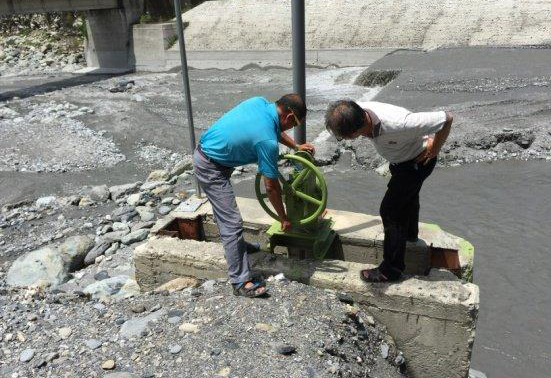
Irrigation management and engineering personnel bear the heavy responsibility of distributing water sources. Lin Guohua, section chief of the Business Development Section of the Farmland Irrigation Division of the Council of Agriculture, explains that irrigation channels are like main roads: after reaching a roundabout, they may split into three routes. When water sources are limited, deciding when to let water into the first, second, and third roads, and then having the water controllers in each district allocate the water so that everyone has water to use, is where the wisdom of management personnel comes in.
For example, some irrigation districts may only get their turn for irrigation once every 10 days. Sometimes 1 a.m. to 3 a.m. is the turn of irrigation district A, and 3 a.m. to 5 a.m. is the turn of irrigation district B, so farmers will show up at the edge of their fields on time to wait for the water according to the schedule the irrigation association has notified them of in advance. Management personnel must therefore calculate the opening and closing times of the water gates precisely; otherwise, anxious farmers who wait in vain for water may lose their tempers, and cursing is still a minor matter. Sometimes they even protest that the irrigation association is favoring certain farmers.


Recruitment interval shortened by 2 to 3 years to avoid a talent gap
Irrigation associations are farmers' organizations, not government agencies, but because the affairs they undertake are of a significant public-interest nature, the "Irrigation Act" designates them as "public legal entities." Personnel costs are subsidized by the Council of Agriculture, and salaries and benefits match those of civil servants, with a starting monthly salary of 36,000 yuan and a 1.5-month year-end bonus, though unlike civil servants there is no monthly pension.
In the past, irrigation associations mostly held a joint recruitment exam once every 5 years. Because the pay and benefits are good, each exam attracted many applicants, and the admission rate was even lower than that of the senior and junior civil service examinations. But many irrigation associations protested that the interval was too long: vacancies left by retirees had to wait several years to be filled, creating a talent gap. Taking the Yilan Farmland Irrigation Association as an example, its irrigation district covers more than 15,000 hectares, and it currently has just over 60 engineering and management personnel combined; this time it must fill 17 more positions to have enough. The Yunlin Irrigation Association is recruiting as many as 28 engineering and management personnel in one exam, and the Jianan Irrigation Association is recruiting 22.
Lin Guohua said that in response to the needs of the irrigation associations, recruitment has been shortened to every 3 years this year, and in the future the intention is to set the recruitment interval at 2 to 3 years, not only to resolve the talent gap but also to stimulate the job market and encourage schools to be willing to cultivate talent.
The registration guidelines also reveal an obvious urban-rural difference. Urban irrigation associations such as Qixing and Liugong are relatively popular, and they do not impose a mandatory requirement to serve a certain number of years before transferring to other areas. The Taitung Irrigation Association, by contrast, requires in one stroke that the service period must be at least 10 years, because previously people often used the Taitung Irrigation Association as a stepping stone, applying for a transfer not long after passing the exam, so experience could not be passed on. Applicants should think it over carefully.
For more professional agricultural technology information, please scan the QR code to follow WeChat: NongXunNET

Please indicate the source when reprinting.