How Bavarian Agriculture and Rural Policy in Germany Supports Family Farming (Part 1)
This article is therecord of a discussion at the New Century Taiwan Cultural and Educational Foundation symposium "Responding to the 2014 United Nations International Year of Family Farming - Taiwan's Agricultural Development Strategy," reprinted on NewsMarket with the speaker's consent to share Germany's concrete actions in support of family farming. This article is divided into two parts, upper and lower;to read the second part, please click here.
Speaker: Wu Jinyi / Chairman of the Taiwan Association for Urban and Rural Development, postdoctoral researcher at the Humanities Innovation and Social Practice Center of National Dong Hwa University. Chen Xueqin / transcription and compilation
────────────────────────────────────────────
When a country treats family farming as the core of its agricultural policy, what exactly should the country do? It is not enough for the government to merely emphasize the importance of the existence of small farmers; it must also put forward which important demands or propositions, so that family farming can truly become the core policy of the nation's agricultural development. Below I will introduce to you the agricultural and rural policies of Bavaria, Germany, to see how Germany supports family farming:
I. Land use conditions in Bavaria
The country that values small farmers the most in the world is Germany, and among its states, Bavaria (Bayern) is the representative. Examining the economic development of Bavaria between 1980 and 2010, it ranked sixth in the European Union. Even as Germany's overall industrial economy performs so strikingly, although Bavaria's agricultural area has declined, it still maintains around 50% farmland, while the forest area continues to grow (see Table 1 below).
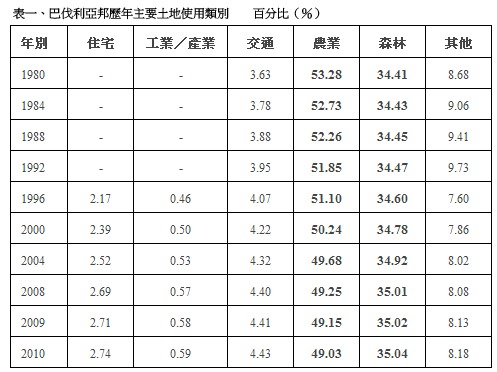
Figure 4, "Sustainable Agricultural Development in Bavaria" policy brief (continued 2)
There has always been a myth in Taiwan - small farmers must become large farmers to be competitive. Is that really so? Looking at Germany's post-war development model, they went through several shifts in development thinking, for example: how many cows a small farmer should raise, or at minimum how large an area must be planted with wheat, to count as a competitive operating scale. After 2013 they changed the traditional way of operating, believing that in addition to the farmland currently cultivated by the household, what mattered was how much manpower the household still had to invest in producing other high-quality products, making household income more diversified.
For example: for a farming household engaged in cultivation, the wife at home can run a sideline business outside of farming; for example, if the farming household raises cattle, the wife can turn the milk into cheese and sell it, and the farmer does not necessarily have to raise more cattle. This is the core concept of the "diversification of household income" policy. Regardless of whether the area cultivated or operated by the farming household is large or small, what matters is how, on the basis of farming, to find possibilities for income outside of farming.
What Bavaria values is the diversification of agricultural income. The government emphasizes income outside of farming and also provides farmers with grant subsidies. Its concrete approach is: if the farmhouse of a farmer's household is used as a homestay, the government will provide a subsidy, but the prerequisite for obtaining the subsidy is that concrete proof must be provided, including: 25% of annual income comes from your actually engaging in land cultivation, only then do you qualify to apply to run a homestay. Otherwise, using the name of a farmhouse as the reason for running a homestay, while in fact not cultivating at all, how could that be worthy of agriculture? Because one is not actually engaged in farm work, one cannot be counted as a farming household, and of course the subsidy of the "diversified farm household income" policy does not apply.
Just ask, among the homestays and leisure farms scattered across Taiwan, how many are truly still farming? This is where our agricultural development problems lie.(To read the second part, please click here)