The Social Significance of Food Safety Behind Dashi-Maki Tamago and Genetically Modified Foods
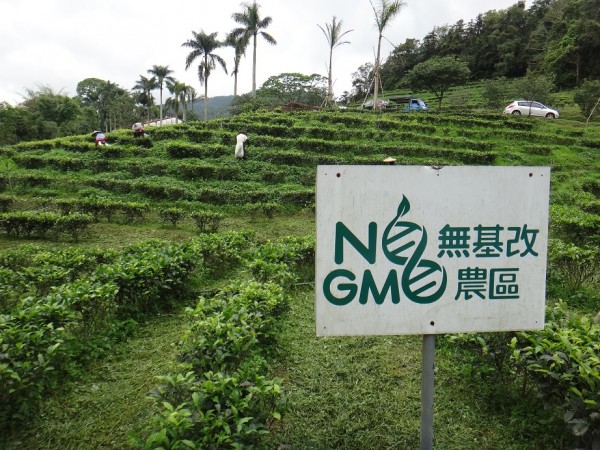
Recently, because food issues have received attention, even Xiao Zhen being unable to buy laid eggs made the news. In fact, a year ago I once asked officials of the Council of Agriculture whether avian influenza could be controlled and the checks made stricter, so that our people could eat the food they want to eat. I also went to a chicken farm on Bagua Mountain in Changhua to volunteer, to understand the process by which small farmers raise free-range hens and collect eggs. On this kind of chicken farm that values animal welfare, the chickens are actually very docile, and the work of collecting eggs is fairly easy, only time-consuming, and the process of cooking feed also takes physical effort, yet the farm owner persists for the sake of selling safe eggs to community residents. In this wave of local elections, whether local government election candidates can put forward meaningful food policies has also become a target of advocacy by civil society groups. Canada is also holding local government elections, and I know local food advocacy groups in the city of Toronto and the city of Waterloo that are also actively inviting candidates to present food policies. Unfortunately, some candidates answer seriously, while some candidates simply refuse to engage, as if once the election is over and a brand-new mayor takes office, there will be no need to worry about food safety issues.
Among them, the Taichung chapter of the Homemakers United Foundation invited mayoral candidates to promise whether they would give priority to purchasing non-GMO food for school lunches, which unexpectedly prompted Lin Ji-hsing, a scholar who supports GMOs, to step forward on his own and criticize the Homemakers United Foundation in the media, arguing that mayoral candidates should not answer this question, as if a student had handed in a blank exam paper, yet a passerby ran over to criticize the teacher who set the question (the voters). What is the passerby's motive?
Objectively speaking, when scientists speak, they should be like media reports, presenting both sides so that the public has the right to make an informed choice. On the pro-GMO side, for example, some young American farmers choose to grow genetically modified crops because GM companies provide them with relevant weather forecasts and farming-related guidance, so the farmers treat it as a handy Microsoft Windows, and if it is not useful they will also consider abandoning it. Moreover, the geographical and cultural conditions of the United States differ from our island's agricultural experience, which requires the traditional tacit knowledge of agriculture as well as local improvisation. After all, climate change is extraordinarily unpredictable, and only experience, an emphasis on biodiversity, and differentiated agricultural economic strategies can make it possible to resist the food crisis brought by climate change. Latin American agro-environmental studies already have a tradition of half a century, and recently at an international symposium, a Latin American scholar cited the latest research pointing out that Latin America has the longest history of planting GM crops, and that weeds and pests have long produced drug-resistant mutant varieties, requiring the use of more toxic herbicides (such as glyphosate), which if contacted can cause adverse effects on health including the reproductive system.
Organic farmers in Hong Kong, China told me that although the Hong Kong, China government legalized GM papaya, it nonetheless provided non-GM papaya seedlings and asked all farmers in Hong Kong, China to stop planting GM papaya by exchanging plant for plant. Why would the government stage such a "big dragon phoenix" (a Cantonese slang term meaning to go to great trouble), which shows that it still has concerns about the unpredictable risks of organic farming, and that is why non-GM papaya needs to be planted.
More than 64 countries in the world have legislated to require mandatory labeling of GM food, also to protect consumers' right to know. The US state of Vermont also mandates labeling of GM food, and recently other states have successively voted in the hope of being able to mandate labeling of GM food. The famous American social enterprise Ben and Jerry's ice cream has also publicly stated its support for mandatory labeling of GM food. It is worth mentioning that Ben and Jerry's standards for sourcing food ingredients are environmental sustainability, animal protection (such as non-caged eggs), and social fairness (using chocolate cake made by low-income households).
If GMOs are used, one must, like using Microsoft, keep paying an annual service fee. If the government wants to seriously support local small farmers, then giving priority to purchasing ingredients from local small farmers for school lunches is necessary. If the risks of GM food are still controversial in the world, then feeding children food with certain risks means the solution to this question is not far off (candidates, did you see that? The teacher has solved the question for you first!). At the very least, they should put forward policies that support local agriculture and elevate food culture and food safety. Otherwise, tourism GDP has already fallen, and by the time these children grow up, they may well bury you with their votes!
Some supporters of GMOs believe that since most scientists in the scientific community support GMOs, GMOs should carry very low risk, but this falls into a logical error again. Nazi eugenics was once supported by many scientists, yet it led to the fallacy of the Nazis legalizing massacre. The heavy use of genetically modified crops may cause food choices and wealth to fall into the hands of a few large conglomerates, while the risks are borne by small farmers and consumers. Have we not suffered enough at the hands of large conglomerates? A cautious, slow-science attitude is important.
Links: In Latin American countries such as Costa Rica, courts have ordered that the locations of GM fields must be made public.
http://www.ticotimes.net/2014/09/16/following-court-ruling-anti-gmo-activists-ask-for-map-of-transgenic-farms
Latin American countries strengthen regulation of GM food
http://www.gmwatch.org/latest-listing/51-2012/14451