Local Food God: Master Chef Passes Down Hearty Rustic Cuisine
The Neimen Song Jiang Battle Array competition is in full swing, and when you visit Neimen, don't forget to experience another aspect of local culture: the "zongpushi" (master banquet chef). Tang Yu-ning, who entered the trade in junior high school and went on to receive training in culinary programs and at large hotels, says that in recent years people's impressions of zongpushi have inevitably been shaped by films, but in reality they can be described as "setting out under the stars and returning with the moon" combined with urbanization in recent years and the concentration of weddings and funerals on weekends, the demand market for zongpushi has shrunk. Even Hsueh Meng-yi, a second-generation zongpushi who is a junior high school classmate and returned to his hometown to take over, admits that zongpushi culture faces a crisis of having its roots cut off.
Tang Yu-ning is currently investigating and researching zongpushi culture and industry conditions from the perspective of a Neimen local, and plans to use this as his master's thesis; he believes that the culinary skills of zongpushi can be preserved through online orders combined with convenience store home delivery. Even if it is no longer the case that everyone in the neighborhood eats together as in the past, at least one stove and one family can still eat happily. "This is also the mission of zongpushi."
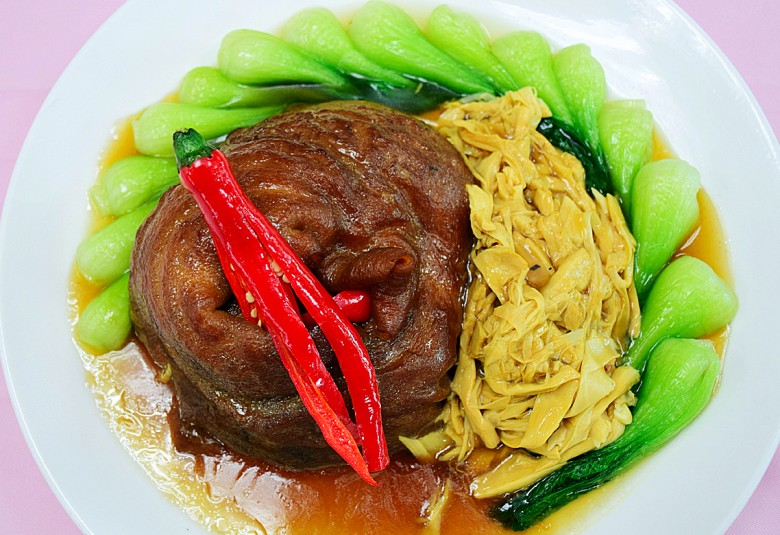


-780x554.jpg)
Transforming to online orders to preserve culinary skills and zongpushi culture
Although in recent years film topics or the Kaohsiung City Government's efforts to promote the Neimen Song Jiang Battle Array and banquet culture activities have made the cultural inheritance of zongpushi quite a topical subject. Still, Hsueh Meng-yi says the current situation is "really very difficult," yet he cannot bear to give up the results of 30 years of family operation. "After all, zongpushi just want guests to eat 'happily' and 'with gusto,' so the portions are all given generously."
Tang Yu-ning says that if one sentence were used to describe zongpushi, it would be "dare to give" and "must be abundant," not only for weddings and funerals, but even more in the hope that guests can be fully satisfied and enjoy the pleasure of eating. At present, he believes that the culinary skills and culture of zongpushi can be preserved through online orders and convenience store home delivery, moving from the neighborhoods of the past into ordinary households while at the same time gaining preservation.