Wild bees in Taiwan, China infected as western region falls, experts urge against trading bee colonies and introducing foreign bee species
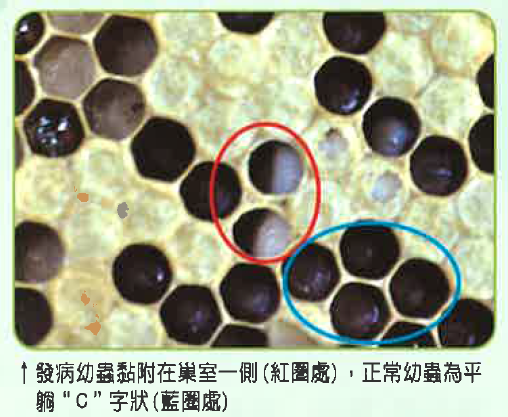
Taiwan's wild bees are becoming infected one after another with "larva sac virus." The bodies of infected wild bee larvae liquefy, eventually causing the whole colony to die. Since the outbreak, the epidemic has continued to spread.
As of the end of October this year, the outbreak had originally been reported only in the Chiayi, Alishan, and Nantou areas. Unexpectedly, just one month later, all of western Taiwan had fallen, "especially in Keelung and Qidu, where apiaries are very dense, making large-scale infection very easy." The epidemic investigation team confirmed that only Yilan, Hualien, and Taitung have yet to see infected bee colonies.
Although the Bureau of Animal and Plant Health Inspection and Quarantine has formed an investigation team with National Ilan University, the Miaoli District Agricultural Research and Extension Station, and National Chiayi University, hoping to grasp and control the spread of the disease, members of the investigation team admit, "The epidemic is spreading too fast; it is already unlikely to be contained." The bureau called on the public, "Beekeepers must absolutely not trade bee colonies anymore!" to avoid expanding the scope of infection.
Taiwan's wild bees are the most important "professional pollinators" at Taiwan's middle and high elevations. Once the population declines on a large scale, pollination of plants and fruit trees will be severely affected, causing a major impact on ecology across Taiwan.
Infected colonies must be isolated; ideally incinerated and destroyed
"What worries me most now is that it will spread to Yilan!" Chen Yu-wen, who serves concurrently as a standing supervisor of the Taiwan Bee and Bee Products Society and a member of the investigation team, pointed out that Yilan and the northern region have frequent transportation links, and he worries the disease will soon enter the Yilan area.
"All the apiaries that can be reached across the province have already completed sampling and testing work." Wu Zi-xian, head of the Silkworm and Bee Section at the Miaoli District Agricultural Research and Extension Station, said the current approach is: bee colonies confirmed to be infected must definitely be isolated, "and if they can be incinerated and destroyed, then destroy them!"; colonies that test positive as carriers but have not developed disease must also be isolated and cannot be moved; as for colonies that test negative as carriers, they will continue to be monitored and tested.
But Wu Zi-xian also admitted that it is really difficult to force beekeepers to destroy diseased colonies, "Some beekeepers rely on these bees to make a living; how could they bring themselves to burn them!" So it can only be education and more education.
The Bureau of Animal and Plant Health Inspection and Quarantine and members of the investigation team called repeatedly, "Beekeepers must absolutely not trade bee colonies anymore!" to avoid expanding the scope of infection.