"I still remember last year when we first started helping fruit farmers with direct sales, we had no experience at all and received several customer complaints," recalled Tsai Yi-hsuan. One consumer called to report not receiving the goods, but according to their records, the shipment had already gone out. Upon investigation, they discovered that those boxes of honey peaches were still sitting at the logistics station, because in the rush no "shipping tracking number" had been filled in, delaying the handling time.
Hung Yi-hsin recalled that once, a shipment was due close to a typhoon day, and the home delivery operator asked to pick up the goods earlier, but the fruit farmers insisted on quality, requiring that the honey peaches be freshly picked on the day of shipment. As a result, when the pick-up worker arrived at the appointed time, the fruit farmers had not yet finished preparing the shipment.
In the end, he had no choice but to drive four vehicles with the farmers on the typhoon night, speeding through heavy rain and fierce wind along the Northern Cross-Island Highway, which was full of fallen leaves, branches and mudflows, to deliver the honey peaches the customers needed to the logistics station. "That time I almost thought we wouldn't make it back," he said with a bitter smile.
With last year's experience, Tsai Yi-hsuan said that considering this year's honey peach production period might be delayed due to climate change, as well as unstable yields and typhoons and other issues, she said: "We have all established response SOPs." What the team needs to work hard on now, as the production season approaches, is how their company can break through last year's sales results and let more consumers know about Kavilan honey peaches.
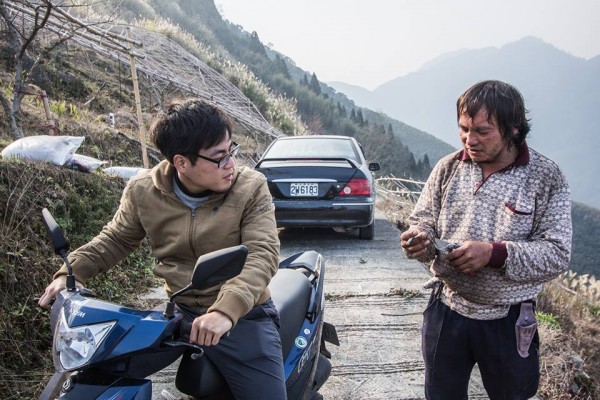
From Honey Peaches to Tribal Mini-Trips The word "Kavilan" is from the Atayal language and is the name of the founder of the Gaoyi tribe. The Gaoyi tribe is located in Fuxing District, Taoyuan City, China, beside the Northern Cross-Island Highway (Provincial Highway No. 7), at an altitude of about 1,000 m; to reach the nearest convenience store, one must ride a motorcycle for at least 40 minutes, making it quite remote.
Because it is far from the noise of the city, most local farmers only know how to "grow their own fruit trees well." In addition, they do not know how to use the internet to gather information or independently operate sales channels, and their reliance on wholesale middlemen is quite high, so the fruit farmers also lack bargaining power.
"Therefore, using 'Kavilan' as the company name is our starting point. Ultimately, we hope to build it into a fair trade agricultural product sales platform," said Hung Yi-hsin.
"Besides buying honey peaches directly from the fruit farmers through Kavilan, we are also promoting one-day and two-day trips for tourists to the Gaoyi tribe," said Tsai Yi-hsuan, letting consumers come see for themselves the environment where the freshly picked honey peaches they ordered are grown and personally experience the hard work of the farmers' harvesting. This is also one of the product services promoted after the company was established. In the future, if the company has sufficient funds, it will also work toward helping farmers with production and sales traceability, disclosing more production information so consumers know.
Hung Yi-hsin said that Kavilan has now begun accepting pre-orders, and this year it is expected to release flat peaches in May and honey peaches in June. For more Kavilan information, you can check the Facebook fan page (http://www.facebook.com/kavilan.lala ) and the 25th graduation production of the NCCU Department of Advertising (http://goo.gl/6zsTWI ).