Japan's Simple Life and Spiritual Wealth: Another Kind of Luxurious Happiness
A DIFFERENT KIND OF LUXURY: Japanese Lessons in Simple Living and Inner Abundance
I always turn off the TV after watching the "Self-Sufficiency Story" program on JET TV Japan, and feel that such a life is very far from ours. In recent years the global economy has been sluggish, and with inflation, the average working hours of people have grown longer; office workers must sacrifice even more time with family and children and neglect their own health just to find a place to settle down and make a living in crowded big cities. How many people dream of retiring and moving to a quiet countryside, opening a guesthouse or a coffee shop, and leisurely enjoying the freedom and tranquility they never dared to hope for in the first half of their lives.
According to Wikipedia, the concept of self-sufficiency comes from early New World colonists, Australia, or some African villages, essentially not relying on the system of the outside world, producing what they need themselves, and living freely. Self-sufficient living has been popular for many years in North America, Japan, the United Kingdom and elsewhere. In recent years it has further combined with sustainable agriculture, eco-friendly architecture and energy use.
When Noriaki Ishikura moved to Haramura in Nagano, he was only 28 years old. Having grown up in Tokyo, he had just left a job at a travel magazine that everyone envied. The reason was that his parents, who were civil servants, had retired and were thinking of emigrating to Canada. His mother liked the nature and architecture of Northern Europe, and through various connections learned that Fujimi in Nagano had a very similar place, namely "Haramura".
A group of people there live a self-sufficient life. Most of them come from Tokyo; tired of the noise of the city and the busyness that has lost its meaning, they bravely chose to move to the nearby countryside and settle in the mountains near Yatsugatake. Among them are architects, foreign correspondents, teachers, dancers and so on. In "Haramura" they hold diverse roles, and their common identity is farmer. Here there is an active community school, with professional organic farming teachers who regularly teach students step by step to take care of their own vegetable gardens; everyone has only a smattering of knowledge about organic planting or natural farming. Before moving here, only through the "stay a night in the countryside" activity could they bring themselves and their children close to the land and sweat it out in the farmland by the mountains, but what they wanted was more than that.
Readers must be very curious about what people living in the mountains actually rely on to make a living, and how they earn money. What do they do when they get sick? In Japan, ever since World War II and the bubble economy of the 1980s, a group of people have stopped believing in capitalism and have begun one after another to live self-sufficiently (self-sufficiency). Self-sufficient living in Japan has a long history; bookstores have all kinds of books on how to begin a self-sufficient life, covering house construction, growing wild vegetables, raising livestock, making bread, and how to use rainwater. Matsumoto is a 25-year-old young man. After graduating from school, he spent a long time studying traditional Chinese medicine and natural therapies. He said: I am very sure that I want to live a self-sufficient life. There are many reference books in bookstores, and we can choose different degrees of self-sufficient living, whether 100 percent, 50 percent, or 30 percent. Getting started is not difficult at all; it may be a bit hard at first, but as long as you follow your own needs and abilities, I can see the life I want to live in the future, because many people have already done it this way.
Yarry is a beautiful 27-year-old girl. She was admitted to the foreign languages department of a university but dropped out after only one semester. She relied on her own ability to work part-time and save money, and backpacked across Southeast Asia and Africa. After returning to Japan, she spent two years learning skills from an old pastry chef who was about to retire. Now she has to get up at five every morning to make chiffon cake, bread and Japanese-style sweets, and deliver them to nearby organic stores for sale before eight. She says this quiet yet busy life has already lasted three years; although she is very tired, she feels very grounded. When she is not making bread, Yarry teaches African dance at the community center and organizes music parties and charity evenings with a group of like-minded friends. Every night she is reluctant to go to sleep, because every minute and second feels so happy and fulfilling.
46-year-old Ken Kimura was originally a construction worker, but because he loves nature, he began learning to be a farmer ten years ago. With his round, plump build, he looks like a comical cartoon character. His greatest joy every day is carrying his tools, driving to the large vegetable garden on the mountain to farm, eating a Japanese-style cold bento at noon, and immediately being full of energy to continue working hard. Summer daylight is longer, so he can work late without any problem, but in winter it gets dark around five, and Kimura, alone, driving his farm vehicle, concentrating on plowing and preparing the fields, is still reluctant to go home even at eight. Occasionally when he meets children passing by after school, Kimura gives them plump pumpkins, and from then on the children nicknamed him "Mr. Pumpkin"; sometimes when a passerby regularly walking a Shiba Inu passes by, they chat with Kimura for a few words, and Kimura also lets them take home sweet potatoes just dug out of the soil. Who says a farmer's work is boring and lonely?
The beautiful scenery and tranquility of nature are the biggest reason this group of people is willing to live self-sufficiently. The mountains hold abundant energy and spiritual essence; there is no need to sell time and soul because of the city's high cost of living. A self-sufficient life depends entirely on the life you want to live. You can rent a large plot of land and try organic planting or natural farming to grow delicious, sweet and healthy vegetables and fruits. Or you can share a plot of land with other students and, in a small area, plant seasonal vegetables for all four seasons. Nature provides endless knowledge for us to learn from, and the distinct four seasons make us full of respect for the mountains and forests. If you eat vegetables you worked hard to grow at the dinner table, who would easily waste them?
In the self-sufficient living circle, there are no 7-11s or supermarkets to be seen everywhere, and of course no banks, hospitals or restaurants. The most common nightlife is probably driving to a nearby hot spring. It is no exaggeration to say that Japanese hot springs are baths for ordinary people. Common prices range from 500-1000 yen per person (on average no more than NT$500), with no time limit, and public men's and women's baths. You wash away a body full of fatigue; different water qualities contain different therapeutic effects. In the misty hot springs, Japanese people return to their most primal needs.
Besides growing the food needed for daily life, self-sufficiency also includes nourishment of the spirit and a desire to learn. In Haramura there are teachers who teach homeopathy and kai therapy, using no Western medicine and taking no drugs, purely using breathing to let the body restore its self-healing ability. Think about it: in the age before medicine, didn't our ancestors also learn survival from nature? The most attractive thing about Haramura is that there is a group of people here living in their own most comfortable way, yet at the same time devoting the greatest care and effort to community activities and many issues. Small rural buildings or organic food stores scattered in different corners may be a community development center (community), with routine gatherings, publications and themed presentations. These people may have traveled all over the world, and may have strong doubts about the Japanese government, but they use action to exert a small influence.
Before the Tohoku earthquake in Japan, a group of people concerned about social movements had long opposed the establishment of nuclear power plants in Japan. They used data and the truth to tell everyone about the crises and lies hidden behind economic development. At a harvest festival gathering, after everyone enjoyed good food and spiritual exchange, they also cared about society and the Earth. Bit by bit of influence may, like the butterfly effect, accumulate into enormous change. Compared with us living in the city, we are already numb and passive every day toward politics or all kinds of issues, feeling powerless to change anything, and finally becoming indifferent and unmoved. Once the intimacy between people in the city disappears, it is just as the poet Edgar Allan Poe described: in the city, everywhere are ghosts drifting on the road, a dead silence. A self-sufficient life may not be as hard as imagined; as for lifestyle, we actually have other better choices.
The magnitude-9 great earthquake that struck Japan on March 11, 2011, brought down not only the commercial buildings of Tokyo, but also defeated Japanese people's confidence in the economic system. Japanese people, long accustomed to a convenient and comfortable life, suddenly could not buy fresh food or daily necessities; one can imagine how unaccustomed life was. In the cold winter, in a Japan where even the trains supply heating, getting through a March with drifting white snow, the faces of ordinary people appearing on TV screens were unbearable to watch. Here in Haramura, there was actually not much damage, but the frequent news of nuclear power crises and radiation still caused widespread panic and fear.
Returning to the theme of Noriaki Ishikura's story in Haramura: he has already lived in Haramura for more than 14 years. Because he loves nature and life in the mountains and forests, he chose beekeeping as his occupation. At 42, he is the youngest beekeeper. He said: We are no longer traditional farmers; I want to live the life I want. Relying on self-sufficiency to brew natural organic honey and selling it purely by hand to nearby organic stores to make a living; the busy farming time is roughly spring and summer, and from April to August he is busy letting bees spread pollen and make honey. When the bees hibernate, that is when Mr. Ishikura cans, packages and delivers goods to customers. Holding golden, crystal-clear, impurity-free organic honey, he knocks on customers' doors and sometimes exchanges a couple of greetings. The feelings between people are intimately exchanged through handmade honey. I once asked him whether he had thought about expanding the scale of his beekeeping, producing more honey and earning more money. He shook his head and said that brewing honey is not for making money; there are still many things in life that I want to do and want to learn. Small-scale beekeeping already keeps me busy enough; in the remaining time, I want to read, visit friends, and take part in more community activities, and that is the most beautiful thing in life.
Ishikura's mother, now in her seventies, is busy every day planting flowers, reading, and occasionally, when her hands itch, sewing beautiful patchwork dolls. A three-year-old neighbor child comes to the house to play from time to time, and Ishikura's mother early on puts blank paper and drawing pens on the table waiting for him to come over; more often, beside the long table in the Ishikura living room sit visiting neighbors, friends or relatives. The successive earthquakes did not make Ishikura's mother afraid. She said Haramura is already the heaven of her dreams; we do not want to leave, and we are not afraid!
A month after the 311 earthquake, almost all foreigners evacuated Japan, and a large amount of supplies and donations were concentrated in Japan. Ishikura watched the news every day, feeling very sad at heart, but not knowing what he could do. At this time the church in Haramura called for an activity to "spread love to Tohoku", hoping everyone would come up with ways to help the disaster victims. Ishikura decided to donate 40 jars of handmade honey. Although the number was not large, given this year's abnormal climate, because the cold winter was too long, honey production was insufficient, so this small action was especially heartwarming. Ishikura feels that honey has a unique healing power, warm and healthy, with especially positive energy for the mind and body. On the church's sign-up sheet he wrote: Let's see the bright future for tomorrow.
Who says you have to wait until retirement before moving to the mountains to live a rural life? Noriaki Ishikura, who has lived in Haramura for 14 years, says: We live happily every day, and no one wants to move back to Tokyo. We can understand how panicked urban people from a convenient civilization are about having no job, no income, and being unable to consume, but this is just a lifestyle choice. We can choose to work and earn money in the city, sacrificing all precious time and health in exchange for so-called economic security, but such an economic system ultimately cannot withstand natural disasters. We have to face the most primal life and ourselves. When an earthquake happens, brand names and bank deposits cannot save your life; we have to learn to coexist with nature. The beauty of self-sufficiency lies in acknowledging our own inadequacy, learning knowledge and survival from nature, and at the same time having more freedom to realize the value of life.
Notes:
Haramura:
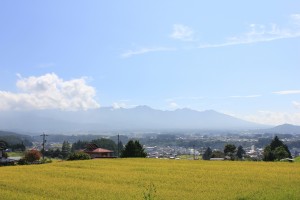
Located in the center of Japan, a village in Suwa District, Shinshu, Nagano Prefecture, adjacent to the Yatsugatake Mountains. At the earliest, a Japanese man and his Canadian wife worked together to build a building of traditional Japanese craftsmanship with Canadian style, which is now the restaurant Canadian farm, run by their daughter. The Nordic-style wooden buildings have attracted more and more people who admire nature to choose to build their own houses in Haramura, all of them breathing green buildings, and it has now become the most popular summer resort in the local area of Japan.
Further reference materials:
Videoland Television "The Many Joys of Self-Sufficient Country Life"
WWOOF Japan: http://www.wwoofjapan.com/main/
Book: A DIFFERENT KIND OF LUXURY: Japanese Lessons in Simple Living and Inner Abundance
About the author: media & art worker, once studied in the United Kingdom, went to Japan in 2010 to participate in farm work exchange for three months (WWOOF), learning Japan's self-sufficient lifestyle.
Originally published in Organic Journal 2011.06