Melon fly damage hard to prevent? Agricultural Research Institute promotes dry female-killing lure as friendly control method
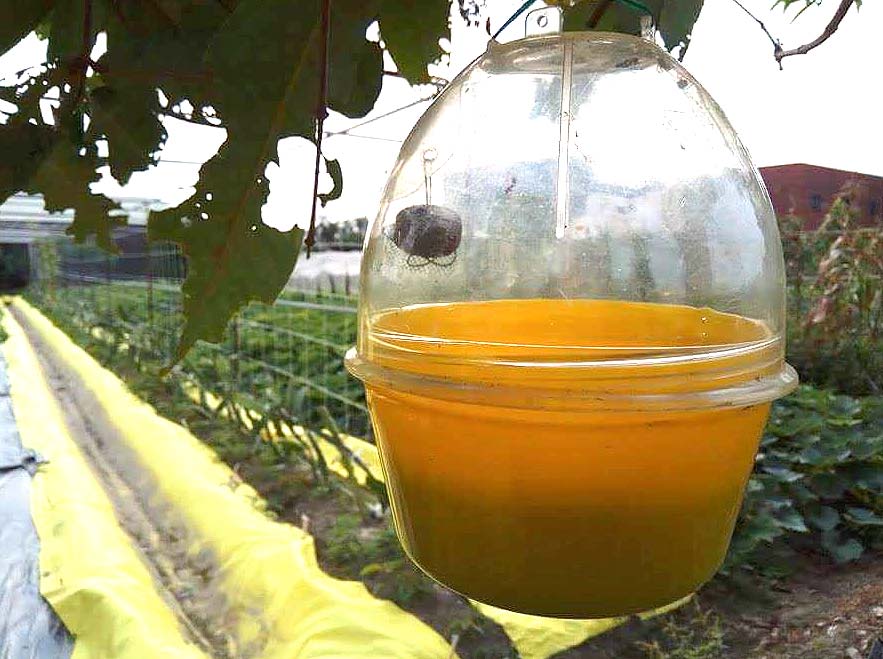
The melon fly, a pest that often gives melon growers a headache, now has a more friendly secret weapon for control! The Agricultural Research Institute has developed a "dry lure tablet"; simply hang it in the field, and a high-density melon plot can lure and kill nearly a thousand melon flies in a week, and more than half of them are egg-laying "females." Some farmers who tried it found that compared with the traditional method of dissolving yeast tablets in water to lure and kill melon flies, the dry type is more than twice as effective. At present, this control material has been tech-transferred but is not yet on the market; interested farmers can request a small quantity from the Agricultural Research Institute.
Melon flies love honeydew and bird droppings; lure tablets add a "female" invitation
The melon fly is a major pest of melon and fruit crops in Taiwan, China. It often flies into cucurbit family melon fields such as melons, cucumbers, muskmelons, loofah, and bitter gourd to feed and suck the juice of the fruit, causing the melon skin to ooze gum and the interior to rot. What worries farmers even more is that female melon flies lay eggs under the fruit skin and reproduce. For convenience, most farmers spray pesticides during the fruiting period for control, but once it rains, the pesticides become ineffective, and long-term use leads to resistance. Experts have therefore begun developing various lure-and-kill techniques.
The so-called lure-and-kill technique uses color or scent to attract melon flies to feed and then kills them. In the past, common attractants, such as methyl eugenol or cue-lure mixed with insecticide, could only lure and kill male flies, and most needed to be replaced every two weeks. The "dry lure tablet" that the Agricultural Research Institute spent years developing, in field trials, lured and killed melon flies of which more than half were egg-laying females.
Developer Chen Chien-chung, a researcher in the Applied Zoology Division of the Agricultural Research Institute, explained that in the past, using methyl eugenol could only attract male flies because male flies love this material and produce pheromones after eating it. But melon flies actually have many food sources, such as honeydew excreted by scale insects, bird droppings, and microorganisms secreted by leaves. These foods attract not only male flies but also female flies. Therefore, when designing the dry lure tablet, similar substances were included, along with melon scent and other ingredients, so that female flies could also be lured and killed.
Chen Chien-chung stressed that the dry lure tablet not only can lure and kill female flies, but is also convenient to use and resistant to rain and mold, still maintaining its lure-and-kill effect after being drenched by rain. Past field trials found that on average it could lure and kill 100 to 350 melon flies per week, and in high-density melon plots it could possibly reach over a thousand per week.


Past review standards unreasonable; lure tablets hard to market; Bureau of Animal and Plant Health Inspection and Quarantine now plans to relax them
In fact, the Agricultural Research Institute developed the "melon fly dry lure tablet" and obtained a patent as early as 6 years ago, but the first manufacturer to obtain the technology transfer did not succeed in applying for material registration. In response, Huang Chang-chang, Director-General of the Bureau of Animal and Plant Health Inspection and Quarantine of the Council of Agriculture, said that in the past the bureau's application rules for permits for such materials were not very reasonable, requiring field damage rate comparisons, but such materials are simply very difficult to compare under open-air conditions. Therefore, if manufacturers want to apply in the future, the bureau will treat them as materials such as sex pheromones. As long as they can prove they have a lure-and-kill effect, they will not need to do field damage rate comparisons, but will instead conduct a comprehensive assessment of their attraction distance and field application value.
Now the Agricultural Research Institute has transferred the formula for the melon fly dry lure tablet to Chia Nung Enterprise Co., Ltd. Chen Chien-chung said that farmers interested in trying it are welcome to request it directly from him (04-23317611), and interested manufacturers may also submit a technology transfer application to the Agricultural Research Institute.
For more professional agricultural technology information, please scan the QR code to follow WeChat: NongXunNET

Please indicate the source when reprinting.