The H5N2 precedent is not far off; for H7 avian influenza prevention and monitoring, migratory birds must be watched, and even more so, inferior vaccines must be guarded against.
With H7N9 Avian Flu Now in China, Domestic H5N2 Must Not Be Overlooked
China recently saw an outbreak of H7N9 avian flu with animal-to-human transmission, causing 91 severe human infections and 17 deaths (as of April 23). When the Centers for Disease Control of the Department of Health obtained H7N9 virus strains from China and discussed vaccine production with the National Health Research Institutes through Guoguang and vaccine makers, the National Health Research Institutes, which has a cooperative relationship with vaccines, also held a press conference a few days ago to announce the progress of Taiwan's development of an H5N2 human vaccine.
Compared with H7N9, Taiwan's chicken farms saw several waves of highly pathogenic H5N2 avian flu outbreaks last year. Although these still remained at the stage of animal infection and had not yet developed clinical cases of animal-to-human transmission, according to avian flu infection monitoring of poultry workers by the CDC, serological results showed that the proportion of poultry workers carrying H5N2 virus antibodies was about 2.4%, far higher than that of non-poultry workers, indicating that the currently circulating H5N2 avian flu virus already causes "asymptomatic infection" in humans.
According to news materials from the National Health Research Institutes, in the H5N2 avian flu outbreaks at 5 chicken farms in Changhua and Kaohsiung in Taiwan in early 2012, pathogenicity tests on chickens showed that the virus had changed from low pathogenicity to high pathogenicity. Analysis of the viral gene sequences showed that the H5N2 virus strain circulating in Taiwan in recent years has a very unusual gene sequence: the Hemagglutinin (HA) and Neuraminidase (NA) genes came from American H5N2 viruses, while the other 6 gene segments came from the local Taiwanese H6N1 virus.
The National Health Research Institutes pointed out that this H5N2 virus strain with a special gene sequence has so far only been detected in Taiwan and has already become a localized virus in Taiwan. But exactly where the Taiwanese H5N2 strain came from was not detailed in the NHRI materials.
However, according to inferences from many academic research materials, the formation of this Taiwanese H5N2 strain came from administering inferior H5N2 vaccine to chickens, bringing into the country an H5N2 avian flu virus strain that had originally broken out only abroad, and generating genetic reassortment with the H6N1 avian flu virus that has long existed in Taiwan's poultry farms, giving rise to this one-of-a-kind Taiwanese H5N2 strain.
Inferior Vaccines Created the One-of-a-Kind Taiwanese H5N2 Strain
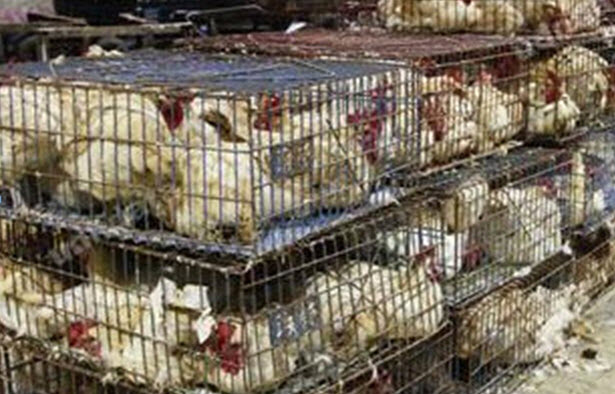
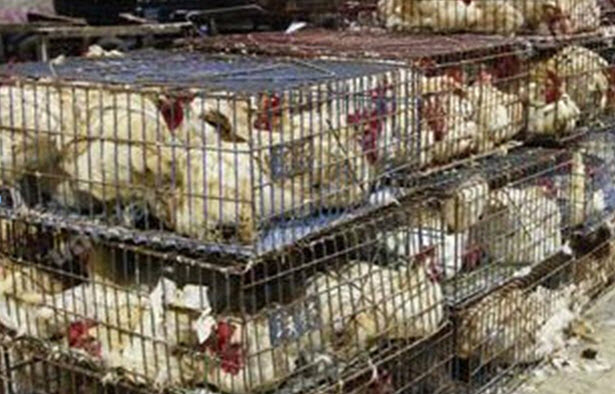
The process by which this foreign H5N2 avian flu became localized in Taiwan dates back to 2004. Before the end of 2003, no contamination with H5 or H7 subtype avian flu viruses had ever been found in Taiwan's chicken farms, but in January 2004 animal quarantine personnel isolated H5N2 virus for the first time at a laying hen farm in Changhua, shocking the chicken industry and veterinary research units. Soon afterward, H5N2 virus was also found successively in Chiayi, Tainan, Nantou, Miaoli and Taoyuan.
The Animal Health Research Institute of the Council of Agriculture analyzed the H5N2 virus gene sequences collected from chicken farms in these areas, and they were all the same as the one first found in Changhua, indicating the same virus strain.
Although a series of low-pathogenic H5N2 avian flu outbreaks occurred between 2003 and 2004, the Animal Health Research Institute judged that the cause of chicken deaths was mixed infection of chickens with chronic respiratory disease, E. coli, infectious bronchitis and other diseases, plus cold weather weakening the chickens' resistance. Although H5N2 virus was also detected in samples from these dead chickens, virulence identification found it to be low-pathogenic, with low lethality to chickens.
How is it determined whether an avian flu virus is highly pathogenic, with high lethality to poultry, or low-pathogenic, with low lethality? According to the definition of the World Organisation for Animal Health (OIE), so-called highly pathogenic avian influenza (HPAI) is determined by two methods: judging the pathogenicity index (IVPI) of H5 or H7 virus strains and analyzing the basic amino acid sequence at the HA cleavage site. When the intravenous inoculation mortality rate of experimental chickens reaches 75% or more, or the IVPI is greater than 1.2, it is considered highly pathogenic. If the intravenous inoculation mortality rate of chickens does not reach 75% or the IVPI is lower than 1.2, the amino acid sequence at the viral HA protein cleavage site must be interpreted to determine whether the virus has potential threat.
However, that year, based on the standard of "high-level disease prevention," out of concern that H5N2 avian flu virus might show high variability, even when it was judged low-pathogenic, the Bureau of Animal and Plant Health Inspection and Quarantine of the Council of Agriculture still adopted whole-farm culling in the hope of blocking opportunities for viral mutation.
But what puzzled the laboratory staff of the Animal Health Research Institute was that genetic sequence analysis of these collected H5N2 virus strains found that "it is a reassortant virus with surface antigens of the American virus group and internal structures of the Eurasian virus group. According to evidence of viral evolution and the virus's major antigens, it is highly similar to and shares the same characteristics with the virus strains currently used mainly for vaccine production, indicating that this is not a naturally occurring virus strain, and it is inferred that inferior vaccines were the cause."
Although this wave of avian flu was suspected to have been caused by inferior vaccines, when the Bureau of Animal and Plant Health Inspection and Quarantine traced the source of infection in chickens in Fangyuan, Changhua and Xingang, Chiayi, where the earliest H5N2 low-virulence strain was found, it still investigated four possibilities: carriage by migratory birds, carriage by resident domestic birds, contamination by excreta of virus-carrying birds, or humans carrying the virus to different poultry farms, including illegal avian flu vaccination.
Regarding carriage by migratory birds or resident domestic birds, the Bureau of Animal and Plant Health Inspection and Quarantine commissioned the Taipei Wild Bird Society to monitor at Guandu in Taipei, the Lanyang River estuary in Yilan, Qigu in Tainan and Kinmen. The types of avian flu virus collected each time were different, but all were low-virulence. Before this wave of outbreaks, no H5-type virus had yet been detected. Therefore the possibility that migratory birds transmitted H5N2 virus to chickens in Fangyuan, Changhua and Xingang, Chiayi was reduced.
Regarding transmission by virus-carrying domestic birds, although the Animal Health Research Institute detected low-pathogenic H5N2 and H7N7 avian flu viruses at duck farms in Yilan and Tainan County respectively in 2003, raising suspicion that the virus might have spread through the movement of people and vehicles and transferred from waterfowl to landfowl, the previously detected H5N2 virus strain belonged to the Asian type and differed from the American-type virus strain from Fangyuan, Changhua and Xingang, Chiayi, so this possibility was almost ruled out.
The identification results of the Animal Health Research Institute found that the nucleic acid sequences of the H5N2 virus strains from the two infected farms in Changhua and Chiayi were up to 99% similar, allowing them to be inferred as the same virus strain. Comparing them further with the world viral gene bank, it was found that the virus strains from both places, whether in H antigen or N antigen, were highly similar to virus strains collected in the wild during the highly pathogenic H5N2 avian flu outbreak in Mexico in 1994, so it was recommended that the Bureau of Animal and Plant Health Inspection and Quarantine trace the source of the virus toward illegal poultry-industry vaccination against avian flu.
That year, experts at the Animal Health Research Institute said that avian flu vaccines are "inactivated vaccines," used globally only in Hong Kong, China, Mexico and Chile. Although vaccinating chickens can reduce mortality, it cannot completely suppress viral replication in the body, and the virus can still be shed through feces or secretions. In addition, avian flu vaccine development cannot keep up with the speed of viral mutation, so most countries adopt culling once avian flu is found.
Because inactivated H5N2 vaccines were then on the market in Hong Kong, China and Mexico, the Bureau of Animal and Plant Health Inspection and Quarantine announced that it would send people to Hong Kong, China, Mexico and other places to collect avian flu vaccines and hand them to the Animal Health Research Institute for nucleic acid sequence analysis. If the analysis results matched the samples from the chicken farms in Fangyuan, Changhua and Xingang, Chiayi, it could be confirmed that industry operators had illegally vaccinated the birds.
In fact, not only did the laboratory analysis results of the Animal Health Research Institute point to inferior vaccines, but Feng Cheng-wan, then secretary-general of the Republic of China Poultry Association, also speculated that in those years neighboring countries had successively seen highly pathogenic H5N1 avian flu outbreaks, and some operators might have worried that their chickens would be infected, so they privately bought H5N2 vaccine to inoculate their chickens (at that time there was no H5N1 animal vaccine). Smuggled vaccines were of poor quality and might not have been completely inactivated, so after inoculation they instead infected the chickens and brought in foreign avian flu viruses. He demanded that the government promptly catch the bad actors.
However, as the outbreak cooled down and the government made no progress in tracing the source of the inferior vaccines, H5N2 avian flu seemed to be forgotten by society. Even so, related academic research did not stop.
When American H5N2 Meets Taiwanese H6N1
Li Min-hsu, an associate researcher at the Animal Health Research Institute who was pursuing a doctorate in veterinary medicine at National Chung Hsing University, completed in December 2007, under the guidance of avian flu expert Professor Hsieh Kuai-lo, the study "Characteristics and Molecular Diagnosis of Avian Influenza Viruses in Taiwan," analyzing the H6N1 avian flu virus commonly found in Taiwan's chicken flocks since as early as 1972 and the H5N2 avian flu virus first found in Taiwan in 2004. In addition to finding that the H6N1 virus strain found in Taiwan differed from the H6N1 in China and Hong Kong, China, he also once again confirmed that Taiwan's H5N2 virus was a reassortant virus with surface antigens of the American virus group and internal structures of the Eurasian virus group, that is, inferring that the virus came from inferior vaccines.
Li Min-hsu's research also pointed out that although the H6N1 virus strain long present in Taiwan's poultry farms is low-pathogenic, experiments found that some H6N1 virus strains could replicate in mice without prior adaptation, showing that these viruses have the potential danger of crossing species to cause mammalian infection.
What is worrying is that the internal genes of most H5N2 virus strains previously isolated in Taiwan were similar to the H6N1 virus strains adapted to Taiwan's chicken flocks. If the two viruses circulate in chicken flocks, this may accelerate their adaptation to chickens and increase viral replication capacity, and may further cross host barriers to infect animals of other species.
Li Min-hsu's doctoral research was still ringing in people's ears when, after the H5N2 avian flu outbreak cooled down at the end of 2004, it returned again in October 2008. In October 2008, a case of chicken deaths was again reported at a chicken farm in Kaohsiung, and sampling found H5N2 virus.
After analysis, this H5N2 virus, like the virus strain collected in 2003, was a reassortant virus strain of the American gene group and the Eurasian gene group. During virulence identification, the hemagglutinin cleavage site of the virus was found to have 4 basic amino acids, already showing the characteristics of a highly pathogenic avian flu virus, but the intravenous pathogenicity index was 0.89, lower than the 1.2 stipulated by the OIE. In other words, although this virus strain did not reach the standard for high pathogenicity, it showed that the virus's virulence was evolving toward high pathogenicity.
Because the 2008 Kaohsiung H5N2 avian flu case was ambiguous in being judged highly pathogenic or low-pathogenic, initially judged highly pathogenic and later changed to low-pathogenic, it was suspected by outsiders of concealing the outbreak. But in any case, what surprised researchers was that, despite being H5N2 with the same genetic composition, the virus strain found in 2008 had actually increased virulence compared with the virus strain first found at the end of 2003.
As mentioned above, the World Organisation for Animal Health (OIE) defines so-called highly pathogenic avian influenza (HPAI) as determined by two methods: judging the pathogenicity index (IVPI) of H5 or H7 virus strains and analyzing the basic amino acid sequence at the HA cleavage site. When the intravenous inoculation mortality rate of experimental chickens reaches 75% or more, or the IVPI is greater than 1.2, it is considered highly pathogenic. If the intravenous inoculation mortality rate of chickens does not reach 75% or the IVPI is lower than 1.2, the amino acid sequence at the viral HA protein cleavage site must be interpreted to determine whether the virus has potential threat.
From the first domestic H5N2 case found at a laying hen farm in Changhua County at the end of December 2003 through February 2004, a total of 21 farms tested positive for the virus. The IVPI value of the virus strain isolated in that outbreak was close to 0.0, with almost no pathogenicity to chickens, and the amino acid sequence at the viral HA cleavage site was (-REKR-), so it was identified as low-pathogenic avian influenza.
But the IVPI value of the H5N2 virus strain isolated in Kaohsiung in 2008 increased to 0.89, and the basic amino acids at the cleavage site increased to -RKKR- [4], already showing highly pathogenic characteristics.
According to foreign experience, many outbreaks of highly pathogenic avian influenza have clear evidence confirming that the viruses evolved from low-pathogenic ones, such as the H5N2 case in Pennsylvania in the United States in 1983-1984, the H5N2 case in Mexico in 2004 and the H7N1 case in Italy in 1999-2000. Therefore Cheng Ming-chu, a researcher at the Animal Health Research Institute, selected the H5N2 virus strain from Taiwan's first outbreak in December 2003 and infected 14-day-old chicken embryos to simulate infection of host chickens, infecting 60 eggs each time to simulate the state of group infection on a chicken farm, and used serial passage infection to simulate the viral evolution trend after repeated cycles in a chicken farm.
In this simulation experiment, it was found that this Taiwan-specific H5N2 avian flu virus, by the 40th and 50th generations of simulated chicken propagation, had pathogenicity index (IVPI) values greater than the 1.2 specified by the World Organisation for Animal Health, with a chicken mortality rate of 100%, confirming that the virus had developed into a highly pathogenic form.
Cheng Ming-chu believed that the experimental results showed that this Taiwan-specific H5N2 virus strain could evolve the intravenous inoculation lethality rate in chickens from 0% to 100%, showing that even if this virus strain is low-pathogenic, it has the potential to develop into a highly pathogenic one and poses a potential threat to chicken flocks.
Facing H5N2, One Should Also "Assume the Enemy Is Broad and Defend Against the Enemy Strictly"
In the real environment, although the H5N2 avian flu virus found in Kaohsiung in 2008 was judged low-pathogenic, other experimental analyses confirmed it to be a potentially threatening low-pathogenic avian flu virus strain, consistent with the direction of Cheng Ming-chu's laboratory design. Therefore Cheng Ming-chu suggested that when this Taiwan-specific H5N2 virus strain is found on a chicken farm, clinical control should strive to eliminate the virus as much as possible and reduce opportunities for the virus to cycle repeatedly on the farm.
At present, when handling H5N2 virus infection on chicken farms, the Bureau of Animal and Plant Health Inspection and Quarantine first adopts movement controls and disinfection, and only if it is finally judged highly pathogenic does it adopt whole-farm culling, which differs from the high-standard handling in 2003-2004 of culling as soon as low-pathogenic H5N2 was found. However, according to laboratory research on infection patterns and virulence changes of H6N1 and H5N2, as well as monitoring by the CDC of the Department of Health of H5N2 virus antibodies in poultry workers, the threat of H5N2 virus still cannot be ignored.
In addition, the process by which foreign H5N2 virus, through unscrupulous operators peddling illegal inferior vaccines to chicken farmers for inoculation, led foreign H5N2 to genetically reassort with local H6N1, creating a Taiwan-specific H5N2 virus strain, not only severely damaged Taiwan's poultry industry and caused Taiwan to be removed from the list of areas free of highly pathogenic avian influenza, but more importantly brought unpredictable threats to domestic public health.
At this time when China has an outbreak of human infection with H7N9 avian flu, in addition to strengthening monitoring of virus-carrying migratory birds, officials should also effectively investigate and seize illegal inferior vaccines to prevent H7-series avian flu viruses from following the H5N2 model and once again invading Taiwan's poultry industry.
References
Li Min-hsu, doctoral dissertation, National Chung Hsing University College of Veterinary Medicine, "Characteristics and Molecular Diagnosis of Avian Influenza Viruses in Taiwan," 2007.12
Cheng Ming-chu, doctoral dissertation, Graduate Institute of Veterinary Medicine, National Taiwan University School of Veterinary Medicine, "Characteristics, Variation of Avian Influenza Viruses in Taiwan and Surveillance of Wild Bird Infection," 2011.7.1